
 Reviewed by Amit Kumar
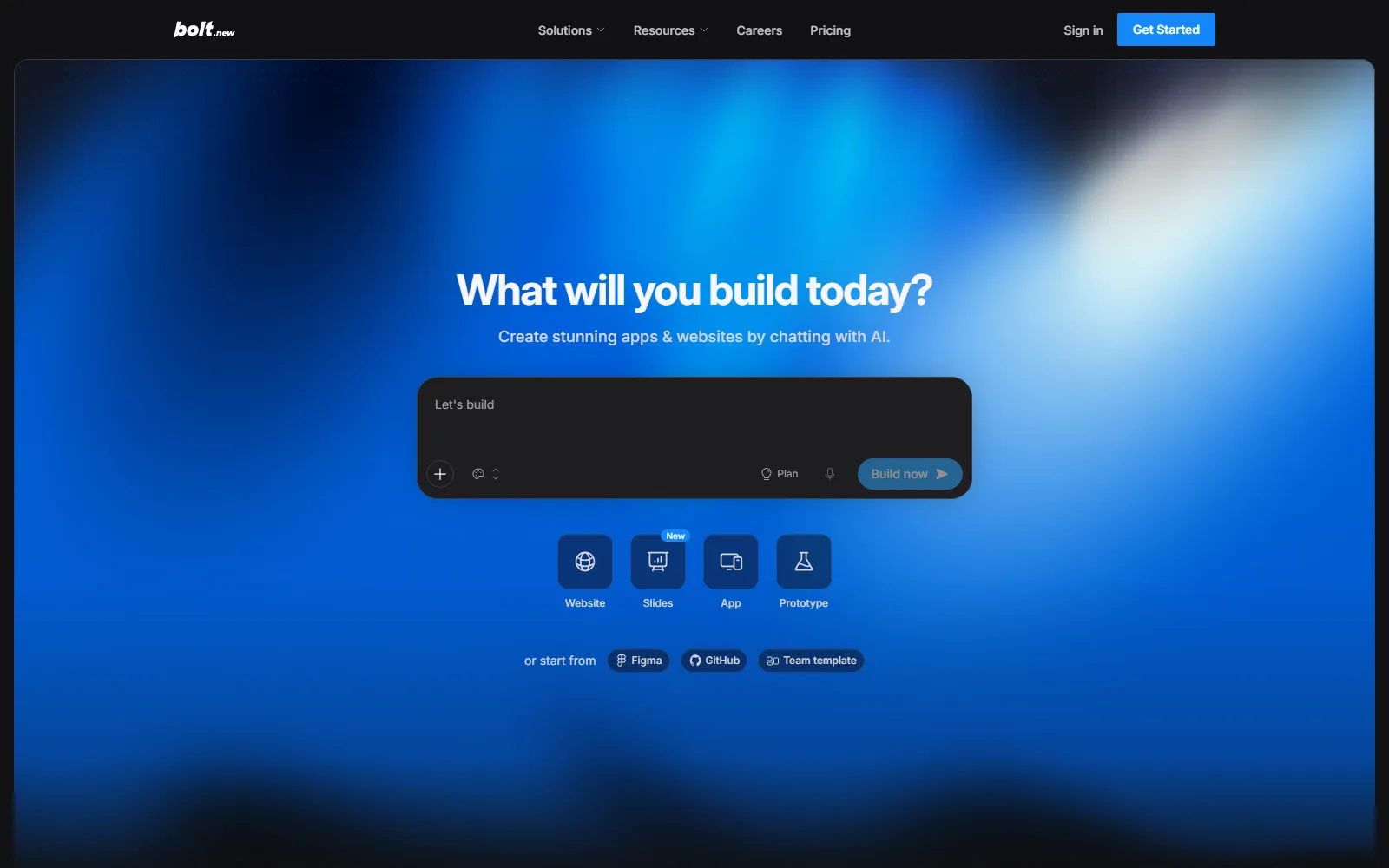
Bolt.new turns a written description into a working full-stack web application and runs it in your browser, with nothing to install. It is made by StackBlitz, whose existing technology already ran Node.js inside the browser, which is why Bolt can execute the code it writes instead of just handing it over. The free plan gives 1 million tokens a month, and Pro is $25 a month for tokens that start at 10 million, with rollover.
Fact-checked reviewDevelopment

Bolt.new Review: Pricing, Tokens and Free Limits
Browser-based AI app builder that runs and deploys apps
Quick verdict
The token meter is the whole story. The free plan's monthly cap is gone in about three and a third days at its daily ceiling, so treat it as a trial. On paid plans, StackBlitz says most token use comes from Bolt reading and syncing your project files, so the same plan stretches far early in a project and shrinks as the project grows. There is also a $9 Lite plan that sits off the pricing page and has a sign-up deadline. Prices come from bolt.new/pricing, token mechanics from StackBlitz's support documentation, and the Lite tier from bolt.new/bolt-lite, all read on 24 September 2026.
Best forIdea to running app fastPrototypes that become the productScaffolding for developers
How we reviewed Bolt.new
Every Bolt.new plan, price and limit in this review comes from Bolt.new's own pages, checked on , and links to the page it came from. All 4 sources are listed at the end. A review cannot be bought. How these reviews are written
On this page
Bolt.new at a glance
It launched on Product Hunt in 2024, took #1 of the day on 30 October 2024, and finished Runner Up for Developer Tools Product of the Year at the 2024 Golden Kitty Awards. It carries 36K followers and a 4.5 rating from 46 reviews. Its most recent release, Bolt Forge, took #1 Day Rank in September 2026.
What Bolt.new is used for
Getting from idea to a running app in one sitting
Describe the application, watch it build, and interact with it in the same browser tab. There is no local toolchain, no dependency install and no deployment step to learn first.
Prototypes that are the product
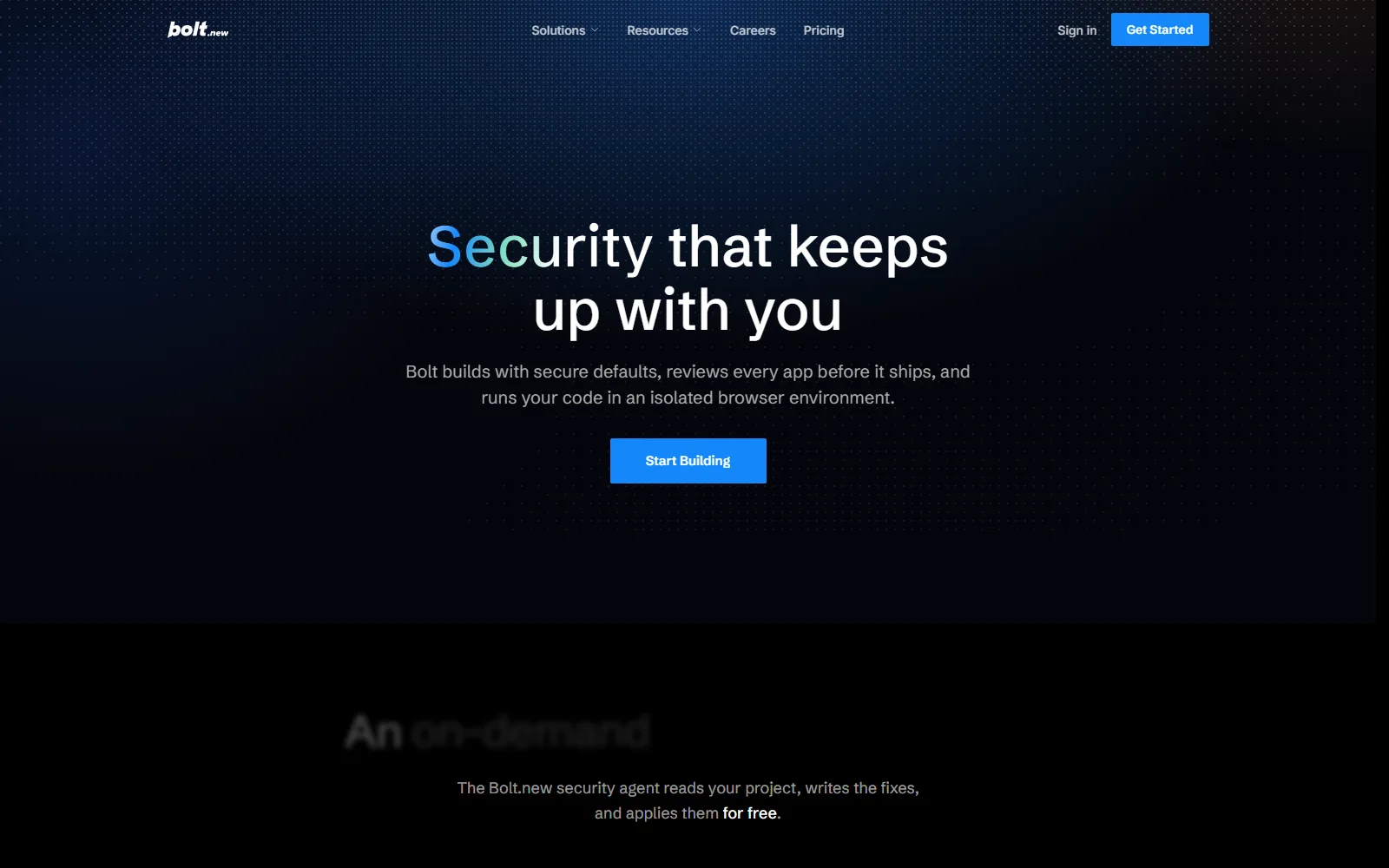
Because Bolt writes real full-stack code rather than a mock, a prototype can become the first version. That is the practical difference between this category and design tooling.
Scaffolding a project a developer takes over
Generating the boilerplate (routing, forms, auth wiring, the data layer) and exporting it is where the token economics work best, since the project is small while Bolt is doing the most work.
Teaching and learning full-stack structure
The generated code is readable and runs immediately, so it is a reasonable way to see how the pieces of a stack fit together without configuring any of them.
Who Bolt.new is for, and who should skip it
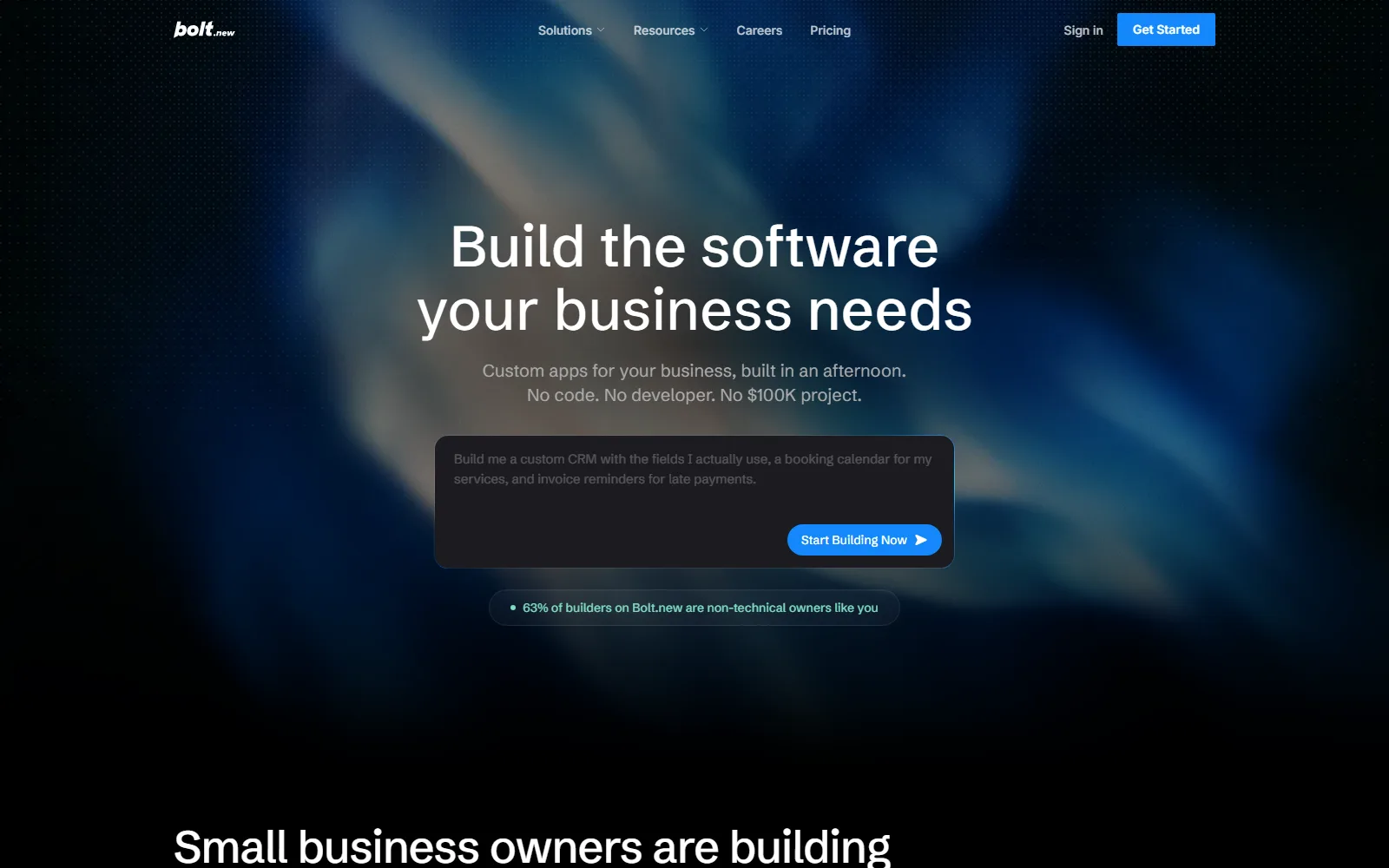
It suits anyone who wants a working application in the time it takes to describe one: founders validating an idea, designers building a real prototype instead of a mock, and developers spinning up a scaffold they will then take over. Running entirely in the browser removes the setup step that usually eats the first hour.
Skip it, or at least price it carefully, if:
- Your codebase is large or mature. This is a pricing argument, not a capability one. When token spend scales with the size of the project Bolt must read, the economics move against you just as the project becomes more valuable.
- You need to forecast cost. Lite's allowance is unpublished, the annual price is unpublished, and the support documentation names plans the pricing page does not.
- You plan to pause a subscription. The token balance goes with it.
How much does Bolt.new cost?
Pro is $25 a month for tokens that "start at 10M tokens per month", with rollover. Teams is $30 a member a month. Enterprise is quoted by sales.
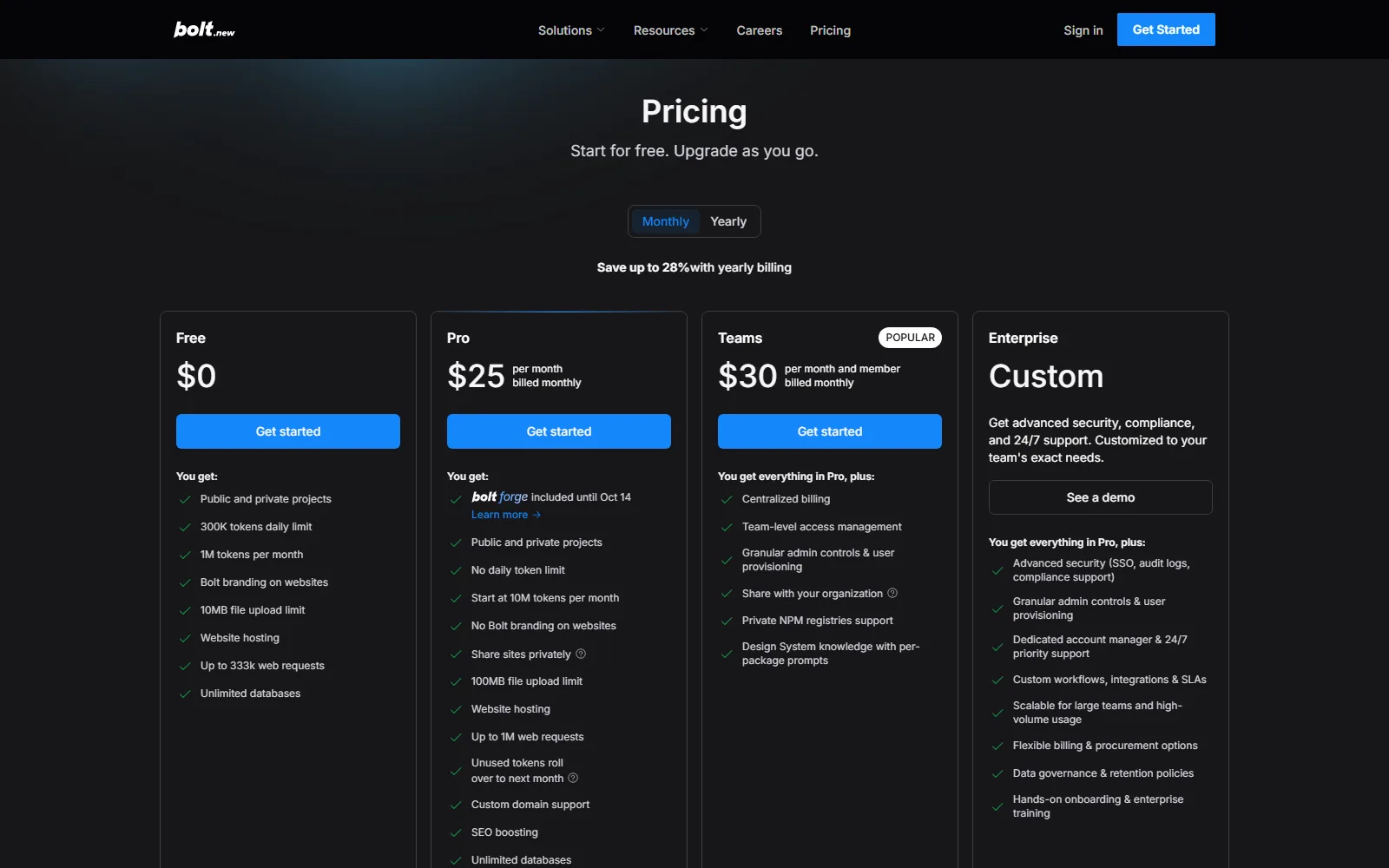
Bolt.new plans, USD, checked 24 September 2026, from Bolt.new pricing
| Plan | Price | Tokens | Rollover | Per million tokens |
|---|---|---|---|---|
| Free | $0 | 1M a month, 300K a day | No | n/a |
| Lite | $9/mo | Not published | Not stated | Not calculable |
| Pro | $25/mo | From 10M a month | Yes, two months | About $2.50 |
| Teams | $30/member/mo | 10M per member | Yes | About $3.00 |
| Enterprise | Sales | Custom | Custom | n/a |
The per-million figures are our arithmetic from the published price and the entry token allowance. The pricing page says yearly billing saves "up to 28%" but does not publish the annual price, so the discounted figure cannot be checked. Separately, StackBlitz's support documentation refers to "Pro 50" and "Pro 20" plans that the pricing page does not list, then points back at the pricing page for details. That loop leaves the plan range genuinely unclear.
Is Bolt.new free?
Yes, with two caps that work together: 300,000 tokens a day and 1 million tokens a month. The monthly cap is the one that binds. At the full daily allowance, 1 million tokens is used up in about three and a third days, so for most of the month the daily limit is irrelevant and you are simply out.
That makes the free plan a short burst of heavy work or a month of light work, not steady daily use. Free tokens also do not roll over, so whatever is unused at the end of the cycle is gone.
What is a token, and how does rollover work?
StackBlitz defines it plainly: "Tokens are small pieces of text. Short, common words like 'I', 'love', and 'cats' are typically one token each, but longer or less common words can be split into several."
What determines your bill is not your prompt. In StackBlitz's words: "Most of your token usage comes from Bolt reading, understanding, and syncing your project files, so larger projects use more tokens per message." Token spend scales with project size, not with how much you type. A one-line change to a large codebase can cost more than a detailed prompt against an empty one, which is the opposite of how most people budget.
Rollover, precisely
- Unused paid tokens carry over and stay valid for two months from the billing cycle start.
- They are consumed first in, first out, so the oldest bucket empties before the newest.
- Free-plan tokens never roll over.
- Cancelling forfeits everything, rollover included, when the billing cycle ends. Rolled-over tokens need an active subscription to spend.
The first-in, first-out rule is quietly in your favour: it spends the tokens closest to expiring first, so you lose the least. The cancellation rule is not. A balance you were saving disappears with the subscription that earned it, so do not pause a subscription you have banked tokens on.
The $9 Lite plan that is not on the pricing page
bolt.new/bolt-lite sells "a new $9/mo plan that builds with Forge". It does not appear on bolt.new/pricing, and it still did not on 13 October 2026. Bolt Forge runs leading open-source models on StackBlitz's own hardware rather than a commercial model API, which is how a $9 tier is possible at all.
It is time-limited to join. StackBlitz's wording: "Sign-ups close Oct 14th, but once you're in, Lite renews at $9/mo for as long as you want it." We read that on 24 September 2026, which left about three weeks. If the deadline has passed by the time you read this, the offer is closed to new sign-ups by StackBlitz's own terms.
Two cautions before you treat it as a bargain. Lite's token allowance is not published anywhere, so its value per token cannot be compared with Pro's. And the performance claims are StackBlitz's own: Forge is said to reach "91% of Bolt's top paid model" on an internal benchmark, and to give "up to 50X more usage" on the most efficient Forge model against Standard mode. Those are vendor-reported figures from an unpublished benchmark, not independent results.
How Bolt.new compares with other tools reviewed here
Lovable is the nearest comparison here: the same category of prompt-to-application building. The distinguishing feature of Bolt is StackBlitz's in-browser runtime, which executes what it writes in the same tab. Price the two against each other on the size of the project you intend to build, since that is what drives token cost.
If the project matures, a conventional editor is the sensible next step. Because token spend tracks the size of the codebase Bolt must read and sync, export and continue elsewhere once the project becomes valuable.
Bolt.new screenshots
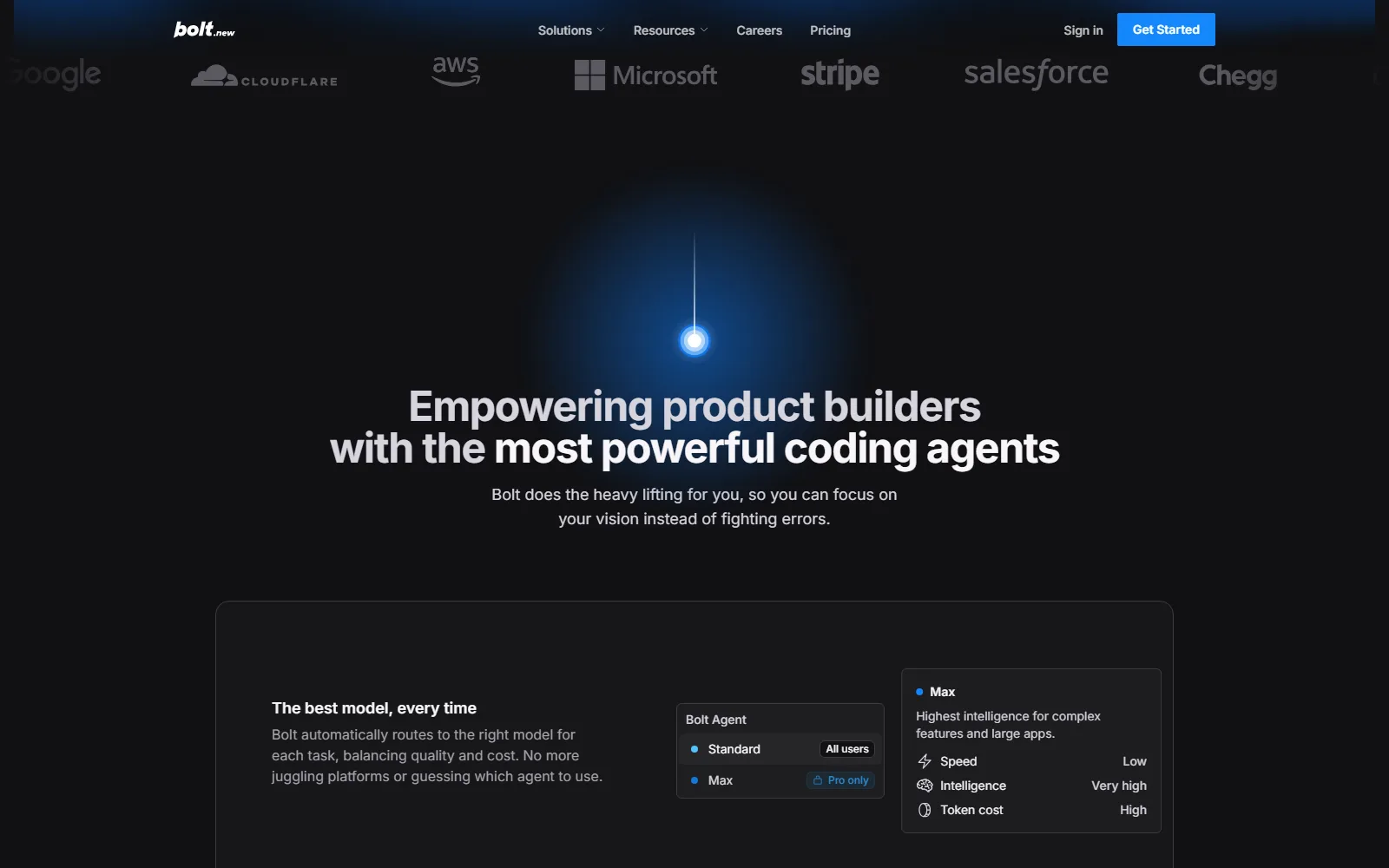
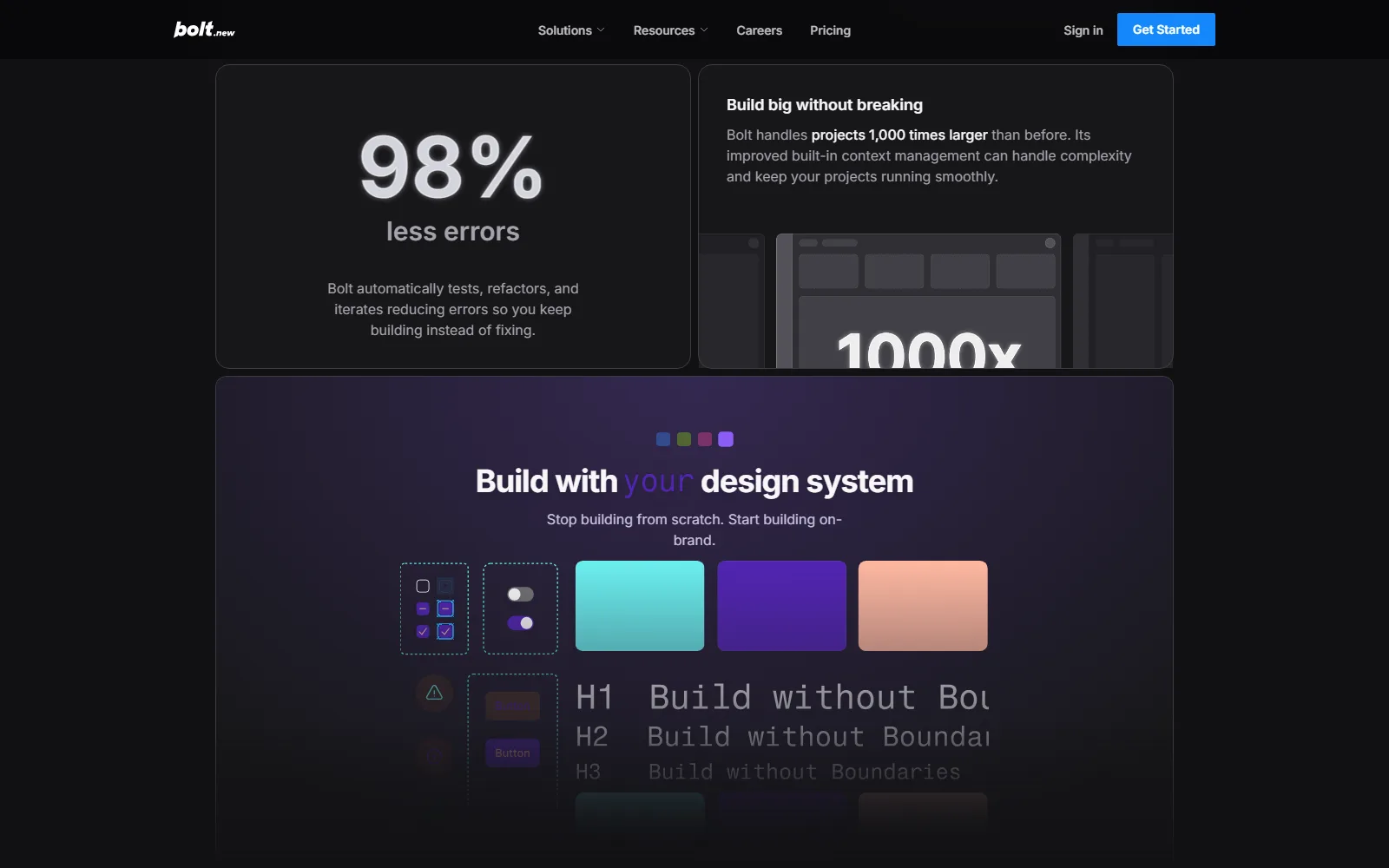
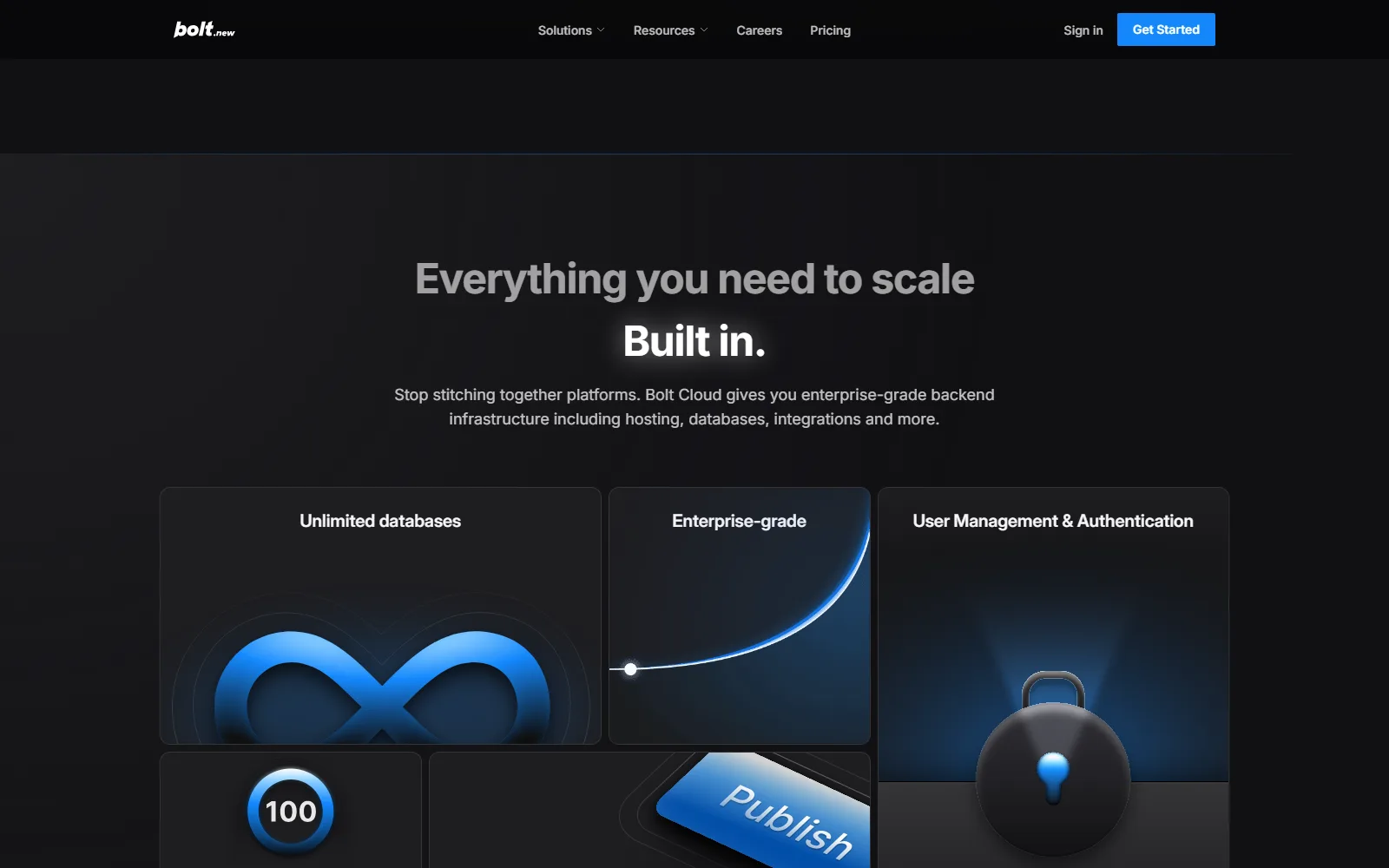
More of Bolt.new's own website, captured . Each caption says which page it shows.
Sources
Every figure above was read from these pages on 24 September 2026.
- Bolt.new pricing: free daily and monthly token caps, Pro and Teams prices, and the advertised yearly saving with no annual price shown
- StackBlitz support: tokens: the definition of a token, the statement that usage comes from syncing project files, the rollover and first-in-first-out rules, and the cancellation forfeit
- Bolt Lite: the $9 a month plan, the 14 October sign-up deadline, and StackBlitz's own Forge performance claims
- Bolt.new on Product Hunt: the 2024 Golden Kitty Developer Tools runner-up, the #1 of the day ranking, follower, rating and review counts
Bolt.new pros and cons
Pros
- Nothing to install: the app is written, run and previewed in the same browser tab
- Paid tokens roll over for two months and are spent oldest-first, so the least is wasted
- A $9 Lite tier exists, well below the $25 Pro entry point, until sign-ups close on 14 October
- Runner Up for Developer Tools Product of the Year at the 2024 Golden Kitty Awards, with 36K Product Hunt followers
- StackBlitz documents plainly that token spend scales with project size
Cons
- Token spend scales with project size, so costs rise as the project matures
- The free plan's 1M monthly cap is reached in about 3.3 days at the 300K daily ceiling
- Bolt Lite's token allowance is not published, so its value cannot be compared with Pro's
- The annual price is never shown, though the pricing page advertises a saving of up to 28%
- Support documentation names Pro 50 and Pro 20 plans that the pricing page does not list
- Cancelling forfeits all tokens including rollover
The bottom line on Bolt.new
Best for
- Idea to running app fast
- Prototypes that become the product
- Scaffolding for developers
Not the right fit? Compare
Facts checked
Visit Bolt.newBolt.new FAQ
Is Bolt.new free?
Yes, within two caps: 300,000 tokens a day and 1 million tokens a month. The monthly cap is the real limit, since at the full daily allowance a million tokens lasts about three and a third days. Free tokens do not roll over.
How much does Bolt.new cost?
Pro is $25 a month and starts at 10 million tokens, roughly $2.50 a million. Teams is $30 a member a month for 10 million tokens each, and Enterprise is quoted by sales. A $9 Lite plan is documented at bolt.new/bolt-lite but absent from the pricing page (checked 24 September 2026).
What is a Bolt token?
Per StackBlitz, tokens are small pieces of text: short common words like 'I', 'love' and 'cats' are typically one token each, while longer or less common words split into several. Most usage comes from Bolt reading, understanding and syncing your project files, so spend tracks project size, not prompt length.
Do Bolt.new tokens roll over?
On paid plans, yes. Unused tokens stay valid for two months from the billing cycle start and are spent first in, first out. Free-plan tokens never roll over, and cancelling forfeits all tokens, rollover included, at the end of the billing cycle.
What is Bolt Lite and is it still available?
Bolt Lite is a $9-a-month plan that builds with Bolt Forge, which runs leading open-source models on StackBlitz's own hardware. StackBlitz states sign-ups close on 14 October, after which Lite renews at $9 a month for existing subscribers (read 24 September 2026). Its token allowance is not published.
How good is Bolt Forge compared with the paid models?
StackBlitz says Forge reaches 91% of Bolt's top paid model, and offers up to 50 times more usage on the most efficient Forge model against Standard mode. Both figures come from StackBlitz's own unpublished internal benchmark, so treat them as vendor claims, not independent measurements.
Alternatives to Bolt.new
 LovableFree plan + paid upgradesDescribe an app in chat and publish it
 n8nFree plan + paid upgradesWorkflow automation and AI agents, billed per run
 CodeRabbitPaid onlyAI code review on every pull request, from $24 per developer
 CoreSpeedFree plan + paid upgradesMCP access layer for AI agents
 EdgeeFree plan + paid upgradesGateway that routes, compresses and meters agent tokens

Reviewed by
Amit Kumar
Full Stack AI Strategist
Amit Kumar runs MPAT, where he reviews AI tools and writes its guides. When he covers a tool he checks its pricing, credits and plan limits against the vendor's own pages, so readers know what a plan includes before they pay. He also leads the site's SEO and AI-focused content strategy.