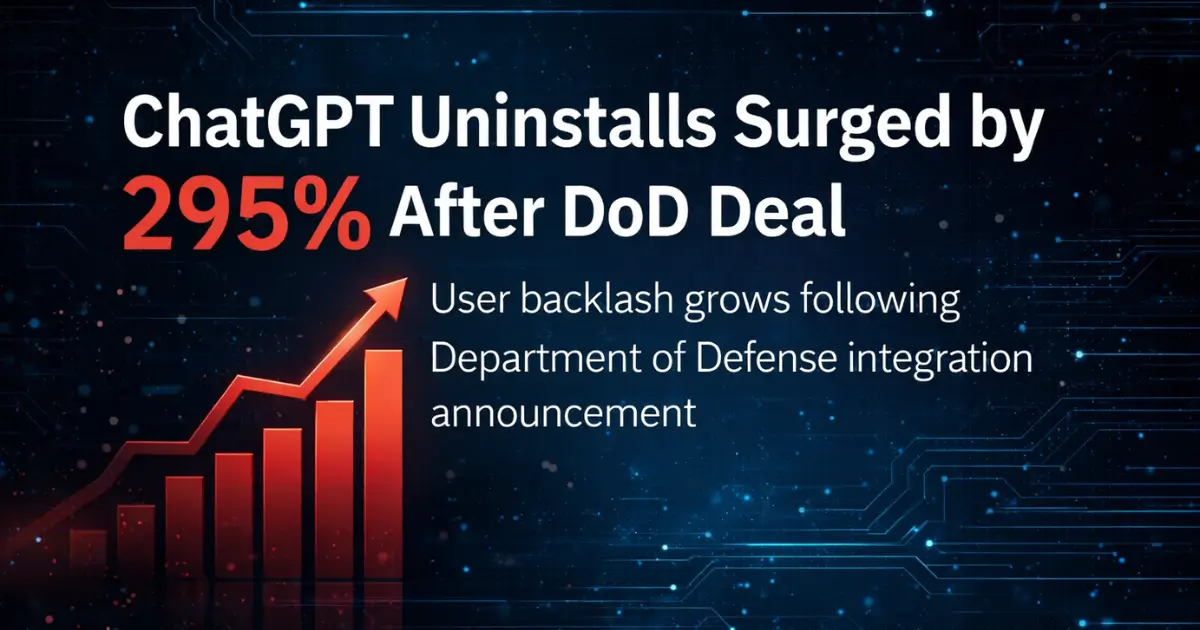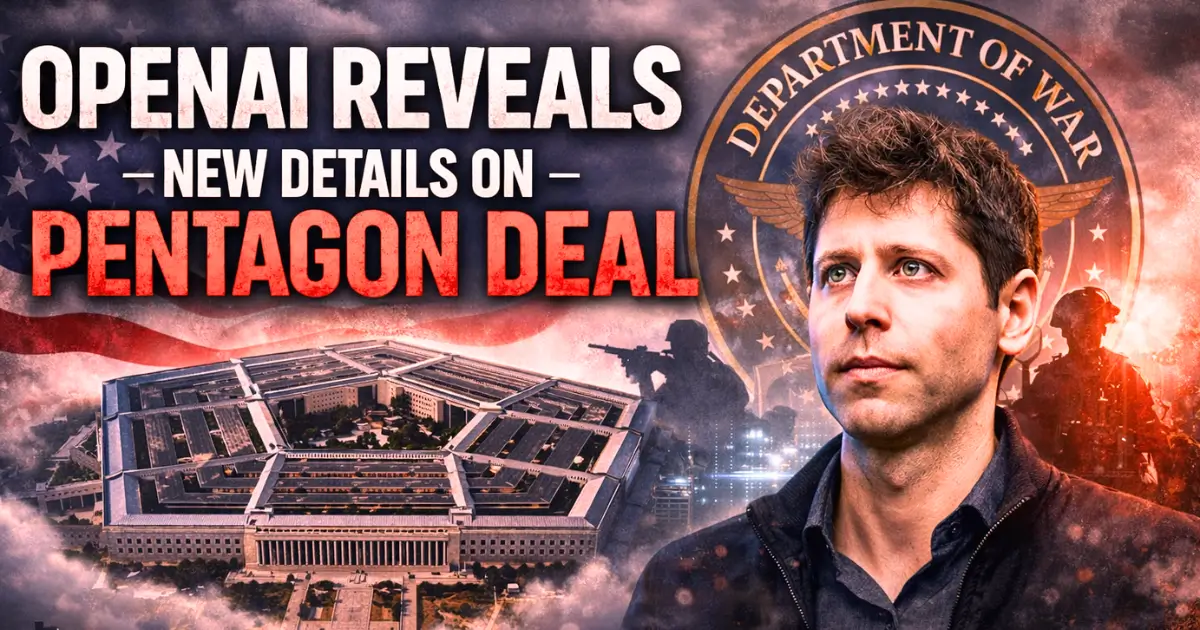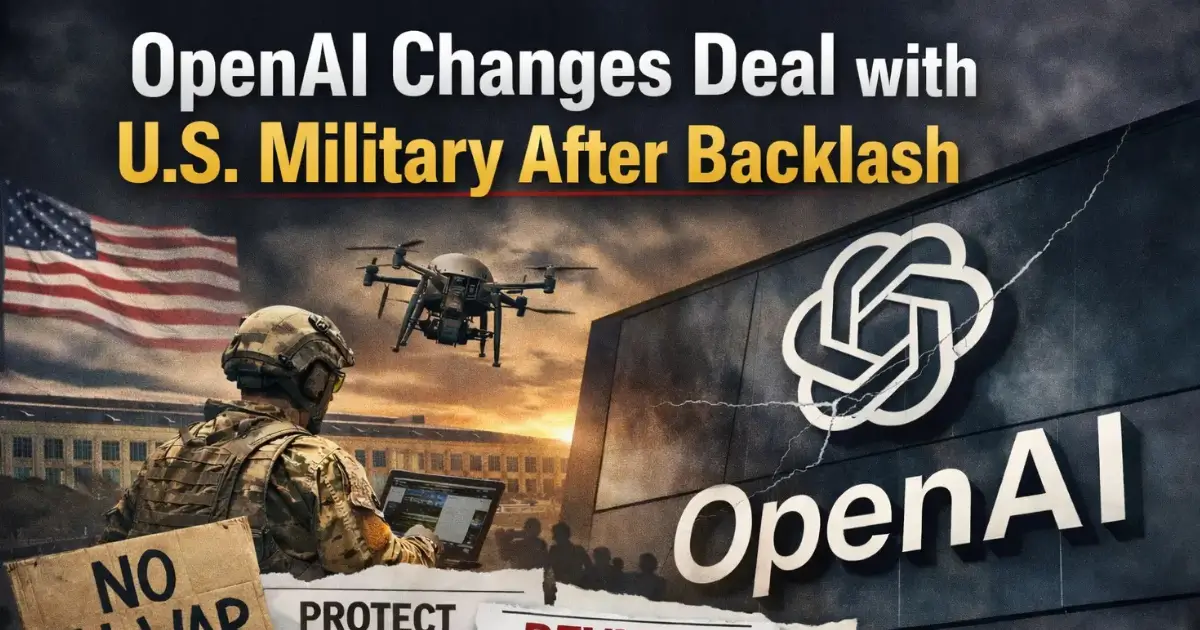
OpenAI amended its Pentagon contract on March 3, 2026, adding explicit anti-surveillance provisions after a weekend of employee revolt, a consumer boycott that saw ChatGPT uninstalls surge by 295%, and widespread criticism that the company had opportunistically replaced Anthropic as the Department of Defense’s preferred AI vendor. CEO Sam Altman conceded the original agreement was “definitely rushed” and “looked opportunistic and sloppy.”
This is the fastest policy reversal in OpenAI’s history—and it arrived against the backdrop of active U.S.-Israeli military strikes on Iran. The collision of frontier AI commercialization, geopolitical conflict, and public outrage has created a defining moment for the entire technology industry in 2026.
Technical Breakdown: What Changed and How
The Original Deal: Legal References Instead of Hard Limits
OpenAI’s initial contract listed three stated red lines: no mass domestic surveillance, no autonomous weapons, and no high-stakes automated decisions such as social credit scoring. However, the contract adopted the Pentagon’s “all lawful purposes” standard. Rather than embedding hard contractual prohibitions—which is what Anthropic had demanded—OpenAI cited existing statutes like the Fourth Amendment, FISA, and Executive Order 12333 as the primary safeguards.
Legal scholars immediately flagged the gap: under current U.S. law, purchasing commercially available personal data and running AI analysis on it could constitute de facto mass surveillance while remaining technically legal. The contract’s protections were, in the words of one former OpenAI policy leader, largely “window dressing.”
The Amended Contract: Closing the Surveillance Loophole
The revised agreement now explicitly prohibits “intentional use for domestic surveillance of U.S. persons and nationals, including through the procurement or use of commercially acquired personal or identifiable information.” It also mandates that intelligence agencies such as the NSA cannot access OpenAI’s services without a separate contract modification. Additionally, the Pentagon agreed to convene a cross-industry working group of frontier AI labs to develop broader deployment standards.
Why This Matters for the Industry
This episode is not an isolated contract dispute. It is the culmination of a two-year collapse of Silicon Valley’s resistance to military AI work, and it reshapes the competitive landscape in several critical ways.
Competitive Disruption
Anthropic, which refused the Pentagon’s “all lawful purposes” terms, was designated a “supply-chain risk” by Defense Secretary Pete Hegseth—a classification previously reserved for adversaries like China—and President Trump ordered all federal agencies to stop using its technology. OpenAI stepped into the vacuum within hours. Meanwhile, Google removed weapons and surveillance prohibitions from its own AI principles in February 2025, and Meta opened its Llama models to defense contractors in late 2024. Palantir and Anduril have formed a defense-tech consortium courting every major AI lab.
End-User Impact
The backlash demonstrated that consumer sentiment is now a material force in defense-AI policy. The “QuitGPT” boycott claimed over 1.5 million participants, and Anthropic’s Claude briefly rose to the number-one spot on Apple’s App Store. Users are no longer passive stakeholders; subscription cancellations and public pressure forced a contract rewrite in under 72 hours.
Ethical & Practical Considerations
Risks that persist: Even the amended contract leaves significant gray areas. The full agreement remains classified, which limits independent oversight. The Center for Democracy and Technology has warned that legal loopholes around commercially acquired data still exist. Moreover, the “working group” mechanism has no enforcement power—it is advisory, not regulatory.
The precedent problem: OpenAI quietly removed its explicit military-use ban from its terms of service in January 2024. The progression from “no military use” to “all lawful purposes with amendments” in just two years raises questions about whether any self-imposed AI safety commitment can withstand commercial and political pressure.
The geopolitical dimension: The deal was announced hours before U.S.-Israeli strikes on Iran began. This timing fused abstract debates about military AI with images of active combat, intensifying public opposition and raising concerns about AI-assisted targeting in active conflict zones.
Future Outlook: The Next 12 Months
Three trajectories are now likely. First, expect Congressional action: the absence of federal legislation governing military AI has been exposed as untenable, and bipartisan hearings are already being scheduled. Second, the Pentagon’s working-group model could become the default framework for military AI governance—industry-led, advisory, and without binding force—unless Congress intervenes. Third, the talent war in AI will increasingly bifurcate: safety-focused researchers will gravitate toward labs that maintain ethical red lines, while defense-oriented engineers will cluster at companies willing to serve military clients without restriction.
The fundamental question is no longer whether AI companies will do military work. It is who sets the boundaries—and whether those boundaries are written into law, or negotiated behind closed doors between CEOs and defense secretaries under deadline pressure.
Key Takeaways
OpenAI amended its Pentagon contract on March 3, 2026, adding explicit bans on domestic surveillance via commercially acquired data after employee revolt and a consumer boycott.
The original deal relied on existing law—not hard contractual language—to prevent misuse, a framework critics called insufficient.
Anthropic was blacklisted by the federal government after refusing the Pentagon’s “all lawful purposes” terms; OpenAI filled the gap within hours.
ChatGPT uninstalls surged 295% and the “QuitGPT” boycott claimed 1.5 million participants—consumer pressure rewrote a defense contract in under 72 hours.
The full contract remains classified, and the advisory working group has no enforcement power. Congressional legislation is the next critical variable.