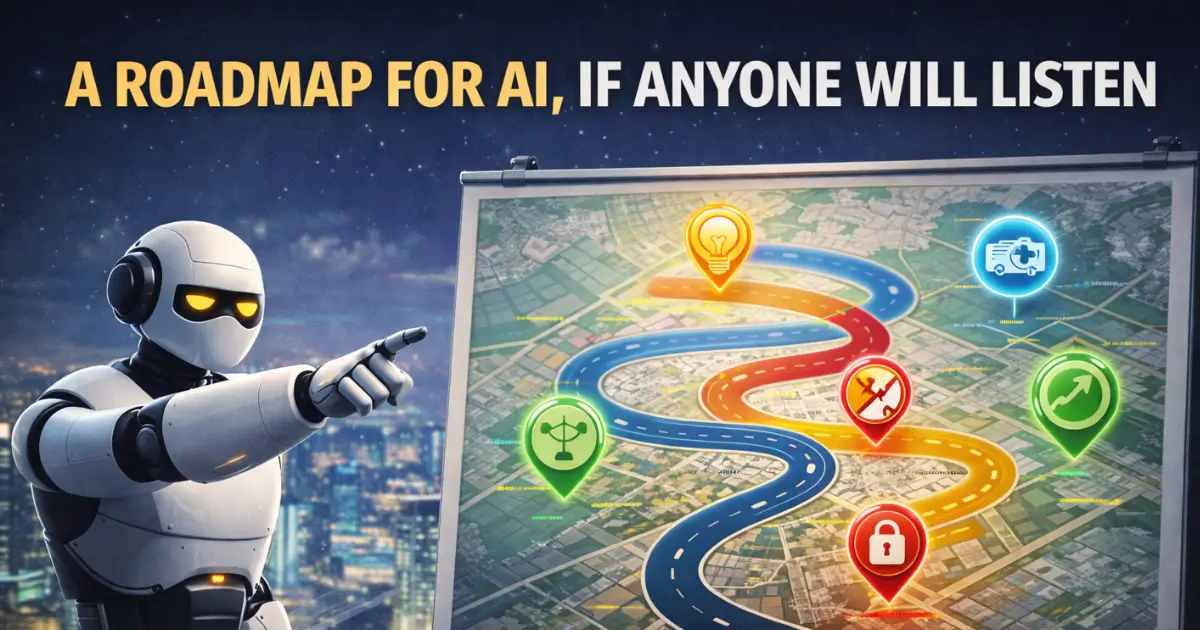
he same week the U.S. military punished Anthropic for saying "no," a group of thinkers from both political sides released something the government never bothered to create: a clear plan for how AI should be built and controlled. The Pro-Human Declaration came together before the Pentagon-Anthropic fight blew up, but the timing made its message hit much harder.
This isn't just bad luck. The cost of Congress doing nothing about AI has become impossible to ignore. March 2026 is when the bill came due.
WHAT DOES THIS NEW AI PLAN ACTUALLY SAY?
The idea behind it is simple: we are standing at a crossroads where AI either takes over human jobs and decisions, or it helps humans do more than ever before.
Five Core Promises
The plan is built on five big ideas: humans must stay in control, no single company or government should hold all the power, the human experience must be protected, personal freedom must be preserved, and AI companies must face real legal consequences when things go wrong.
Where It Gets Tough
The real strength is in what it bans outright. It says no one should build superintelligent AI until scientists agree it is safe and the public gives clear permission. Every powerful AI system must have a kill switch. And any AI design that can copy itself, upgrade itself, or fight being turned off is completely off limits.
These are not gentle requests. They are meant to become law.
HOW THIS CHANGES THE GAME FOR TECH GIANTS
This week's chaos between the Pentagon, Anthropic, and OpenAI proves the point. Defense Secretary Pete Hegseth slapped a "supply chain risk" label on Anthropic a company whose AI already runs inside classified military systems simply because it refused to give the government unlimited access. Hours later, OpenAI signed its own military deal, but legal experts quickly said the agreement would be nearly impossible to enforce in any real way.
AI companies now face a lose-lose situation. Give the government whatever it wants with no rules, or get blacklisted. Without proper laws, every deal becomes a backroom fight over power.
For everyday users, the risk is just as real. If the biggest AI companies have no shared safety standards, then the apps and tools you use every day are only as safe as those companies choose to make them and that choice can change overnight.
THE RISKS AND THE HARD QUESTIONS
Kids Are the Way In
Max Tegmark, the MIT scientist who helped build this coalition, believes protecting children is the issue most likely to force lawmakers to finally act. The declaration demands that every AI product aimed at young people especially chatbots and companion apps must be tested before launch for dangers like pushing kids toward suicide, worsening mental health, or emotionally manipulating them.
His thinking is straightforward: once you require safety testing for kids' products, it becomes very easy to add more rules like testing whether AI can help someone build a weapon or attack critical systems.
A Strange Alliance — With Clear Limits
People who almost never agree on anything signed this together. Steve Bannon from the Trump camp, Susan Rice from the Obama era, retired military chief Mike Mullen, and progressive religious leaders all put their names on it. That kind of unity sends a strong signal, but a signed paper is not a law. Congress still has to act, and so far it has shown no interest.
The plan also skips some big questions, like who enforces these rules globally and how countries like China would ever agree to follow them.
WHAT HAPPENS NEXT — THE COMING 12 MONTHS
Child safety laws will almost certainly come first. The public is already there: new polls show that 95% of Americans are against racing toward superintelligent AI without any rules. That kind of number gives politicians easy cover to vote yes. If even one state passes pre-launch testing for kids' AI apps, others will follow fast.
At the same time, the military's new habit of punishing AI companies through labels and contracts will push smaller labs out of the defense market. Expect more mergers, more deals, and fewer independent voices in the room.
WHAT YOU NEED TO REMEMBER
The Pro-Human Declaration is the first real bipartisan AI safety plan in the U.S.
It bans superintelligence, self-copying AI, and systems that resist being shut down.
The Pentagon vs. Anthropic fight proved that having no rules is already causing damage.
Protecting children will likely be the first AI safety law to pass.
Congress will face growing pressure through all of 2026 to turn this plan into real law.