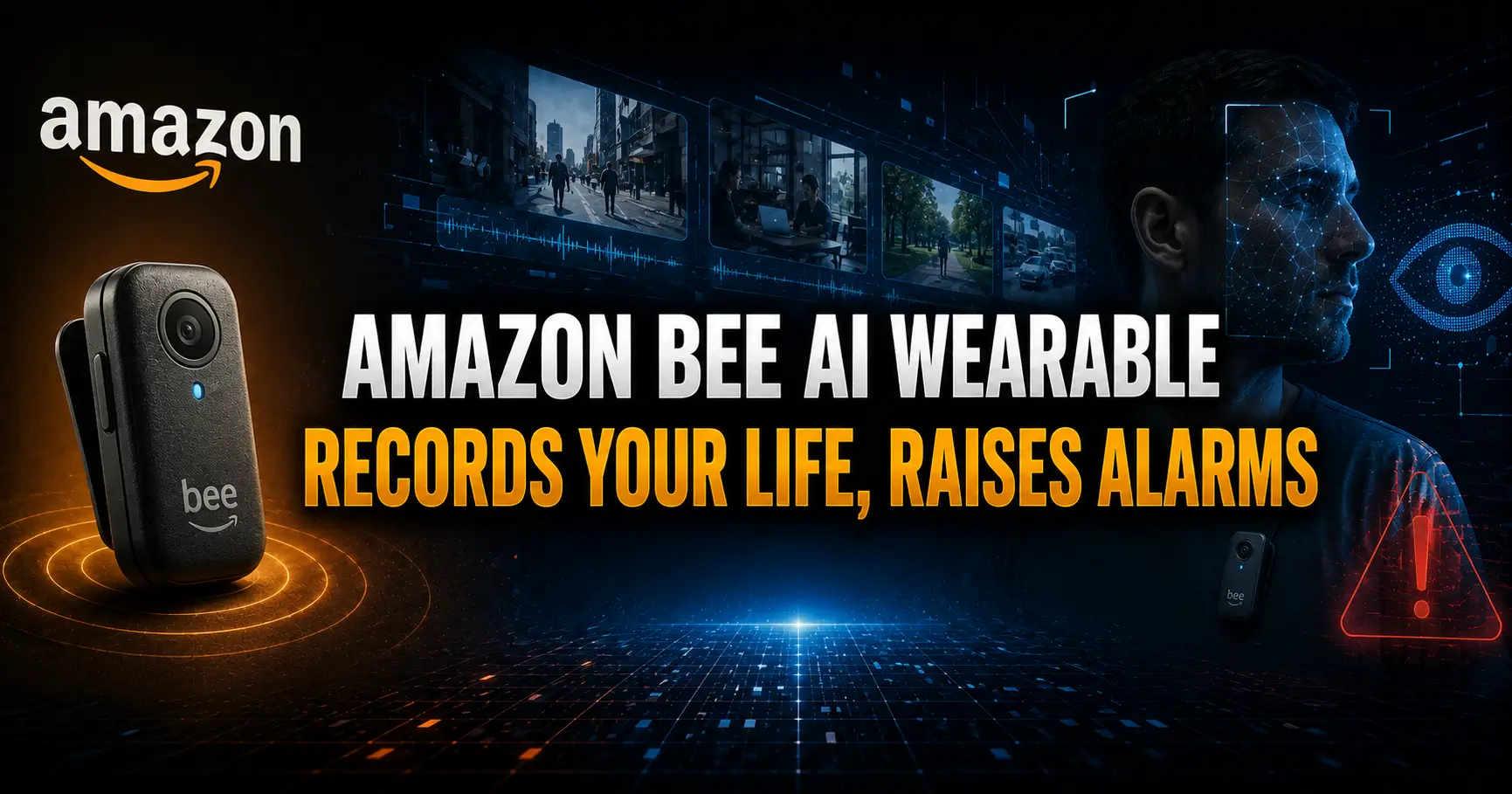
Amazon's Bee wearable is an AI-powered wrist device that records, transcribes, and summarizes your conversations throughout the day. The product — acquired by Amazon last year — works as an always-on personal assistant that turns spoken interactions into searchable notes. It is useful for professionals juggling multiple meetings. It is also a privacy nightmare for anyone uncomfortable with a corporation storing their conversations in the cloud.
How Bee Works
The device is simple. Strap it to your wrist. Sync it with the Bee mobile app. Click the button to start recording. A green light flashes when recording is active. After a conversation ends, the app generates an automated summary and a full transcription.
The summaries are the most useful feature. Instead of re-listening to an entire meeting, users can scan a structured breakdown of what was discussed. During testing, TechCrunch found the summaries faithful and well-organized. The transcriptions were less reliable — occasionally omitting sections and struggling to identify different speakers without manual input.
Bee syncs with your calendar to provide alerts and reminders. It needs extensive mobile permissions to work well — access to location, photos, contacts, calendar, and notifications. Users can optionally share health data including sleep patterns and heart rate. The more data Bee has, the more useful it becomes. That tradeoff defines the product.
Where It Works
Bee shines in professional settings. A worker who moves between meetings throughout the day can keep Bee running and review conversation summaries later. It captures details that would otherwise be lost — the quick decision made at the end of a call, the action item mentioned in passing, the name you forgot to write down.
The capability overlaps with existing tools. Otter offers meeting transcription with enterprise search. Vapi processes billions of voice calls for enterprises. And OpenAI's voice intelligence API enables real-time transcription and semantic search across audio. Bee differentiates by being a wearable — always on your wrist rather than requiring you to open an app or join a call through a platform.
Where It Gets Creepy
Bee has been marketed primarily for personal use. That is where the privacy concerns become acute. To work well, Bee needs access to nearly every aspect of your digital life. It records your conversations. It knows your location. It reads your calendar and notifications. And all of that data is stored in Amazon's cloud.
Amazon has a documented history of data security issues. The company that processes more cloud data than anyone else has also experienced its share of breaches. For a device that records intimate personal conversations — family dinners, medical appointments, private arguments — cloud storage creates risk that goes beyond typical app data collection.
Bee demonstrated a local processing demo to a tech reviewer but has not shipped that capability. If Bee could run entirely on-device — with no data leaving the wearable — the privacy equation would change significantly. Until then, every conversation passes through Amazon's servers.
The AI Wearable Race
Bee enters a growing market for AI-powered wearable devices. Meta's Ray-Ban glasses combine cameras, speakers, and Meta AI. Apple's incoming CEO John Ternus is exploring AI smart glasses and pendants. Startups like Era are building the software layer for AI gadgets. And Neurable is licensing brain-sensing technology for headphones and glasses.
The common challenge across all AI wearables is the privacy-utility tradeoff. The more data the device collects, the more useful it becomes. The more data it collects, the more invasive it feels. Bee illustrates both sides of that equation clearly. It is genuinely helpful as a meeting assistant. It is genuinely unsettling as a life recorder.
What It Means
Amazon's Bee wearable is a well-executed product searching for the right use case. As a professional tool for meeting-heavy workers, it fills a real gap. As a personal life companion that records everything and stores it in Amazon's cloud, it crosses a line that many users will not accept.
The AI industry is building toward a future where AI assistants know everything about your day. Anthropic's Cat Wu described AI that anticipates your needs before you ask. Google's Gemini Spark monitors your email and calendar proactively. Bee takes that concept to the physical world — an AI that listens to your conversations and remembers what you said.
Whether that future is empowering or dystopian depends entirely on who controls the data and how well they protect it. Amazon has a lot of data already. Bee gives it your voice too.