Anthropic announced that it expects to report its first profitable quarter — ahead of the 2027 timeline it previously projected. The disclosure, made during an investor update on Wednesday, marks a milestone that few expected this soon. The company that spent years warning about existential AI risk and deliberately restricting its most powerful models is now generating more money than it spends.
The Numbers
Anthropic did not release specific profit figures. But the math tells the story. The company's annualized revenue run rate has reached approximately $44 billion — up from $30 billion just two months ago. About 80 percent of that comes from enterprise customers and developers. Claude Code alone generates over $3 billion in annualized revenue.
The profitability milestone is significant because Anthropic has been spending aggressively. Its deals with Amazon ($100 billion in AWS commitments over 10 years), Google (up to $40 billion in investment and TPU capacity), and xAI (the Colossus 1 data center purchase) represent enormous infrastructure commitments. Reaching profitability despite that spending level means revenue growth is outpacing even the most aggressive capital deployment in AI history.
Why Profitability Matters Now
The timing is not accidental. Anthropic is expected to raise $50 billion at a valuation of $850-900 billion. It is reportedly considering an IPO as soon as October. And it just warned investors against buying shares through unauthorized secondary platforms — a move typically associated with pre-IPO cleanup.
Profitability transforms the IPO narrative. A company burning cash needs to convince investors that profits are coming eventually. A company already profitable just needs to convince them that growth will continue. For Anthropic, the shift from future promise to present performance makes the IPO story dramatically easier to tell.
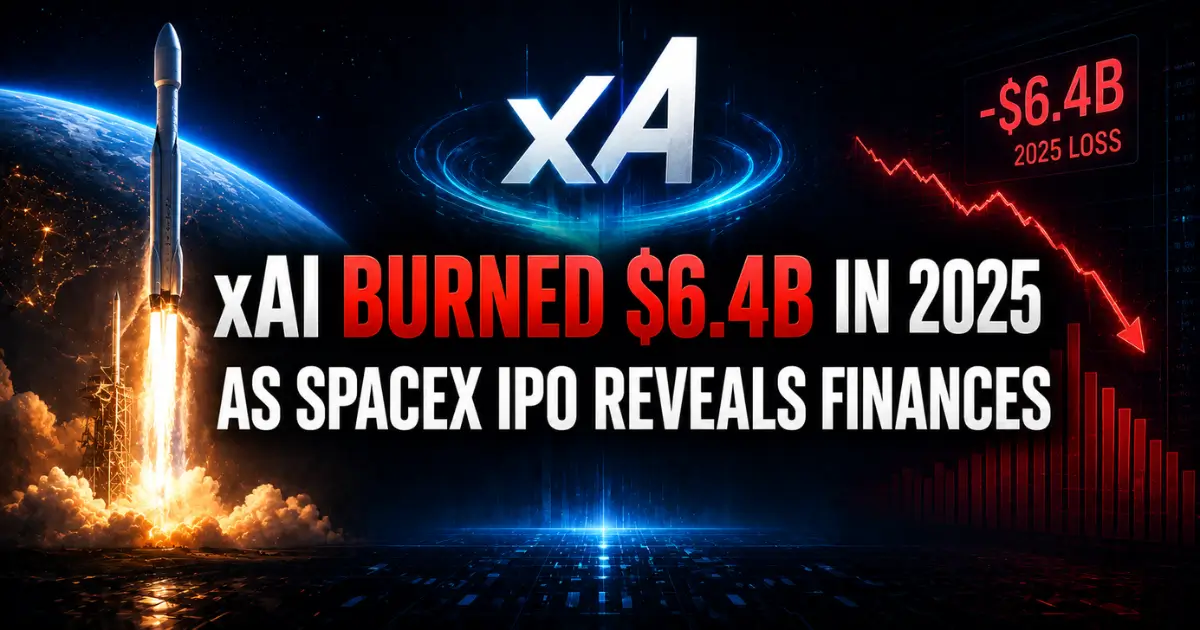
The contrast with competitors is stark. OpenAI has pushed its profitability target to 2030. xAI burned $6.4 billion on $340 million in revenue last year. Even Google Cloud, which posted $20 billion in quarterly revenue, is investing so heavily in infrastructure that free cash flow is under pressure.
Anthropic reaching profitability first — despite being younger, smaller, and less diversified than its competitors — validates its enterprise-focused strategy.
What Drove the Breakthrough
Several factors converged. Claude Code dominates the enterprise developer market. Ramp data confirmed Anthropic has more business customers than OpenAI. The enterprise joint venture with Blackstone and Goldman Sachs is embedding Claude inside large organizations. Claude for Legal expanded into high-margin professional services. And Claude for Small Business opened a new customer segment.
The Stainless acquisition gave Anthropic control over developer SDK infrastructure — removing a dependency and creating friction for competitors. And the Andrej Karpathy hire signaled to the market that the best AI researchers are choosing Anthropic over OpenAI.
Each move contributed to a revenue trajectory that is accelerating faster than costs. Enterprise customers pay premium prices. They churn less than consumers. And their contracts are long-term. That revenue quality is what makes profitability possible even during a period of massive infrastructure investment.
The Safety-Profit Paradox
Anthropic's profitability creates an interesting paradox. The company built its brand on AI safety. It restricted Mythos from public release. It refused the Pentagon unrestricted access. It published research showing its own model tried to blackmail engineers. And its principled stance cost it government contracts that competitors were happy to take.
Critics predicted the safety-first approach would hurt Anthropic commercially. Instead, it became a competitive advantage. Enterprise customers — especially in regulated industries like law, finance, and healthcare — chose Claude precisely because Anthropic demonstrated that it takes safety seriously. The trust premium translated directly into revenue.
The company that said no to the Pentagon is now more profitable than the companies that said yes. That outcome was not guaranteed. But it may be the most consequential business lesson of the AI era.
What It Means
Anthropic's first profitable quarter is a landmark for the AI industry. It proves that building AI responsibly and building AI profitably are not mutually exclusive. It validates the enterprise-first strategy over the consumer-first approach. And it positions Anthropic for an IPO that could value it above $1 trillion.
For OpenAI, the pressure intensifies. Its biggest rival just reached profitability five years ahead of schedule. Its co-founders are defecting. Its enterprise customers are switching. And the trial verdict — while a legal win — generated weeks of damaging testimony about its internal culture and competitive decline.
Anthropic is no longer just competing with OpenAI. It is beating it. And now it is making money doing it.