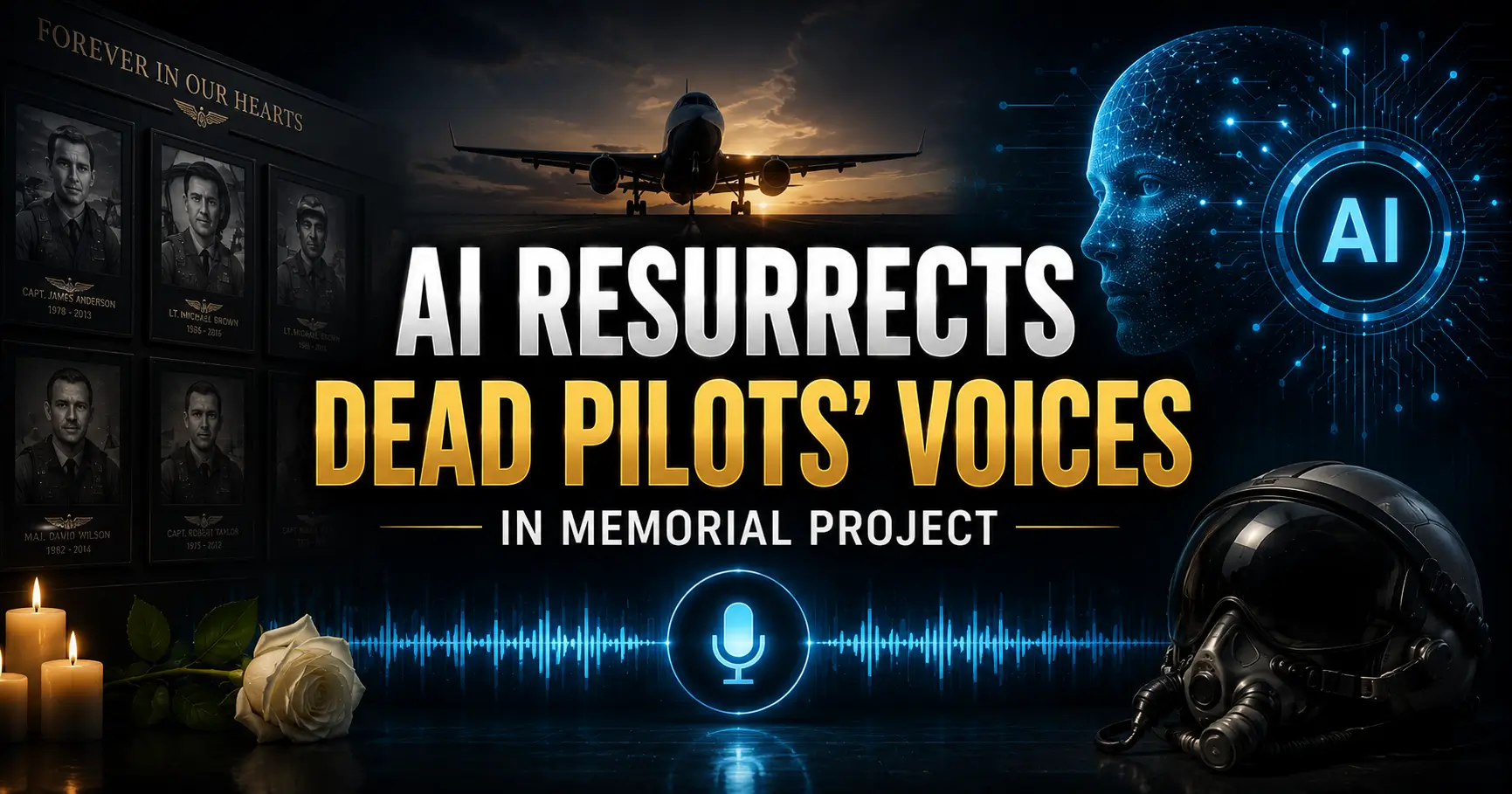
AI is being used to recreate the voices of deceased military pilots. The project — developed by a defense-adjacent technology company — generates synthetic speech that sounds like specific pilots who died in combat or training accidents. Family members can hear their loved ones speak new words they never said. The technology is being positioned as a memorial tool. Critics call it exploitative and dangerous.
How It Works
The system takes existing audio recordings of a pilot — cockpit communications, personal videos, phone calls, interviews — and trains a voice model that replicates the person's speech patterns, tone, cadence, and accent. Once trained, the model can generate new speech in that person's voice from any text input.
Family members can type a message and hear it spoken in their deceased relative's voice. A mother can hear her son say "I love you" in his own voice years after his death. A widow can hear her husband read a bedtime story to children who were born after he died. The emotional impact is immediate and overwhelming.
The technology is not new. AI voice cloning has been available commercially for several years. Companies like ElevenLabs and Resemble AI offer voice cloning services. What makes this project different is its application — using military records and personal audio to recreate the voices of people who died in service.
The Ethical Minefield
The project raises questions that the AI industry has been wrestling with across every creative medium. The Academy banned AI-generated performances from the Oscars. Artists are suing AI companies over unauthorized use of their work. And the growing sophistication of deepfakes has made voice cloning a tool for fraud — romance scams cost Americans over $1 billion last year, and AI-generated voices are increasingly used in those schemes.
Consent is the central issue. The pilots did not consent to having their voices cloned. They recorded cockpit communications as part of their duties. They made personal videos for personal reasons. Using that audio to create a synthetic voice that says things they never said — even loving things — raises questions about autonomy that extend beyond death.
Supporters argue the families consent, and that is sufficient. The project requires family approval before creating any voice model. No voice is generated without permission from next of kin. The intent is healing, not exploitation.
Critics counter that consent from family members is not the same as consent from the person whose voice is being replicated. A dead person cannot object to words being put in their mouth. And once a voice model exists, it can potentially be used for purposes the family never intended.
The Military Context
The project connects to a broader trend of AI in defense. The Pentagon is deploying AI across every domain — from autonomous drones to intelligence analysis to cybersecurity. Google, OpenAI, and xAI have all signed military deals. Palantir's manifesto argued AI companies have a civic duty to support national defense.
Using AI to memorialize fallen service members is a different application entirely. But it raises similar questions about boundaries. If the military endorses voice resurrection as a memorial tool, the technology gains institutional legitimacy. That legitimacy makes it harder to restrict the same technology when it is used for less noble purposes — political manipulation, fraud, or unauthorized impersonation.
The Grief Technology Market
The pilot voice project is part of a growing grief technology market. Startups are using AI to create chatbots that mimic deceased relatives. Apps let users upload photos and videos of loved ones and generate new interactions. The market is estimated at hundreds of millions of dollars and growing.
The demand is real. Grief is universal. The desire to hear a loved one's voice again is one of the most powerful human emotions. AI can now fulfill that desire — technically. Whether it should is a question that technology cannot answer.
The Bigger Picture
AI voice resurrection sits at the intersection of the AI industry's most challenging debates. Creative rights. Consent. Deepfakes. Military applications. And the fundamental question of what AI should be allowed to do with human identity.
Anthropic's research showed that AI models absorb behavioral patterns from their training data — including fictional portrayals of how AI should behave. The pilot voice project asks a different version of the same question. If AI can replicate a human voice perfectly, what stories should it be allowed to tell in that voice? And who gets to decide?
The families who hear their loved ones speak again will say the technology is a gift. The critics who see it as exploitation will say it is a warning. Both can be right simultaneously. That is what makes AI's most personal applications its most complicated.