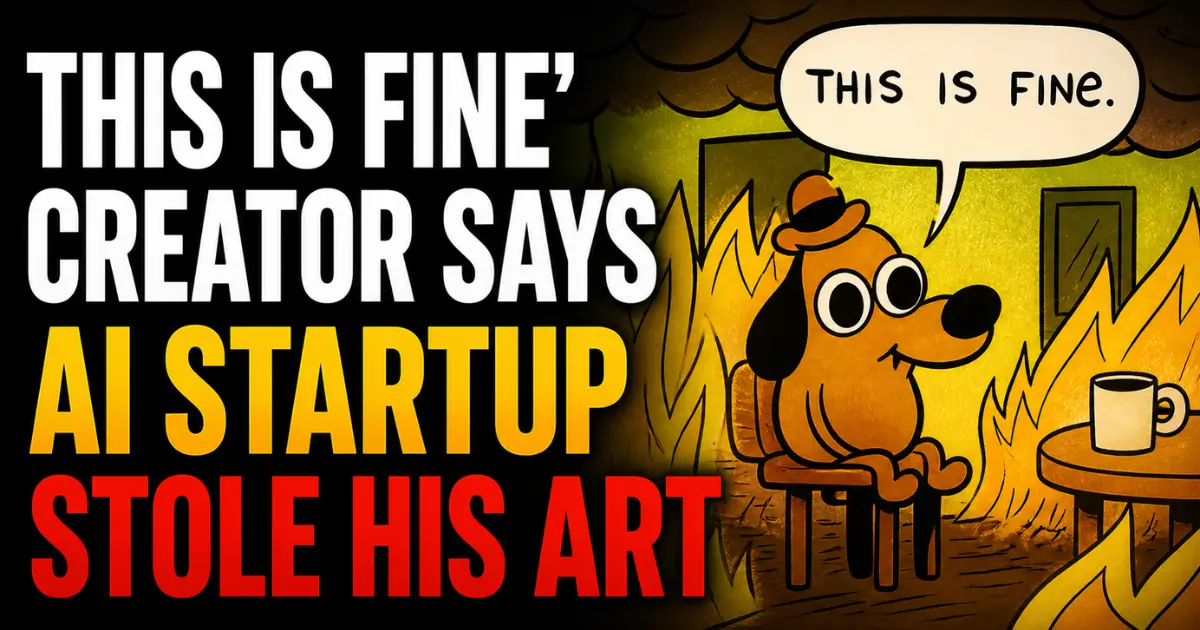
The creator of the iconic "This is fine" meme says AI startup Artisan stole his artwork for an advertising campaign without permission. Cartoonist KC Green said the company's subway ad — which repurposes his famous dog-in-a-burning-room comic to promote an AI sales assistant — was never authorized. He told followers to vandalize the ads if they see them and said he is pursuing legal representation.
What Happened
A photo shared on Bluesky shows a subway station ad featuring Green's distinctive artwork. The ad replaces the comic's original text with the dog saying "my pipeline is on fire" alongside a message promoting Artisan's AI sales tool, Ava. The ad uses Green's copyrighted art style, character design, and composition in a clearly commercial context.
Green responded publicly. He confirmed he never agreed to the campaign. He described the use as art stolen in the same way AI companies steal creative work. And he urged people to vandalize the ads.
When TechCrunch contacted Artisan, the company said it has a lot of respect for Green and is reaching out directly. The company scheduled a conversation with the artist.
Artisan's History of Provocative Marketing
This is not Artisan's first controversial ad. The startup previously ran billboards in San Francisco urging businesses to "stop hiring humans." CEO Jaspar Carmichael-Jack defended that campaign by saying it referred to a category of work rather than humans in general.
The "stop hiring humans" framing connects directly to the AI and jobs debate that has intensified throughout 2026. With Goldman Sachs estimating AI is eliminating 16,000 net jobs per month and Anthropic's CEO warning of Depression-era unemployment levels, Artisan's provocative messaging hit a raw nerve.
Now the company has added alleged art theft to its marketing playbook — a combination that is unlikely to generate the kind of attention a startup wants.
The Bigger Copyright Problem
Green's case illustrates a tension that runs through the entire AI industry. AI companies have built their products by training on vast amounts of human-created content — text, images, code, music — often without permission or compensation. Artists, writers, and publishers have responded with lawsuits, protests, and new rules restricting AI-generated content.
The Academy Awards just banned AI-generated performances and screenplays from Oscar eligibility. Publishers have pulled novels over suspected AI use. Science fiction writers' groups have declared AI work ineligible for awards. And tools like ComfyUI are specifically designed to keep human creators in control of the generative process.
Green's situation is slightly different from the training data debate. Artisan did not use AI to generate an imitation of his work. According to the available evidence, the company appears to have directly repurposed his copyrighted artwork for a commercial ad campaign. That is a more straightforward intellectual property issue — and one that artists have successfully litigated before.
The Meme Ownership Problem
Green's case is complicated by the nature of memes. Once an image becomes a meme, it spreads virally across the internet. People modify it, share it, and repurpose it without thinking about who created it or whether they have permission. The "This is fine" dog has appeared on merchandise, social media posts, news articles, and corporate presentations millions of times.
But viral spread does not eliminate copyright. Green still owns the artwork. Commercial use — especially by a funded startup in a paid subway advertising campaign is a different matter from an individual sharing a meme on social media.
Green told TechCrunch that pursuing legal action takes the wind out of his sails. He would rather spend his time drawing comics and stories. But he feels he has no choice.
What It Means
The Artisan incident is a small story with large implications. It captures everything wrong about the AI industry's relationship with creative work in a single subway ad. An AI company that tells businesses to stop hiring humans used a human artist's copyrighted work without permission to sell its product. The artist now has to hire a lawyer instead of drawing comics.
Green's description of the situation is hard to improve on: memes do not come out of thin air. Neither does the creative work that AI companies depend on. Until the industry takes that seriously, incidents like this will keep happening.