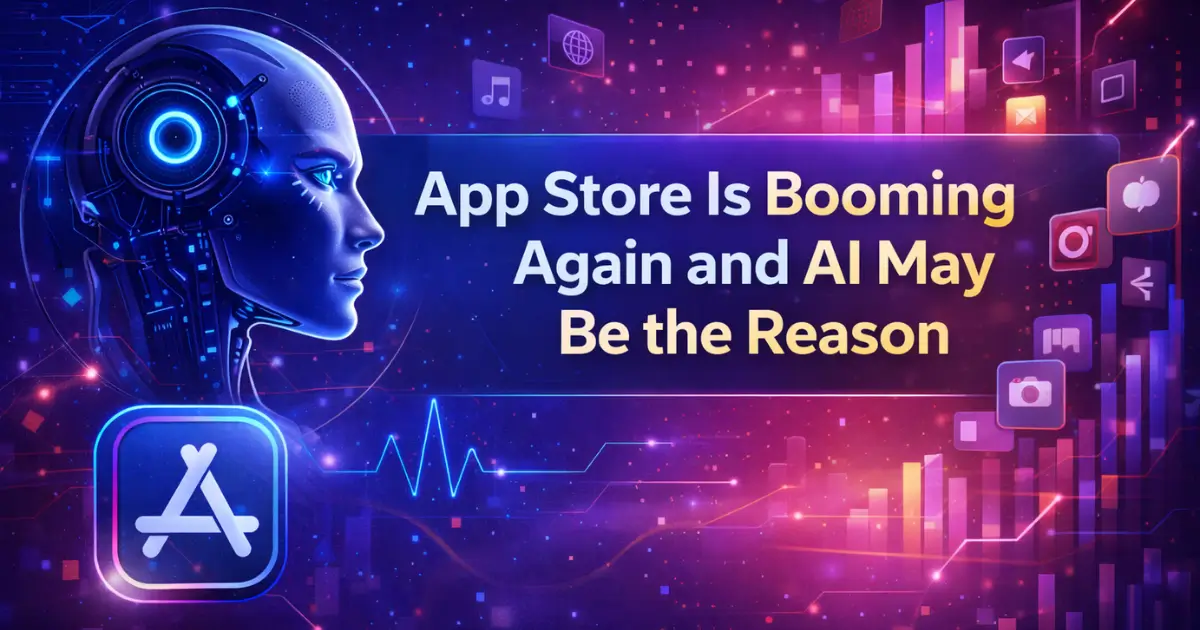
Everyone said AI would kill apps. Instead, the opposite is happening. New app releases surged 60 percent year-over-year in the first quarter of 2026 across both Apple's App Store and Google Play, according to new data from market intelligence provider Appfigures. On iOS alone, the increase was 80 percent. And in April so far, total app releases are up 104 percent compared to the same period last year.
The app economy is not dying. It is being reborn — and AI-powered coding tools may be the driving force behind the boom.
The Numbers Are Hard to Ignore
Appfigures' analysis paints a picture of an app marketplace that is growing faster than it has in years. Mobile games still account for the largest share of new releases globally, as they have in prior years. But the composition of what is being built is shifting.
Productivity apps have entered the top five categories for the first time. Utilities have moved to the number two slot. Lifestyle apps climbed from fifth to third. And health and fitness applications round out the top five. These categories suggest that the new wave of app creators are building practical tools for everyday life, not just games.
Apple's senior VP of worldwide marketing, Greg Joswiak, responded to the trend with a quip: rumors of the App Store's death in the AI age may have been greatly exaggerated.
AI Is Making Everyone a Developer
The working hypothesis behind the surge is that AI-powered coding tools like Claude Code and Replit are lowering the barrier to app development so dramatically that people who never could have built apps before are now doing exactly that.
This aligns with what Vercel CEO Guillermo Rauch described at the HumanX conference: a future where everybody can create an app, regardless of technical background. Vercel reported that 30 percent of apps on its platform are already being built by AI agents — not humans.
The phenomenon also connects to the rise of vibe coding, where users describe what they want in plain language and AI handles the actual development. Tools like Cursor, which is reportedly raising $2 billion at a $50 billion valuation, are at the center of this trend.
The Quality Problem
More apps does not necessarily mean better apps. The explosion of new releases is creating challenges for Apple's review process. This week alone, Apple pulled a rewards app called Freecash from the App Store after it climbed the charts despite violating platform rules. The company was also caught off guard by a malicious cryptocurrency app that drained $9.5 million from victims' accounts.
Apple already blocks hundreds of thousands of problematic apps annually. Its most recent analysis from 2024 showed the company removed or rejected more than 17,000 apps for bait-and-switch violations, rejected over 320,000 submissions found to be spam or misleading, and prevented more than 37,000 potentially fraudulent apps from reaching users.
But if AI-assisted development continues to accelerate the pace of new submissions, Apple's existing review infrastructure may struggle to keep up. The same code quality concerns that startups like Gitar are trying to solve for enterprise code are now spilling into the consumer app ecosystem.
Not Everyone Agrees Apps Have a Future
The app boom runs counter to predictions from some prominent tech figures. Nothing CEO Carl Pei has argued that smartphone apps will eventually disappear as AI agents take their place. OpenAI is reportedly working on an AI hardware device with Jony Ive that could bypass the app model entirely.
But for now, the data tells a different story. People are building more apps than ever, the categories they are building in suggest genuine utility rather than novelty, and the tools enabling this wave are getting cheaper and more accessible every month.
The Bigger Picture
The App Store boom is one of the most tangible signs yet that AI is not just replacing existing workflows — it is creating entirely new ones. When non-technical people can build and ship mobile applications using nothing more than natural language prompts, the addressable market for app creation expands from tens of millions of developers to potentially billions of users.
Whether this wave produces lasting value or a flood of low-quality software remains to be seen. But the trend is unmistakable: AI is not killing apps. It is making more of them than ever before.