
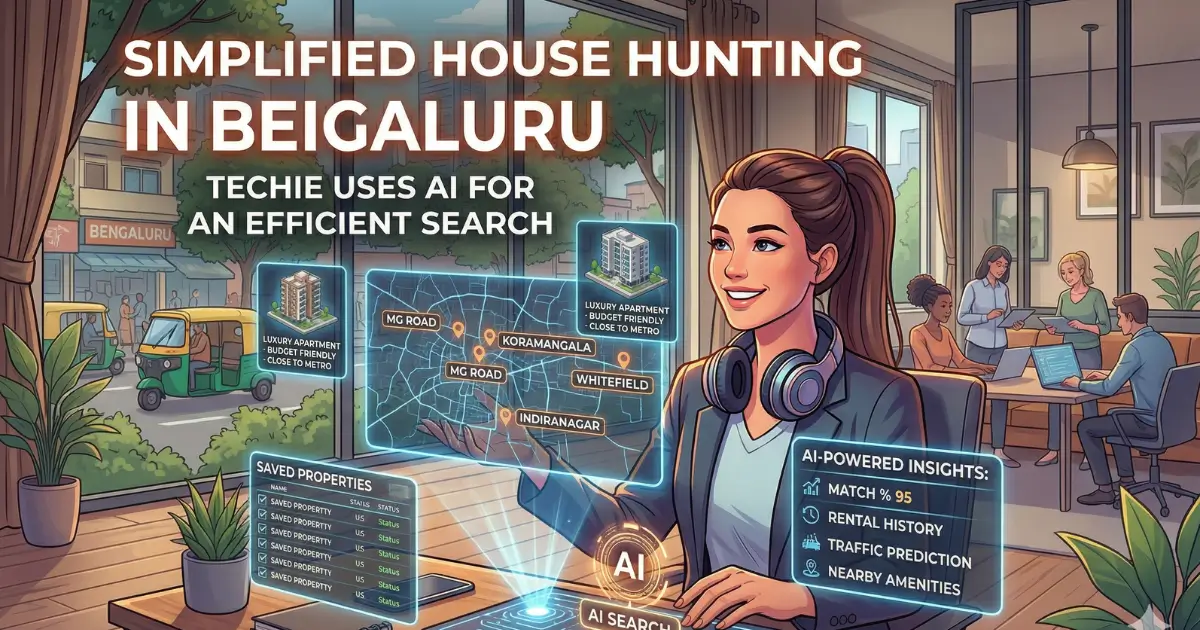
Finding a home in Bengaluru has become a full-time job in itself. Between skyrocketing rents, fake listings, pushy brokers, and neighborhoods that look nothing like their online photos, the city's rental market has turned into a minefield for tech professionals relocating for work. But one Bengaluru-based software engineer decided to fight the chaos with the one thing he knows best — code.
The Problem
Bengaluru's housing crisis is no secret. Rental prices have surged dramatically in recent years, particularly in IT corridors like Whitefield, Koramangala, HSR Layout, and Electronic City. A decent 2BHK in a well-connected area can easily cost ₹25,000 to ₹40,000 a month, and that's before maintenance and deposits that often run to ten months' rent.
For newcomers and job-switchers, the hunt is even more exhausting. Listings on platforms like NoBroker, MagicBricks, and 99acres are flooded with duplicates, outdated entries, and outright scams. One techie recently went viral for saying he was ready to quit his job after months of failing to find a place near MG Road on a ₹25,000 budget. That frustration is widespread — and it's exactly what prompted this particular engineer to build something better.
The AI Solution
Rather than scrolling through hundreds of listings manually, the techie built an AI-powered assistant that does the heavy lifting. The tool scrapes rental listings from multiple platforms, feeds them into a large language model, and filters results based on highly specific criteria — not just budget and BHK count, but factors like proximity to metro stations, natural light, floor level, grocery access, and even whether the society allows pets.
The system goes further than basic filtering. It cross-references listings to flag duplicates and suspected scams — for instance, identical photos used across different listings or prices that seem suspiciously low for a given area. It ranks the remaining options by a custom score that weighs the user's stated priorities, and it generates a daily shortlist delivered straight to a Telegram or WhatsApp chat.
The techie reportedly used a combination of Python scripting, web scraping tools, and API calls to Claude and Gemini for the natural language processing layer. The entire setup runs on a modest cloud instance and costs less than ₹2,000 a month in compute — a fraction of what most people spend in broker fees alone.
Did It Actually Work?
According to the techie's account, the tool cut his search time from weeks to days. Instead of visiting 15 to 20 properties in person — most of which turned out to be disappointments — he visited just four. Three of them matched his expectations closely, and he signed a lease on one within a week.
The key advantage wasn't just speed. It was the elimination of noise. Bengaluru's rental platforms are designed to maximize listings, not relevance. An AI layer that understands context — "I want a quiet neighborhood but still walkable to cafes" — can parse what keyword-based search filters simply cannot.
The Bigger Picture
This isn't just one person's clever hack. It points to a growing trend of individuals using AI tools to solve real, everyday problems that traditional platforms have failed to address. India's proptech sector — including platforms like NoBroker, Housing.com, and Square Yards — is already investing in AI-driven recommendations and virtual tours. But the gap between what these platforms offer and what renters actually need remains wide.
The DIY approach also raises interesting questions. If a single engineer with a weekend project can outperform major platforms at matching renters to homes, what does that say about the state of proptech innovation in India? And as AI tools become more accessible, how long before such solutions move from side projects to mainstream products?
What Renters Can Learn
You don't need to be a coder to benefit from this shift. AI chatbots like Claude and ChatGPT can already help renters draft broker messages, compare neighborhoods, estimate commute times, and even analyze lease agreements for red flags. The tools are there — most people just haven't thought to use them for house hunting yet.
In Bengaluru's unforgiving rental market, a little AI might just be the best roommate you never knew you needed.