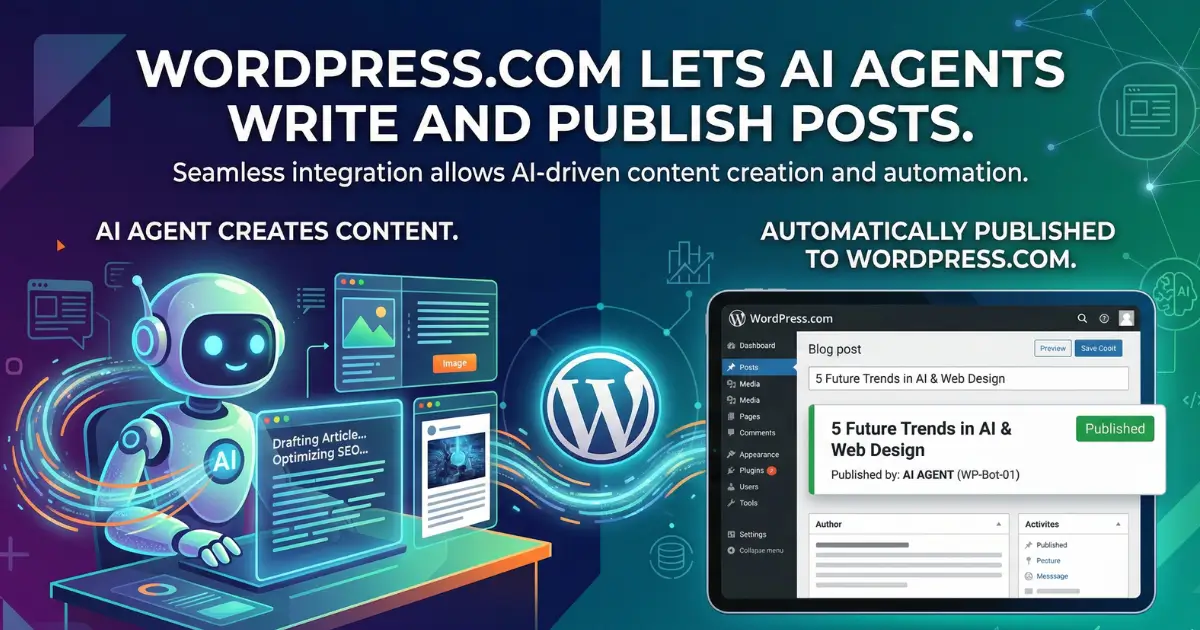
WordPress has taken a decisive step into the age of artificial intelligence. The web hosting platform announced on Friday that it will now allow AI agents to draft, edit, and publish content directly on customers' websites. The agents can also manage comments, update metadata, and organize content using tags and categories all controlled through simple natural language commands. It is a move that could fundamentally reshape how millions of websites are built and maintained, and one that raises serious questions about the future of human-authored content on the web.
From Read-Only to Full Control
The new capabilities build on WordPress com's introduction of MCP support last fall. MCP, or Model Context Protocol, is a standard that allows applications to provide context to large language models. When WordPress first integrated MCP, AI assistants could connect to the platform in a read-only capacity, giving site owners visibility into their content, settings, and analytics through tools like Claude Desktop, Cursor, or VS Code. Now, WordPress is going much further. AI agents are no longer limited to reading; they can actively create and modify website content, turning what was an observation tool into a full content management assistant.
What the AI Agents Can Do
At launch, the range of capabilities is broad. AI agents can create blog posts, landing pages, and About pages from scratch based on a user's natural language description. They can approve, reply to, and clean up comments across the site. They can create, rename, and restructure categories and tags to improve content organisation. They can also fix alt text, captions, and titles to boost search engine optimization. Crucially, the agents are designed to understand the visual identity of a website before they begin creating. They can search a site's theme and design elements, colours, fonts, spacing, and block patterns to ensure that any new content matches the existing look and feel. Every action taken by the AI is tracked through the site's Activity Log, giving owners a complete audit trail.
Human Approval Still Required
WordPress has built in safeguards to prevent fully autonomous publishing. All changes made by AI agents require the user's approval, and posts written by AI are saved as drafts by default. Site owners can choose to hand their agent a draft they have already written and ask it to publish, tag, and categorise the piece along with a meta description. Alternatively, they can describe what they want from scratch and let the agent handle the entire creation process. To enable these features, customers visit a dedicated settings page and toggle on the specific capabilities they want to activate. They then connect their preferred AI client whether Claude, ChatGPT, Cursor, or another MCP-enabled tool and begin working.
The Scale of the Impact
The potential reach of this change is enormous. WordPress as a publishing platform powers over 43 percent of all websites on the internet. The hosted version at WordPress com represents only a fraction of that total, but its network still commands a significant footprint, attracting 20 billion pageviews and 409 million unique visitors every month. If even a modest percentage of these site owners begin using AI agents to generate content, the volume of machine-written material appearing on the web could increase dramatically. For small businesses, freelancers, and solo creators who lack the time or resources to maintain a regularly updated website, the tool could be transformative removing technical barriers and drastically reducing the effort required to keep a site fresh and functional.
A Web Written by Machines
The broader implications are harder to ignore. As AI agents become capable of building and running websites with minimal human involvement, the line between human-authored and machine-generated content will blur further. The web is already grappling with a flood of AI-produced text, and giving agents the power to publish directly to one of the internet's largest platforms will accelerate that trend. Meta recently acquired Moltbook, a social network where AI agents were allowed to post and interact with one another, and Anthropic has experimented with letting an AI write its own blog under human oversight. WordPress com's move sits squarely within this emerging pattern.
Convenience Versus Authenticity
The tension at the heart of this announcement is one the entire tech industry is navigating. AI agents offer undeniable convenience, speed, and cost savings. But a web increasingly populated by machine-written content risks losing the authenticity, nuance, and human perspective that once defined online publishing. WordPress has placed the controls in the hands of site owners, but how those controls are used and how readers respond to the results will shape the next chapter of the internet.