
 Compiled by Amit Kumar
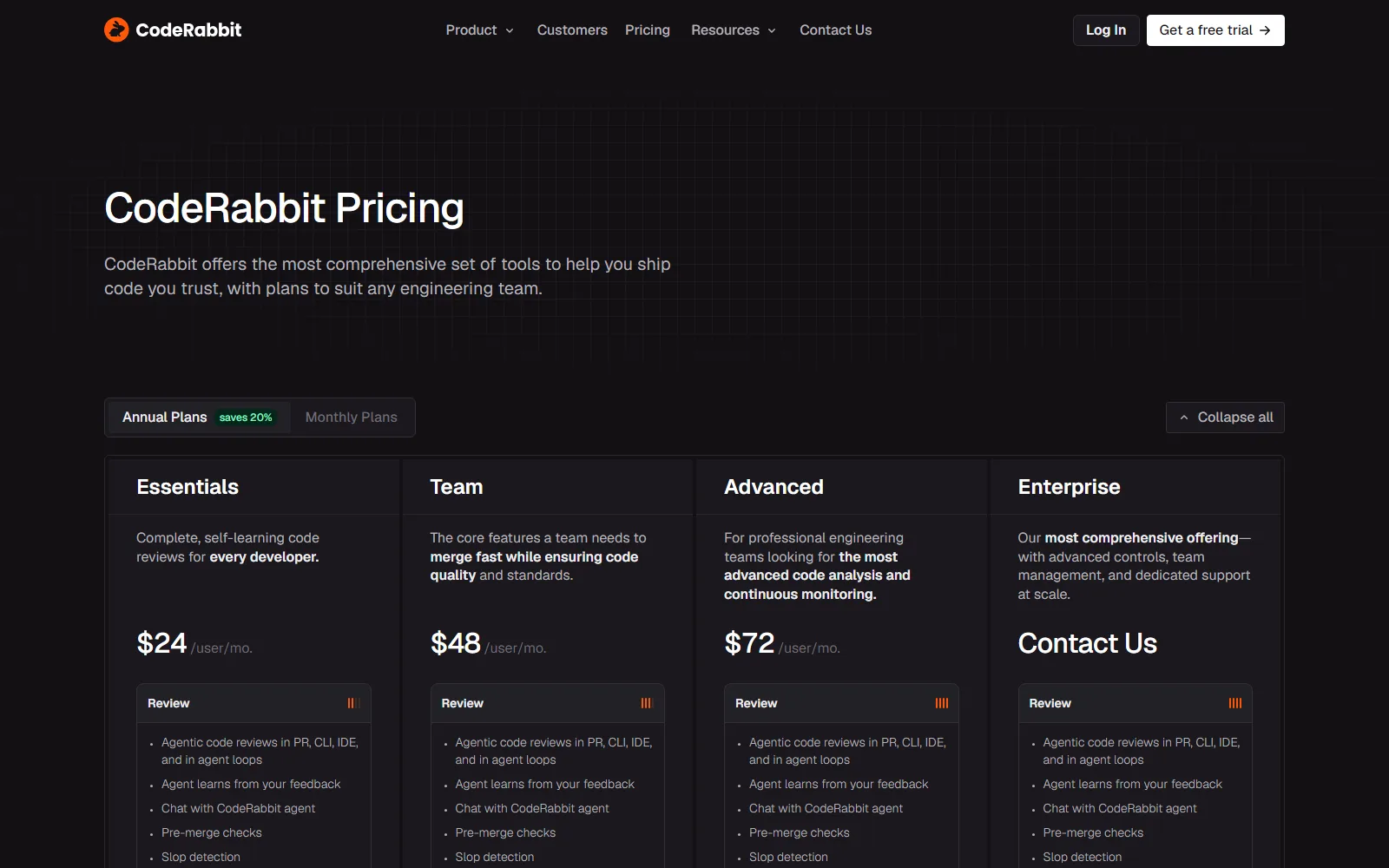
CodeRabbit is an AI code review service that reads every pull request on your Git platform and comments on it. It is built for engineering teams that want a first pass before a person looks. There are four plans: Essentials at $24 per developer a month billed annually ($30 monthly), Team at $48 ($60 monthly), Advanced at $72 per developer a month billed annually, and Enterprise on request. Public repositories are reviewed free.
We read CodeRabbit's pricing page, homepage, documentation, Terms of Service and Privacy Policy on 13 October 2026. Our read: the per-developer price is the small number. The limits are the real story, because Essentials links just 1 repository and allows 5 PR reviews per developer per hour, and you need Team for 5 repositories. The privacy side has a catch too: the no-training promise is explicit for private code, but the Privacy Policy says it does use open-source code to train its systems.
CodeRabbit at a glance
| Question | Short answer |
|---|---|
| Plans | Essentials, Team, Advanced, Enterprise (custom) |
| Billing | Per developer who creates pull requests; cheaper billed annually |
| Free | Free reviews for public repositories; 14-day trial on Essentials, Team and Advanced |
| Platforms | GitHub, GitLab, Azure DevOps and Bitbucket per the docs; GitHub and GitLab on the homepage |
| Read | coderabbit.ai, 13 October 2026 |
What is CodeRabbit used for?
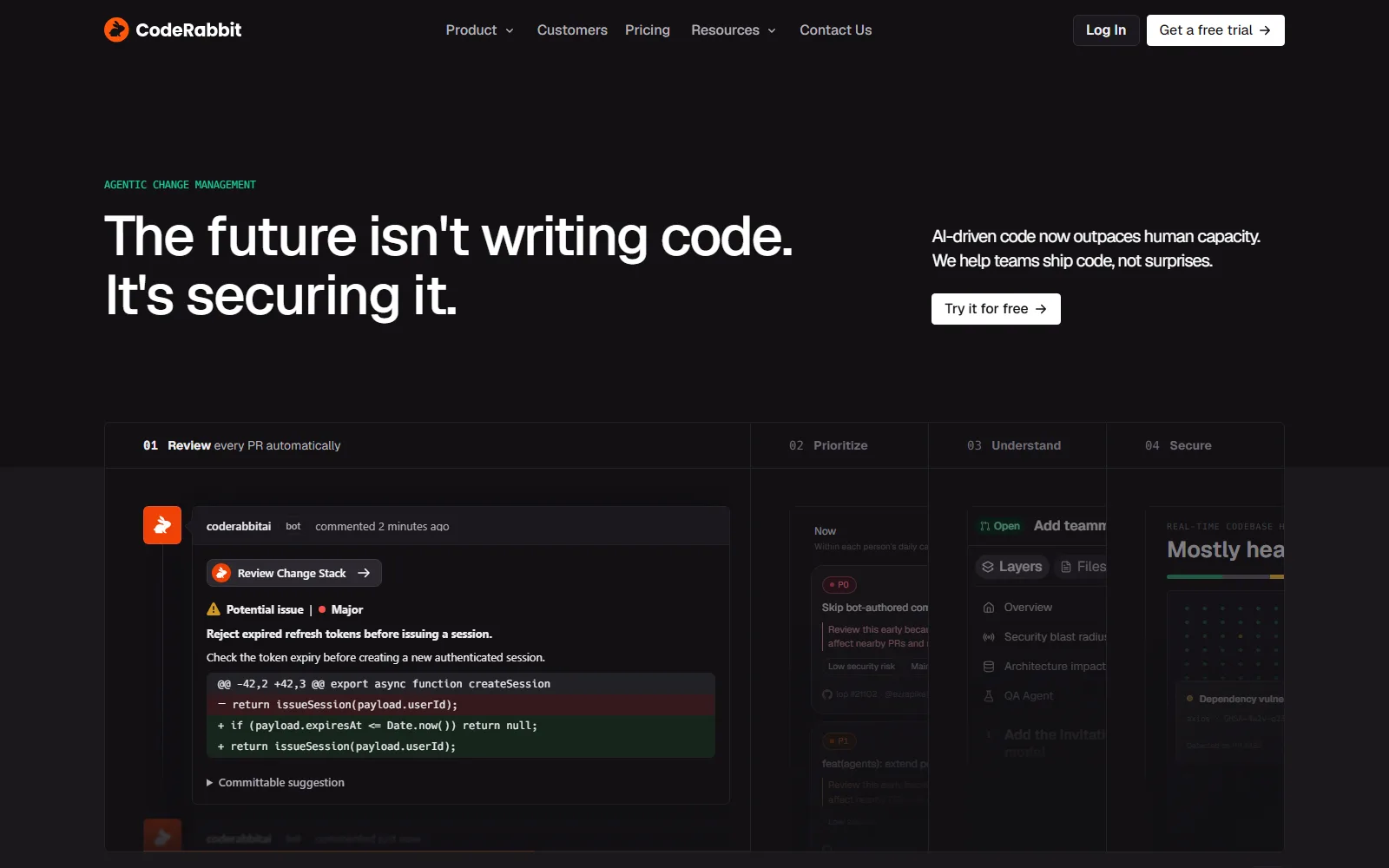
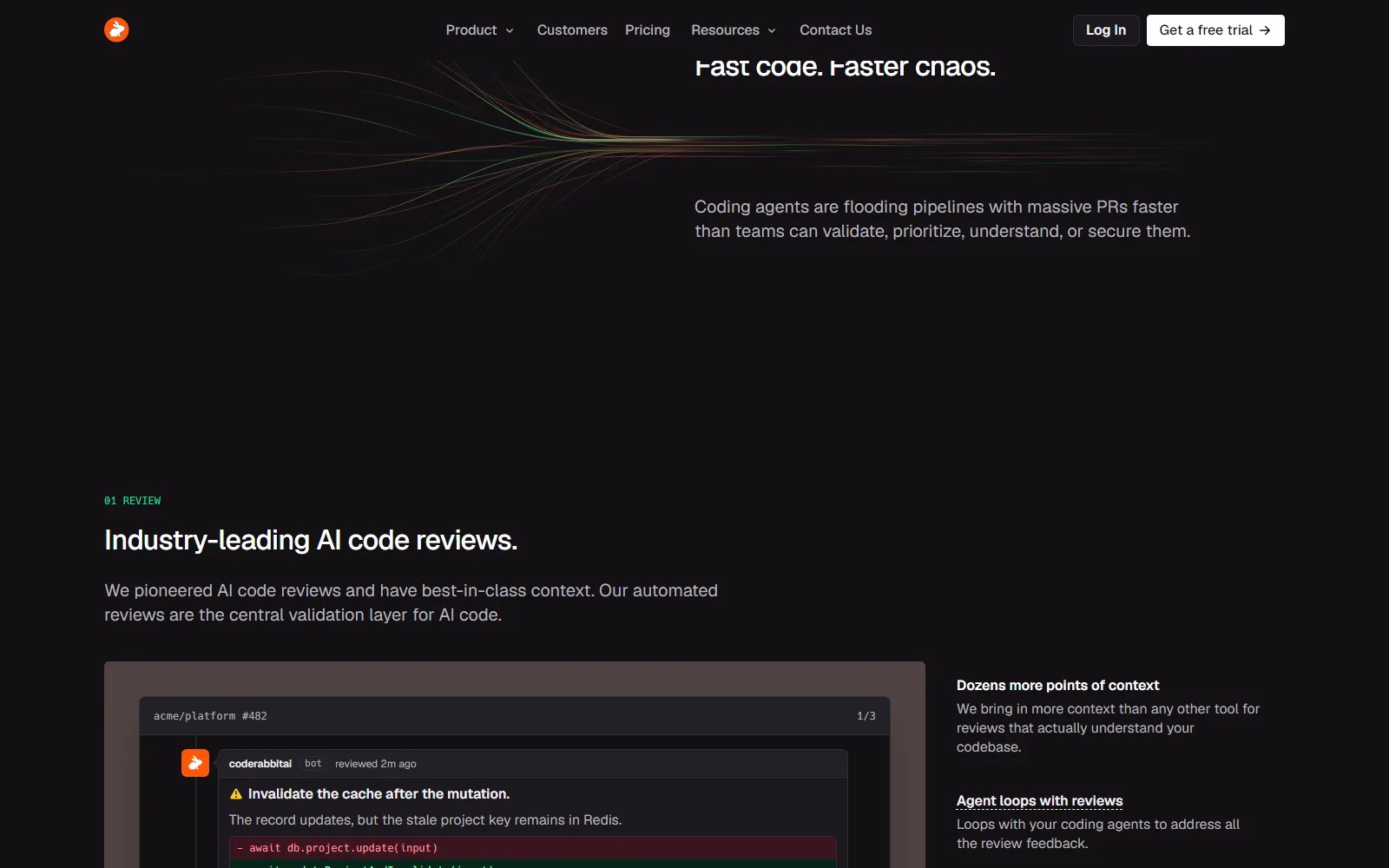
For catching problems in a pull request before a human reads it. The homepage now frames it as governance for agentic development: its headline is "The future isn't writing code. It's reviewing it."
Pull request review
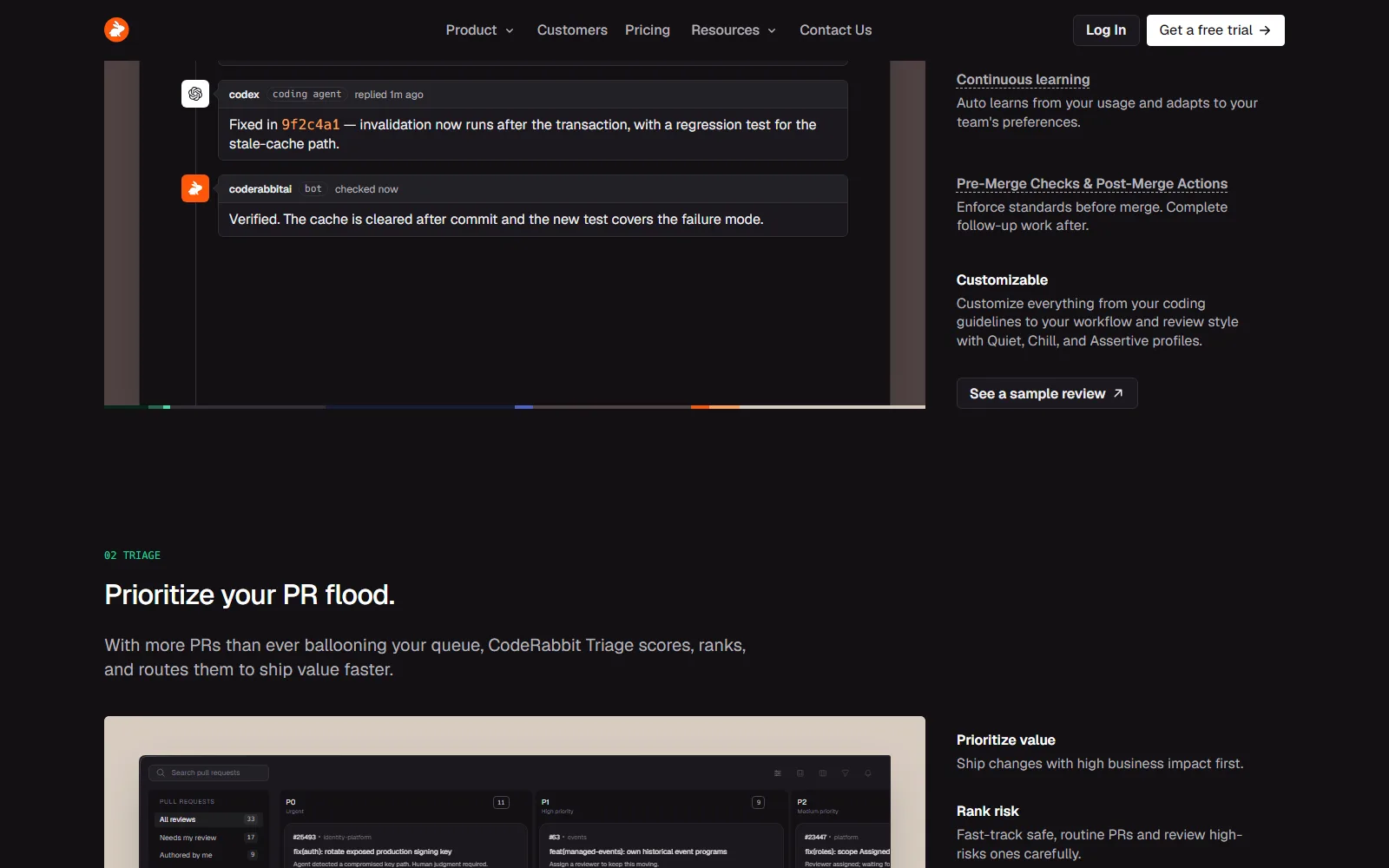
Every plan includes AI review in the PR, the CLI, the IDE and agent loops, plus PR summaries, chat, learnings, one-click fixes, slop detection and pre-merge checks. The docs add IDE extensions for VS Code, Cursor and Windsurf, and a CLI for pre-commit reviews. Review profiles are named Quiet, Chill and Assertive.
Triage and large diffs
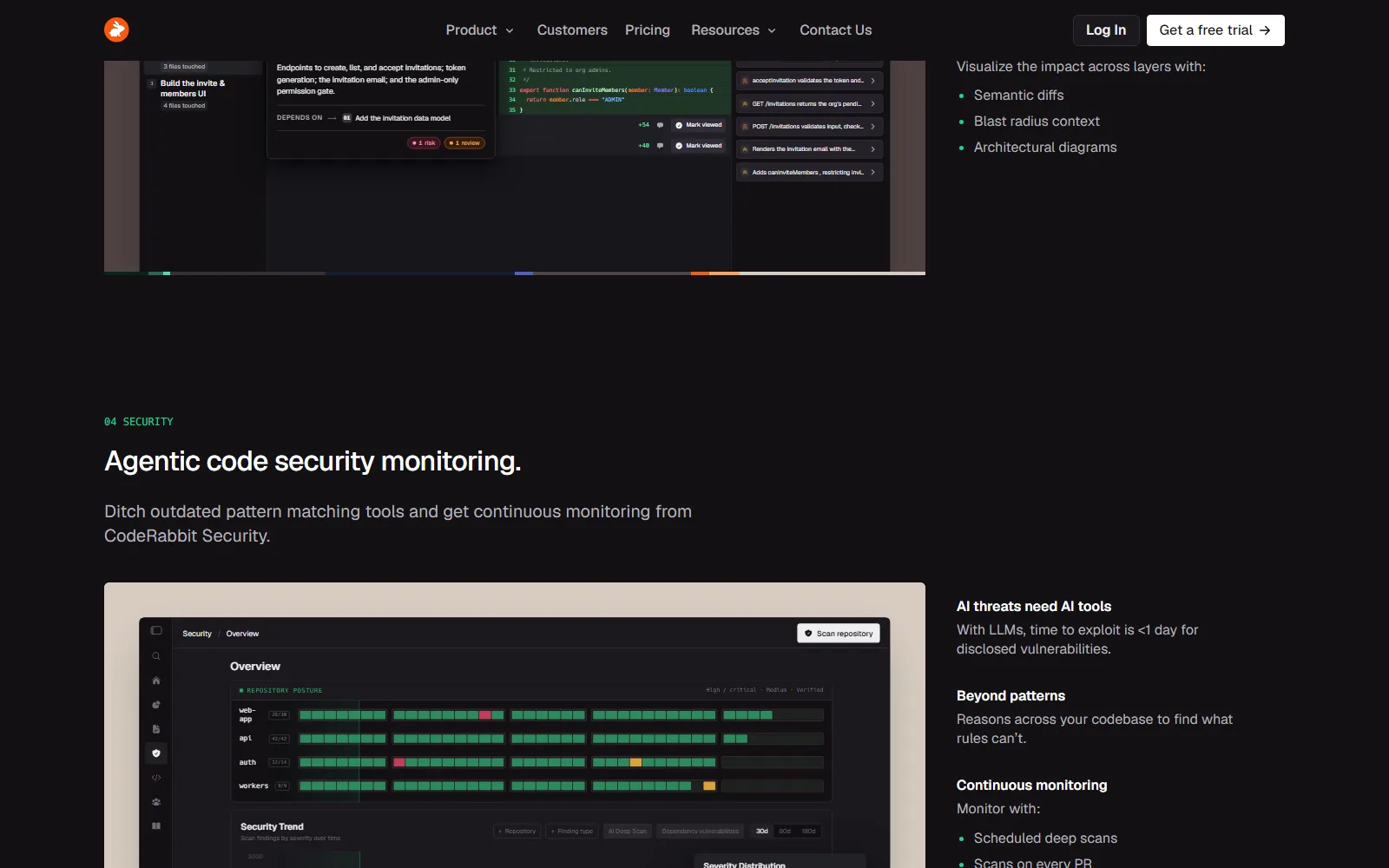
The homepage describes scoring and ranking PRs by business impact and risk, suggesting reviewers and showing a Kanban-style queue. Its Change Stack uses semantic diffs, blast-radius context and architecture diagrams to help with big changes. On the pricing page, the prioritised PR queue and Slack triage start on Team, while blast radius and architecture impact review start on Advanced.
Security
Security code review (static analysis, secrets, dependencies, infrastructure) is on every plan. Continuous monitoring and PR security review with severity, exploitability and reachability need Advanced or Enterprise. Full codebase scans are sold separately as Deep Scan, at variable pricing.
Team features
Team adds automated unit test generation, finishing touches such as conflict resolution and docstrings, and post-merge actions. Jira and Linear integration, usage analytics and spending caps are on all plans. SSO, custom roles, audit logs and API access are Enterprise-only.
Who CodeRabbit is for, and who should skip it
It suits teams opening many pull requests, especially where AI tools write much of the code and reviewers are the bottleneck. Open-source maintainers get the same review free on public repositories.
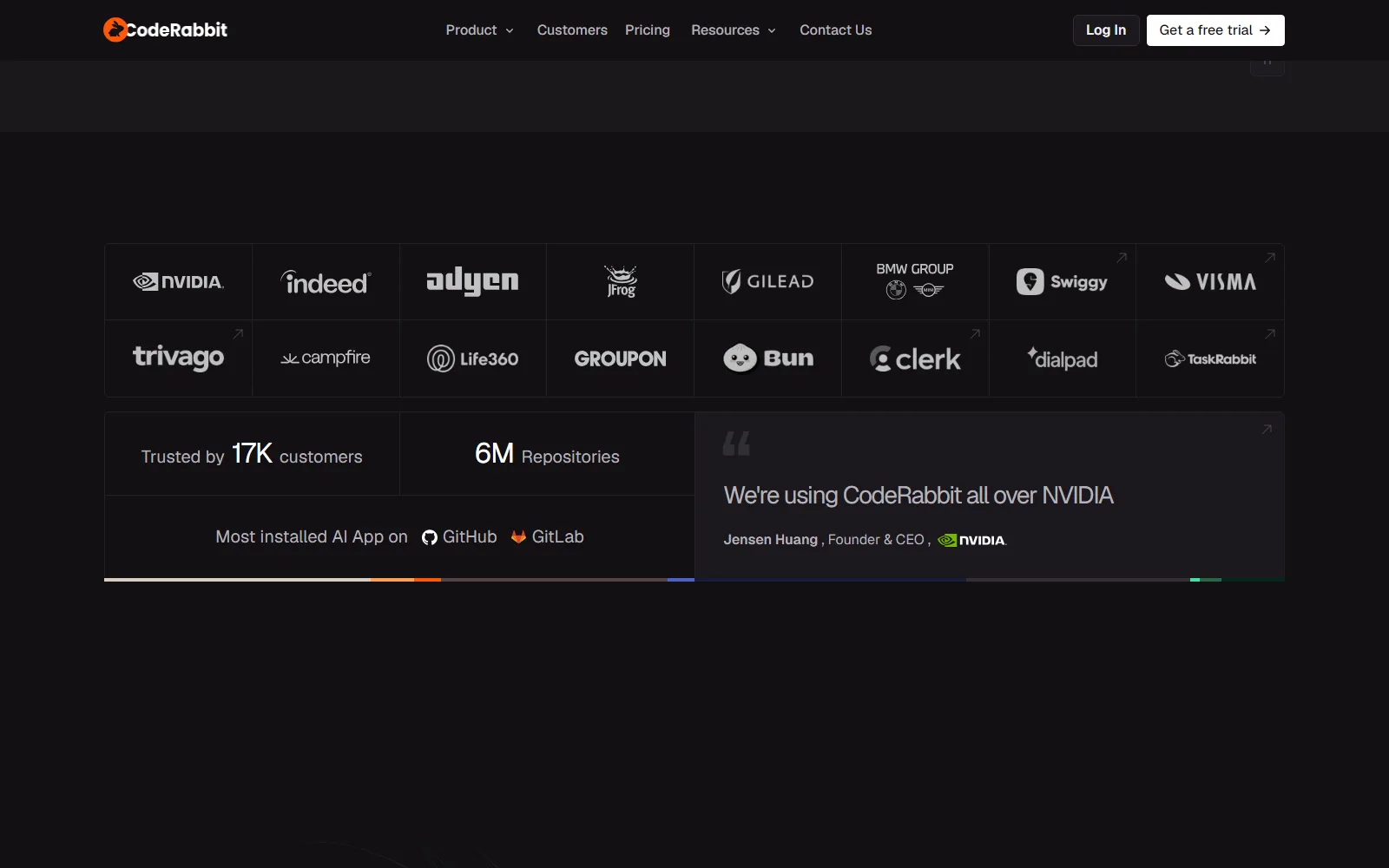
The homepage backs its pitch with customer figures, which are the vendor's own claims: 17K customers and 6M repositories, Swiggy reporting 70% faster PR merges, and Writer reporting 70% suggestion acceptance across 50 PRs a day. Treat them as marketing, not as a measure of what your team would see. What you can check is the plan ladder: a small team on one repository can live on Essentials, a team spread over several repositories needs Team at $48 per developer on annual billing, and anyone who wants security review on every PR is pushed to Advanced.
- Skip it if you have many repositories on a tight budget. Linked repositories are capped at 1, 5, 10 and 20 across the four plans.
- Skip it if you need self-hosting without a sales call. Custom deployment is listed as available on Enterprise only.
- Skip it if open-source code you publish must stay out of training. The Privacy Policy says CodeRabbit uses open-source projects to train its systems.
How much does CodeRabbit cost?
The figures below come from the CodeRabbit pricing page, read on 13 October 2026. The FAQ says you are charged only for developers who create pull requests.
USD per developer, read 13 October 2026, from CodeRabbit pricing (coderabbit.ai/pricing)
| Plan | Monthly | Billed annually | Linked repos | PR reviews per developer per hour | MCP connections |
|---|---|---|---|---|---|
| Essentials | $30 | $24 | 1 | 5 | 5 |
| Team | $60 | $48 | 5 | 8 | 10 |
| Advanced | not stated | $72 | 10 | 10 | 15 |
| Enterprise | Contact sales | 20 | 12 | 20 | |
The FAQ says there is no total limit on the number of pull requests or repositories you can review, and that the hourly allowances fall under a Fair Usage Policy. Beyond the plan, continued usage-based reviews cost $0.25 per reviewed file, billed monthly, and admins can set a monthly spending cap. CodeRabbit Engineer, the agent, costs $0.40 per agent minute after free minutes. Custom pre-merge checks are not on Essentials, then allow 10 per organisation on Team and 20 on Advanced and Enterprise.
The Terms say recurring subscriptions are billed in advance, price changes take effect at the next billing cycle with reasonable notice, and termination does not by itself earn a refund. The exceptions are termination for CodeRabbit's material breach, which refunds prepaid unused fees, and a warranty failure reported within 30 days. Agreements auto-renew unless either side gives at least 45 days' written notice.
A quick sum on the published rates: a team of 10 developers on Team billed annually pays $480 a month, against $600 on monthly billing. That is our arithmetic, and it assumes all 10 create pull requests.
Is CodeRabbit free?
For public repositories, yes: the pricing page promises free reviews forever. For private ones, Essentials, Team and Advanced each offer a 14-day trial, and the Deep Scan and Engineer products show "Try it Free". After that you pay.
How CodeRabbit handles your code
- Training. Section 3.3 of the Terms says neither CodeRabbit nor its third-party AI model providers use customer code to train models. The Privacy Policy names OpenAI and Anthropic as LLM providers and says the same for non-open-source code, with the open-source exception noted above.
- Ownership. You keep all rights in your customer data, including source code, and output is assigned to you if you pay your fees.
- Stored data. The Privacy Policy says CodeRabbit stores data to improve reviews, mostly vector embeddings, and that you can opt out. It gives no retention period for code or embeddings.
- Credentials. It says it has no access to your Git provider credentials, only a token, organisation, username and role. Payments go through Stripe and Chargebee, not stored by CodeRabbit.
- Deletion. Requests are honoured with commercially reasonable efforts, and some residual information may persist after you close an account.
The Terms name CodeRabbit, Inc., are governed by California law and include binding individual arbitration.
Where CodeRabbit's own pages disagree
- The homepage names only GitHub and GitLab, while the docs also list Azure DevOps and Bitbucket.
- The pricing page header shows Essentials at $24, but the FAQ gives $30 monthly, so $24 only applies on annual billing.
- The pricing page gives Advanced at $72 without saying whether that is annual or monthly, and prints no monthly price for it.
- The docs page we read does not state data retention or training, while the Terms and Privacy Policy do.
How CodeRabbit compares with other tools reviewed here
We have not reviewed another code review tool yet. The nearest neighbour is on the other side of the pipeline: Bolt.new writes and deploys apps from a prompt, and CodeRabbit is the kind of checker you would put on the pull requests such code produces. Our Bolt.new review lists Free at $0, Lite at $9 a month and Pro at $25 a month, a different model from CodeRabbit's per-developer billing, so the two are not substitutes.
Sources
- CodeRabbit pricing, coderabbit.ai/pricing, read 13 October 2026
- CodeRabbit homepage, coderabbit.ai, read 13 October 2026
- CodeRabbit documentation, docs.coderabbit.ai, read 13 October 2026
- CodeRabbit Terms of Service, read 13 October 2026
- CodeRabbit Privacy Policy, read 13 October 2026