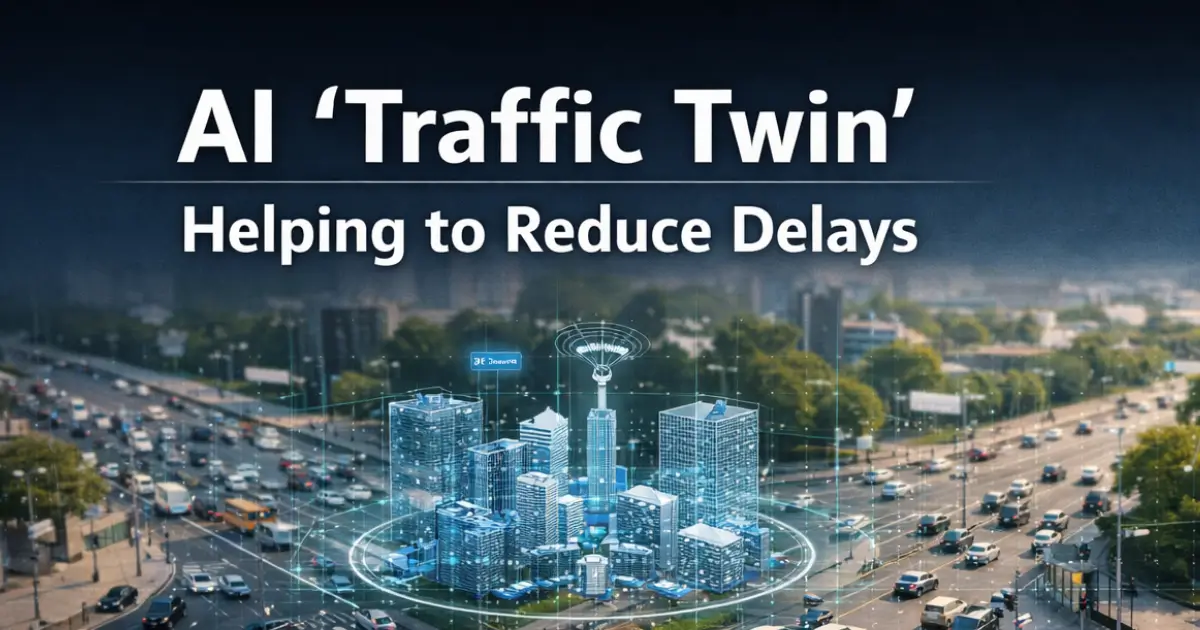
A new artificial intelligence system described as a “traffic twin” is helping transport authorities better manage congestion and reduce delays on busy roads. The technology creates a digital replica of real-world traffic networks, allowing planners to observe how vehicles move across a city and test possible improvements before applying them in real life.
Officials involved in the project say the system is already helping improve the flow of traffic and reduce waiting times at intersections. By analyzing real-time data from sensors and cameras, the AI model can predict congestion and suggest changes to traffic signals or routes.
A Digital Model of the City’s Roads
The traffic twin works by collecting large amounts of data from across the road network, including vehicle movements, traffic light timings and public transport information. This data is used to build a live digital simulation of traffic conditions.
Transport managers can observe how congestion develops in the digital model and test potential solutions. For example, they can examine how adjusting signal timings or prioritizing buses at certain intersections would affect traffic flow.
Because these changes are tested first in the virtual model, authorities can implement strategies with greater confidence and less risk of disruption.
Helping Buses Move Faster
One of the key goals of the technology is to improve the reliability of public transport. Bus services often face delays when traffic lights and road congestion slow their progress.
With the help of the traffic twin system, transport officials can identify areas where buses are frequently delayed and adjust traffic signals accordingly. In some cases, the system can give buses priority at intersections, helping them move through traffic more efficiently.
Early results suggest that the technology is already reducing travel times on certain routes and making bus schedules more reliable.
Predicting Congestion Before It Happens
Unlike traditional traffic systems that rely on fixed signal schedules, the AI model continuously analyzes live traffic data. This allows it to identify patterns and predict congestion before it becomes severe.
If the system detects a potential traffic buildup, it can recommend adjustments to signal timings or alternative routes. These changes can prevent bottlenecks from forming and help keep vehicles moving.
Transport experts say this predictive capability is one of the most important advantages of AI-based traffic management.
Part of a Growing Smart City Movement
The traffic twin project is part of a wider global effort to use artificial intelligence to improve urban infrastructure. Cities around the world are exploring AI tools to manage traffic lights, public transport systems and road networks more effectively.
Supporters of the technology say it could help cities respond more quickly to changing traffic conditions and reduce congestion in densely populated areas.
By improving traffic flow, the system could also reduce fuel consumption and emissions, contributing to broader environmental goals.
Challenges Remain
Despite its potential, implementing a traffic twin system requires significant investment in infrastructure. Cities must install sensors, cameras and communication networks capable of collecting and transmitting large volumes of data.
There are also concerns about the cost of maintaining such systems and ensuring that data is accurate and secure.
Experts say the success of the technology will depend on reliable data and careful coordination between transport authorities, technology providers and city planners.
Looking Ahead
Transport officials believe that digital twin technology could play a major role in the future of urban mobility. As AI systems become more advanced, traffic twins could be used not only to manage daily traffic but also to plan future road projects and transport policies.
For now, early results suggest that the system is already helping reduce delays and improve the efficiency of busy road networks.
As cities continue searching for smarter ways to manage growing traffic demands, AI-powered solutions like traffic twins may become an increasingly important tool for modern transportation planning.