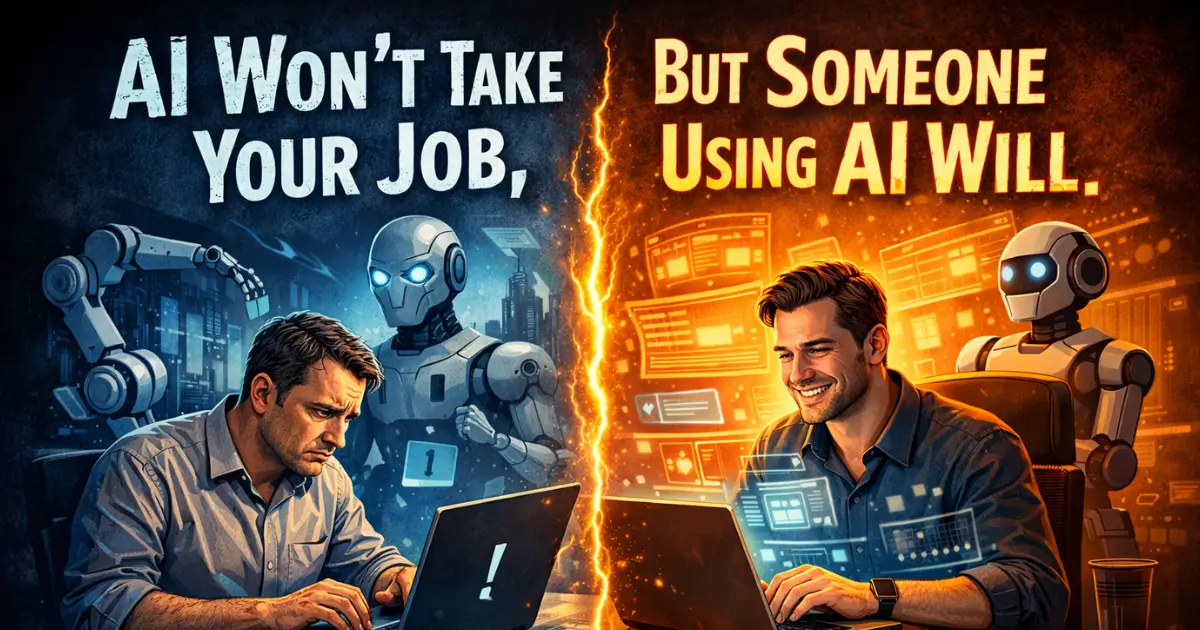
The fear that artificial intelligence will steal your job has become one of the defining anxieties of this decade. But according to LinkedIn CEO Ryan Roslansky and the company's workforce expert Aneesh Raman, the real threat isn't AI itself. It's the person sitting next to you who's already figured out how to use it.
That's the central argument of their new book, Open to Work: How to Get Ahead in the Age of AI, published by Harper Business and excerpted in TIME on March 31, 2026. The message is pointed and timely: stop worrying about robots replacing you and start worrying about falling behind the humans who are learning to work alongside them.
The Skills Shift Is Already Happening
The numbers behind the argument are hard to ignore. According to LinkedIn's own research, 24% of skills required for the average job changed globally between 2015 and 2022. Looking ahead to 2030, the company estimates that figure could jump as high as 70% — driven almost entirely by the accelerating impact of AI.
That means your job is changing whether you change careers or not. And while you're sitting still, your peers are already experimenting. Content writers were among the earliest adopters — by 2023, a third of them on LinkedIn had added AI literacy to their profiles, outpacing even software engineers at 19%. Graphic designers and marketing managers weren't far behind.
By early 2025, AI literacy had become one of the most commonly added skills across LinkedIn's global user base. The message is clear: this isn't a tech industry trend anymore. It's a workforce-wide shift.
The Two-Way Upgrade
What makes AI different from previous waves of technology, Roslansky and Raman argue, is the feedback loop. AI doesn't just automate tasks — it learns from the person using it while that person simultaneously learns how to get more out of the tool.
The authors compare it to riding a bicycle that adapts to you over time — adjusting the pedals, the seat, the handlebars — until the machine feels less like a tool and more like an extension of yourself. Each interaction removes friction and builds fluency, creating a compounding advantage for early adopters.
This is why the gap between AI-fluent workers and everyone else is widening fast. It's not about technical brilliance or access to expensive tools. It's about willingness to experiment early and often.
The Corporate Calculus Has Changed
The urgency isn't just personal — it's institutional. A recent LinkedIn report found that nearly 90% of C-suite leaders say accelerating AI adoption is a critical priority right now, not in some distant future. Even more striking, two-thirds of corporate leaders say they won't consider candidates who lack AI skills.
That's a dramatic shift in the hiring calculus, and it's already reshaping how companies evaluate talent. Employers are no longer just asking what you've done — they're asking how you work, and whether AI is part of that equation.
Leaders who truly understand AI aren't talking about incremental upgrades. They're talking about reimagining work from the ground up. The old model of predictable titles and ladder-like career progression has been eroding for years. AI is simply accelerating a transformation that was already underway.
Don't Fight the Future — Build It
The book's core advice is deceptively simple: engage with AI before you're forced to, adapt by focusing on what you can control, and become irreplaceable by leaning into distinctly human skills.
Roslansky and Raman aren't dismissing the real anxieties around job displacement. They acknowledge that the landscape is shifting fast and that not everyone will benefit equally. But their argument is that passivity is the real danger. The workers getting ahead aren't the most resourced or the most technical — they're the ones who experiment with intention before they have to.
Technology doesn't just replace old work, the authors argue. It transforms what work can be. Those who resist change see only what might be lost. Those who adapt early get to shape what comes next.
The future of work isn't written yet. But the people writing it are already using AI to do it.