
 Reviewed by Amit Kumar
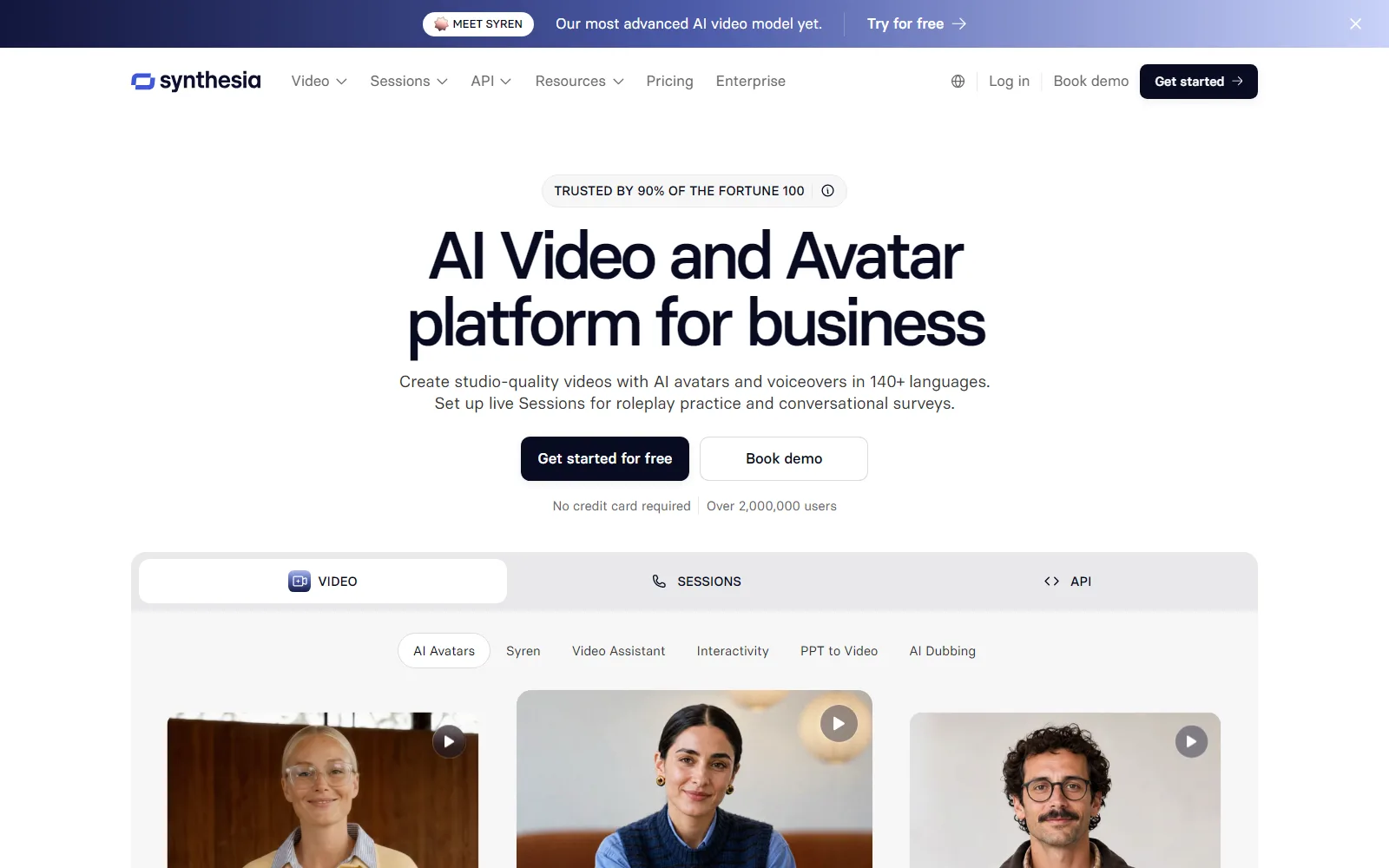
Synthesia is an AI video platform from Synthesia Technologies, a London company. You write a script, pick a presenter, and it renders a video of that presenter saying your words. You can use a stock avatar, a personal avatar trained on footage of you, or AI dubbing that re-voices a video you already have. The Basic plan is free for 10 watermarked minutes a month, Starter is $29 a month ($18 billed yearly) and the next tier is $89 a month ($64 billed yearly).
Fact-checked reviewVideos

Synthesia Review: Pricing, Credits and Free Plan
Script-to-video with AI avatars and dubbing
Quick verdict
The pricing page is easy to misread. Starter is allocated the same 1,200 credits a month as the free plan in Synthesia's knowledge base, so $29 buys no extra video, only the removal of the watermark, a bigger avatar library and guest seats. And the bigger plan raises the cost per finished minute instead of lowering it. Credits also never roll over, so an unused month is paid for and lost.
Best forTraining and onboarding modulesOne script in many languagesDubbing existing video
How we reviewed Synthesia
Every Synthesia plan, price and limit in this review comes from Synthesia's own pages, checked on , and links to the page it came from. All 4 sources are listed at the end. A review cannot be bought. How these reviews are written
On this page
Synthesia at a glance
Everything here comes from Synthesia's own pricing page and knowledge base, read on 24 September 2026, and from its Product Hunt listing. We read the pricing page again on 13 October 2026 and found the $89 tier now named Pro, where our earlier reading called it Creator, so this review uses both names and notes where the page now differs. On Product Hunt, Synthesia first appeared on 17 September 2020 and finished #1 of the day, #1 of the week and #2 of the month. Its Expressive AI Avatars release took #1 of the day again on 3 May 2024. It now carries a 3.9 rating from 24 reviews, which is worth knowing before you commit to an annual plan.
What is Synthesia used for?
Course and onboarding modules
The core case, and the one the plan shapes fit. A policy document becomes a narrated module with a consistent presenter, and a correction means editing a line of script instead of rebooking a studio. Guest seats let a subject-matter expert check the script without buying a seat.
One script, many languages
All self-serve plans carry 160+ languages, so the same module can go to every region from one source script. This is where Synthesia earns its price against a camera: the second language costs credits, not another shoot.
Re-voicing video you already have
AI dubbing bills at 25 credits a minute without lip sync and 50 with it, against 120 to generate a minute. If your back catalogue is the asset, dubbing goes roughly five times further on the same plan than generating from scratch.
Product and release notes at a steady cadence
Ten minutes a month on Starter is about right for a short monthly update, and 30 on the $89 tier covers a weekly one. Past that the arithmetic stops favouring Synthesia and an Enterprise quote becomes the honest option.
Sales and support answers that get reused
Short avatar clips answering recurring questions, embedded in help articles or sequences. Bulk personalization exists for the named-prospect version of this, at 90 credits a minute.
How does Synthesia work?
You give it source material, pick a presenter and it renders. In Synthesia's own words, you can generate a video "from a script, PowerPoint, document, link, or prompt, combining AI avatars, voices, motion graphics, and generated media." That list matters. Most corporate video is not a script written from nothing but a deck, a policy PDF or a help page turned into something watchable, which is why Synthesia lands with training teams and not with video editors.
The three kinds of presenter
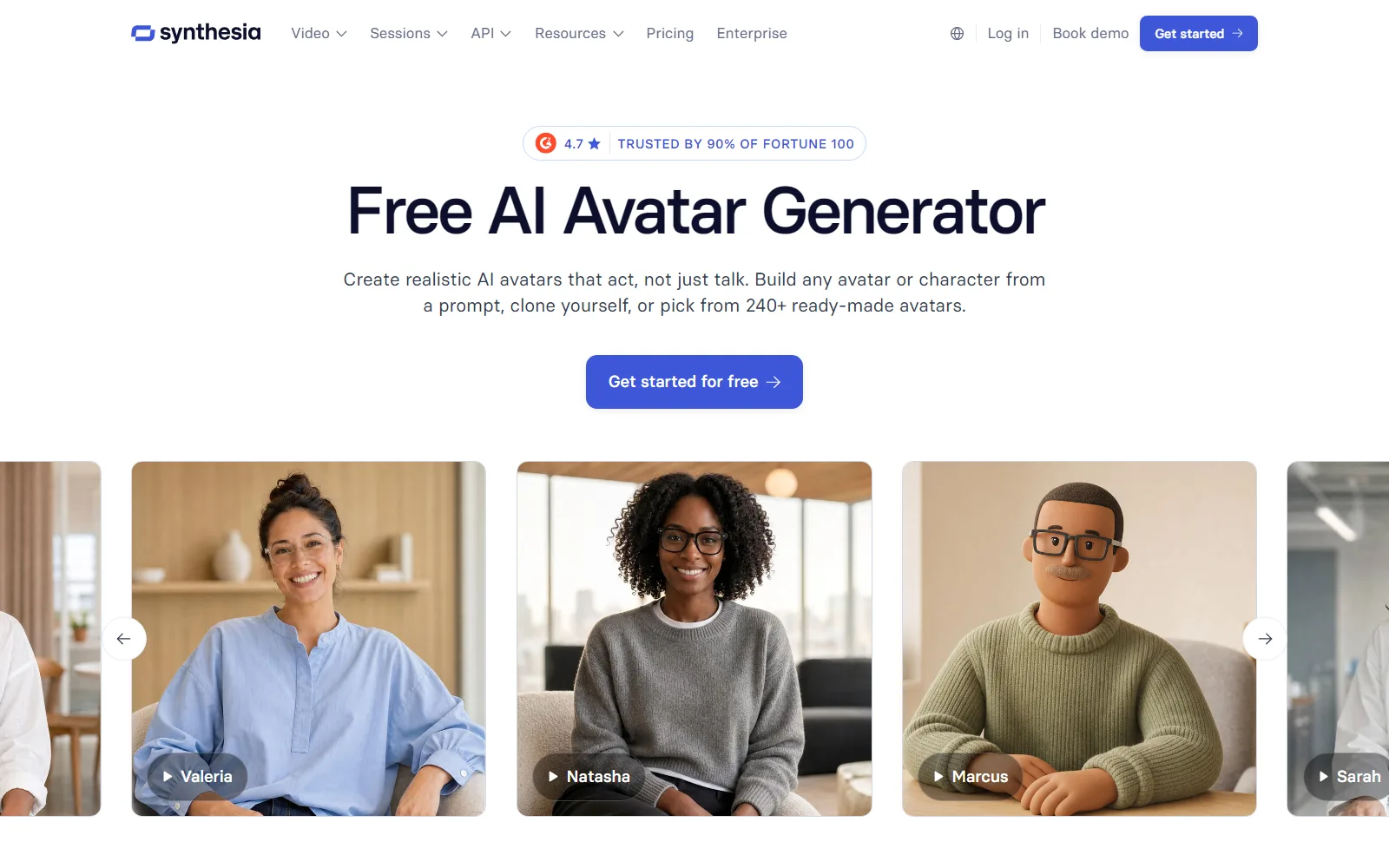
- Stock avatars. 240+ at the top of the range, 9 on the free plan, 125+ on Starter and 180+ on the $89 tier. No setup; pick one and type.
- Custom avatars, which Synthesia calls "a digital twin of yourself". Five personal avatars are included on the $89 tier (our earlier reading named it Creator) and they are unlimited on Enterprise. The Avatar Builder route bills 14 credits an avatar.
- AI-generated avatars, presenters that do not correspond to a real person.
Once a video exists you can re-brand it, add interactivity and export, or push the same script through AI dubbing to produce the other language versions.
What Synthesia says about consent and safety
Synthesia describes its controls as "consent-based avatars, content moderation, and a public red-team test conducted with Humane Intelligence and NIST". Consent-based means you cannot make an avatar of someone who has not agreed to it, the relevant guardrail when the product is synthetic presenters. That is Synthesia's own description of its process, not an independent audit finding. If your organisation needs an assurance report rather than a policy statement, that is an Enterprise conversation.
Is Synthesia free?
Yes. The Basic plan costs nothing, needs no card, and gives 1,200 credits a month, which is 10 minutes of finished video. Free videos carry a Synthesia watermark, and the avatar library is cut to 9 of the 240-odd Synthesia offers. There is no cap on how many videos you make, only on total minutes.
- Allowance: 1,200 credits a month. At Synthesia's published rate of 2 credits a second, that is exactly 10 minutes of video.
- Spend it how you like: the same 1,200 credits buy 10 minutes of video, 10 minutes of AI dubbing, or 25 AI-generated assets. Those are Synthesia's own conversions.
- Avatars: 9. No personal avatar.
- Seats: 1 editor, no guests.
- Languages: 160+, the same as the paid self-serve plans.
- Support: AI chat only.
Ten minutes a month is enough to judge whether the avatars clear your bar. It is not enough to run a channel, and the watermark rules out client work. Stay here if you publish under ten minutes a month and can live with the watermark.
How much does Synthesia cost?
Starter is $29 a month, or $18 a month billed yearly. The next tier is $89 a month, or $64 a month billed yearly. Basic is $0 and Enterprise is quoted by sales. The pricing page we read on 13 October 2026 shows the same prices but names the $89 tier Pro.
Synthesia plans, in USD. Prices checked 13 October 2026; credit figures are from the knowledge base as read on 24 September 2026.
| Plan | Monthly | Billed yearly | Credits | Video a month | Avatars and seats |
|---|---|---|---|---|---|
| Basic | $0 | $0 | 1,200 a month | 10 minutes, watermarked | 9 avatars, 1 editor |
| Starter | $29 | $18 | 1,200 a month, or 14,500 a year | 10 minutes | 125+ avatars, 1 editor + 3 guests |
| Creator (listed as Pro on 13 October 2026) | $89 | $64 | 3,600 a month, or 44,000 a year | 30 minutes | 180+ avatars, 5 personal, 1 editor + 5 guests |
| Enterprise | Sales | Sales | Custom | Unlimited minutes | 240+ stock, unlimited personal |
The credit column needs a caution. The pricing page as we read it on 13 October 2026 shows different credit figures from the ones above, and they were not consistent with each other, so confirm the current allowance with Synthesia before buying. The unit-cost arithmetic below uses the 24 September figures.
Per finished minute, that is $2.90 on Starter monthly, $1.80 on Starter yearly, $2.97 on the $89 tier monthly and $2.13 on it yearly, our arithmetic: plan price divided by the minutes the credits buy. It runs against the usual pattern. On most tools the bigger plan lowers the unit price, but here it raises it on both billing terms. Moving up buys avatars, personal avatars and guest seats, not cheaper video.
The thing the pricing page does not spell out
Synthesia's knowledge base allocates Starter 1,200 credits a month on monthly billing, the identical allowance to the free Basic plan. The pricing page quotes Starter as "14,500 credits/year", which reads like a bigger number than Basic's "1,200 credits/month". Annualised, Basic is 14,400, within 100 credits, or under a minute of video.
So on Starter you are not buying more video than the free plan gives you. You are buying the removal of the watermark, 125+ avatars instead of 9, and three guest seats. Those may well be worth $18 a month, but go in knowing that is the trade, because the plan table does not present it that way.
How do Synthesia credits work?
Every second of video costs 2 credits, so a one-minute video costs 120 credits. Other features bill at their own rates, from Synthesia's knowledge base, checked 24 September 2026:
| What you are doing | Credits |
|---|---|
| Video generation | 2 a second (120 a minute) |
| AI dubbing with lip sync | 50 a minute |
| AI dubbing without lip sync | 25 a minute |
| Bulk personalization | 90 a minute |
| API | 75 a minute |
| Interactive Avatar API | 10 a minute |
| Avatar Builder | 14 an avatar |
| AI images | 3 to 9 each, by model |
| Video assets | 18 to 192, by model |
Credits do not roll over. Synthesia's wording: "credits for usage are reset at the start of the billing period and there is no accumulation of unused credit." Upgrading mid-cycle does not bank what you had either: unused credits from the previous plan do not carry over, and the balance resets to the new plan's full amount.
Two consequences. Dubbing is much cheaper than generating: re-voicing a minute of existing footage without lip sync costs a fifth of generating a minute from a script, so if you already have video, dubbing stretches the same plan a long way. And because nothing accumulates, a month you skip is a month you paid for and lost.
Synthesia vs HeyGen
They solve the same problem and split on scope: Synthesia is built around corporate training and internal comms, HeyGen around marketing, social and translation volume. The difference shows in the free tiers. Synthesia gives 10 watermarked minutes a month with no cap on the number of videos. HeyGen gives up to three watermarked videos a month, each capped at one minute, and its terms restrict free output to personal, non-commercial evaluation.
It also shows at the bottom of the paid range. Synthesia's cheapest paid plan is $18 a month billed yearly for 10 minutes; HeyGen's starts at $24 billed yearly and runs on a credit pool you can spend on higher-end avatar engines. A handful of polished training modules fit Synthesia's structure, while many short pieces or a back catalogue to translate fit HeyGen's. Neither publishes a straightforward price per minute, and both sell the plan rather than the output, so work out what a finished minute costs you before you sign an annual term.
Two other tools cover narrower jobs. Descript suits a real person on camera, since it edits video by editing the transcript. Vozo AI is the dedicated option if lip-synced translation of existing footage is the whole job and you do not need avatar generation.
Who Synthesia suits, and who it does not
It suits an L&D or internal-comms team that turns documents into video on a schedule, needs 160+ languages from one script, and cares more about consistency and approvals than cinematic quality. The guest seats on Starter and the $89 tier exist so a subject-matter expert can review without a paid seat.
It does not suit anyone who needs a lot of finished video cheaply. At $1.80 to $2.97 a minute, an hour of output costs between roughly $108 and $178 by our arithmetic, before anyone edits anything. Nor does it suit work where the presenter has to carry real emotion. And if you are weighing the annual term, weigh the Product Hunt score with it: a 3.9 from 24 reviews is a soft reception, against 5.0 from 315 for Fathom and 4.9 from 160 for Raycast.
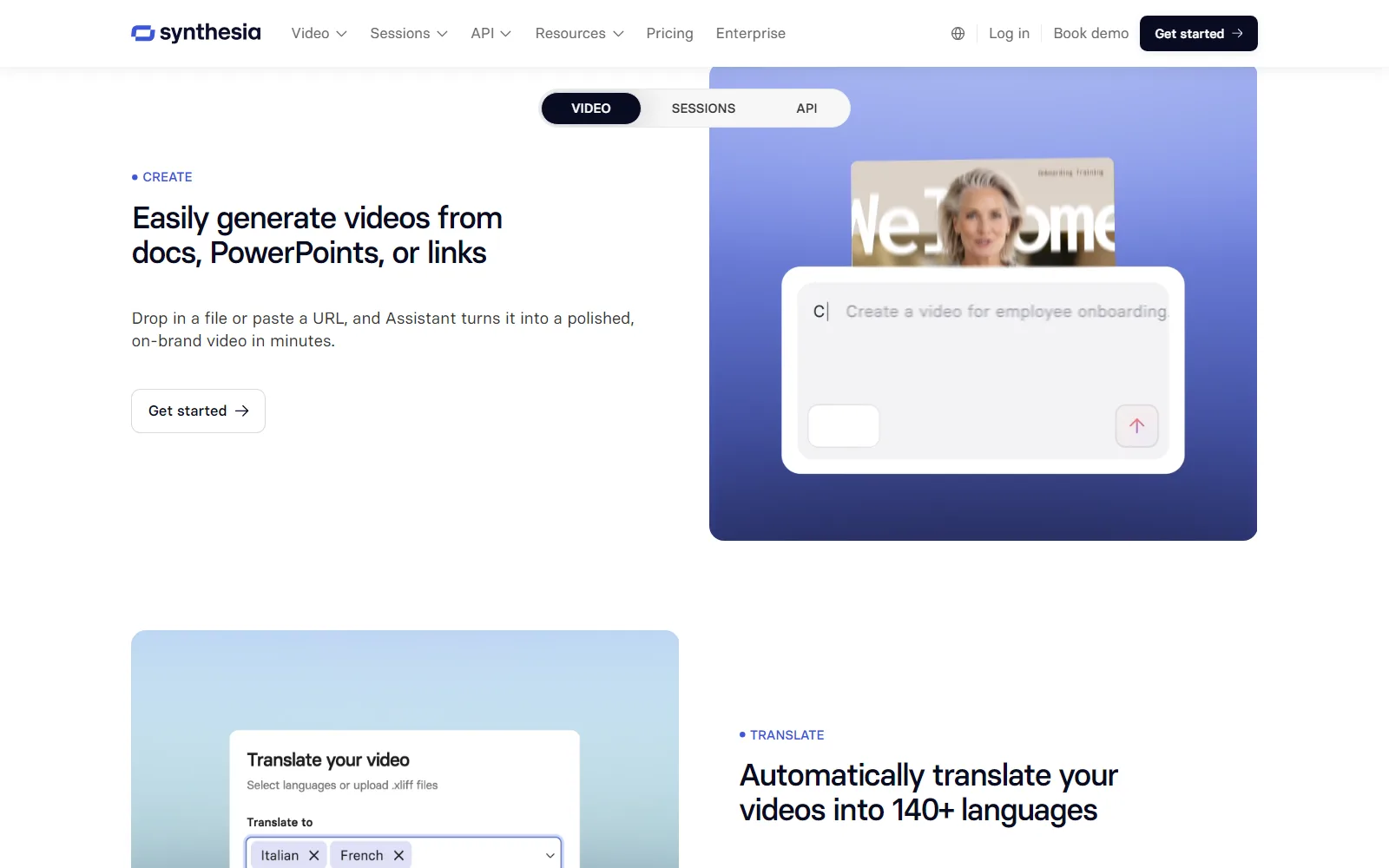
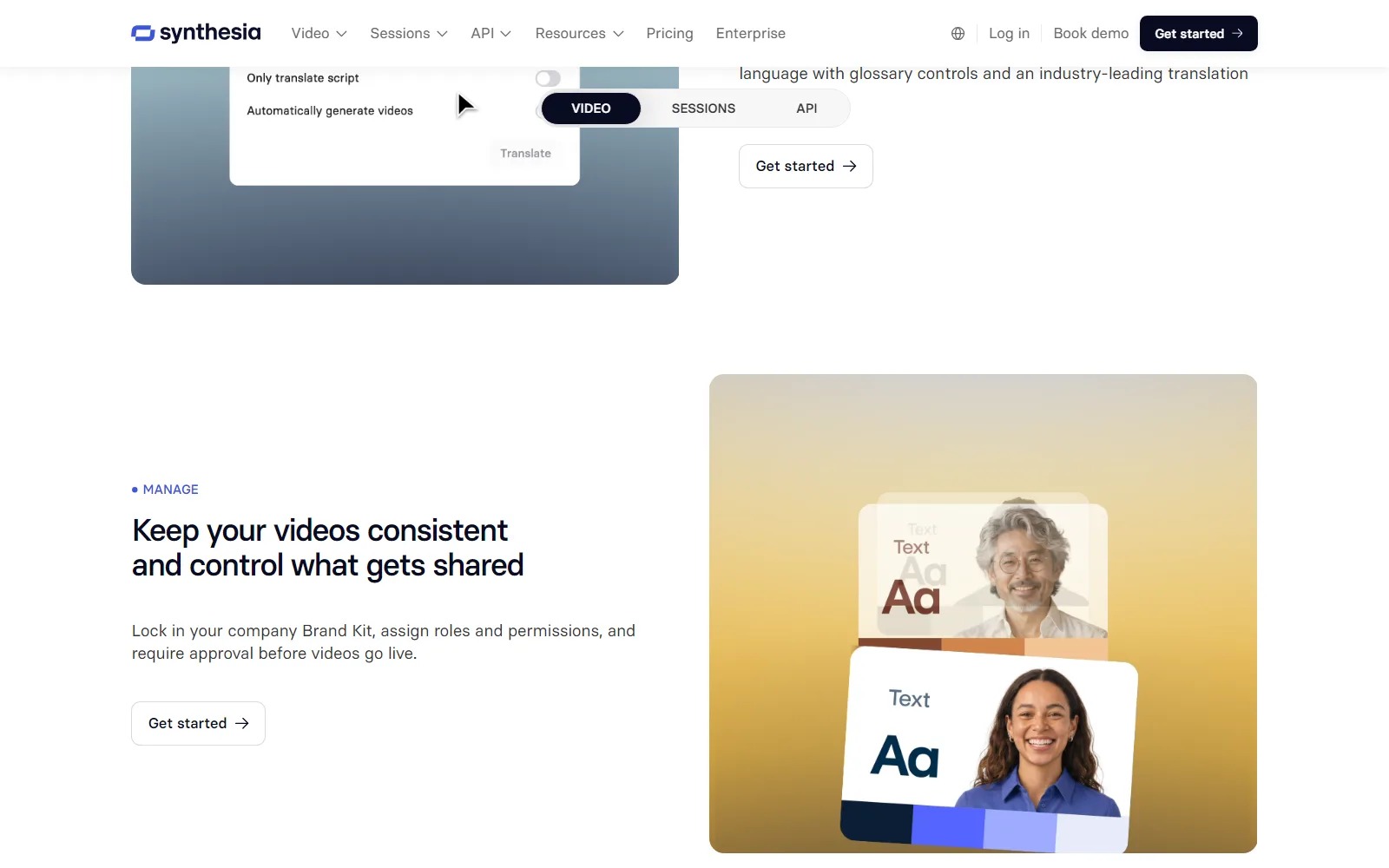
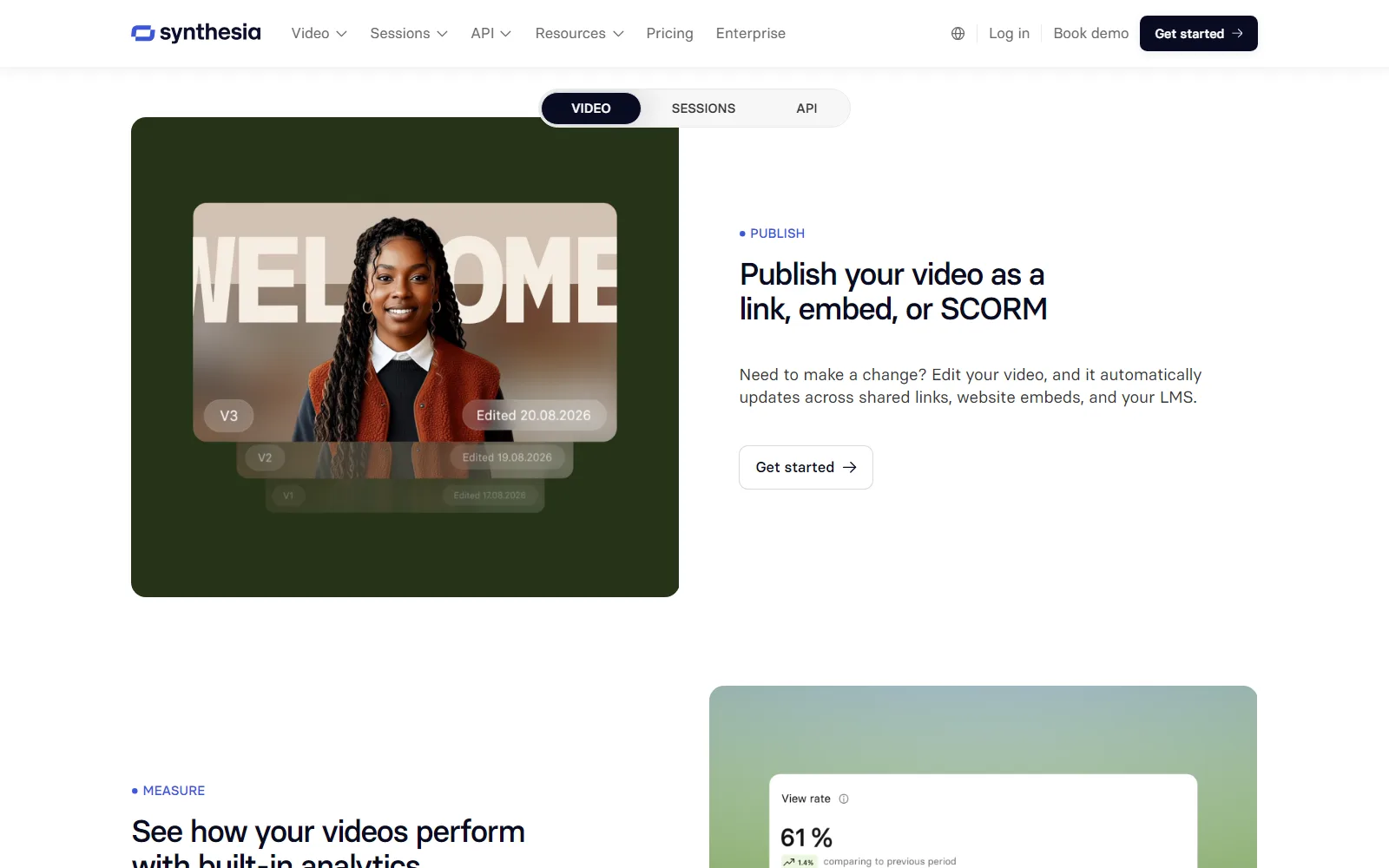
Synthesia screenshots
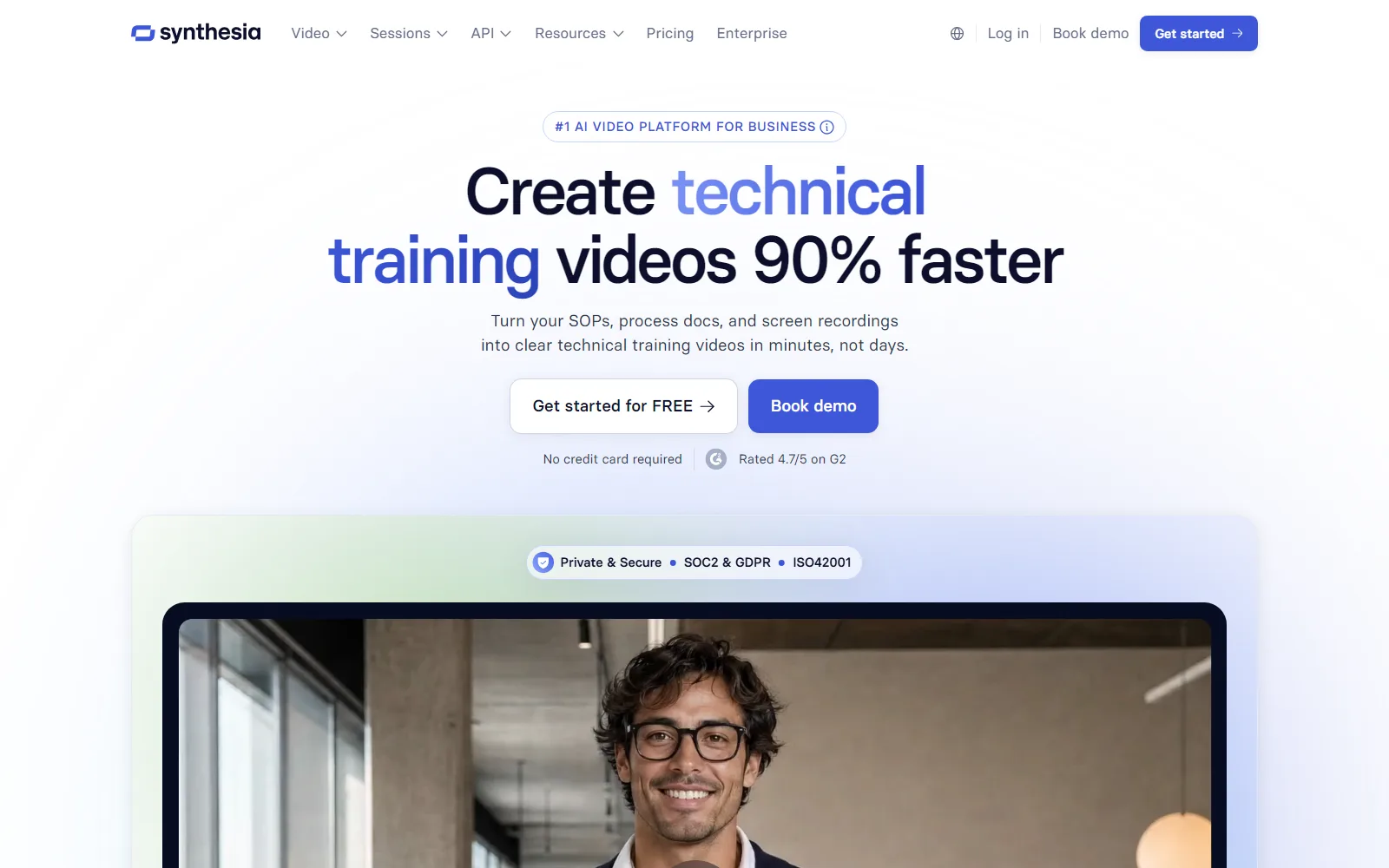
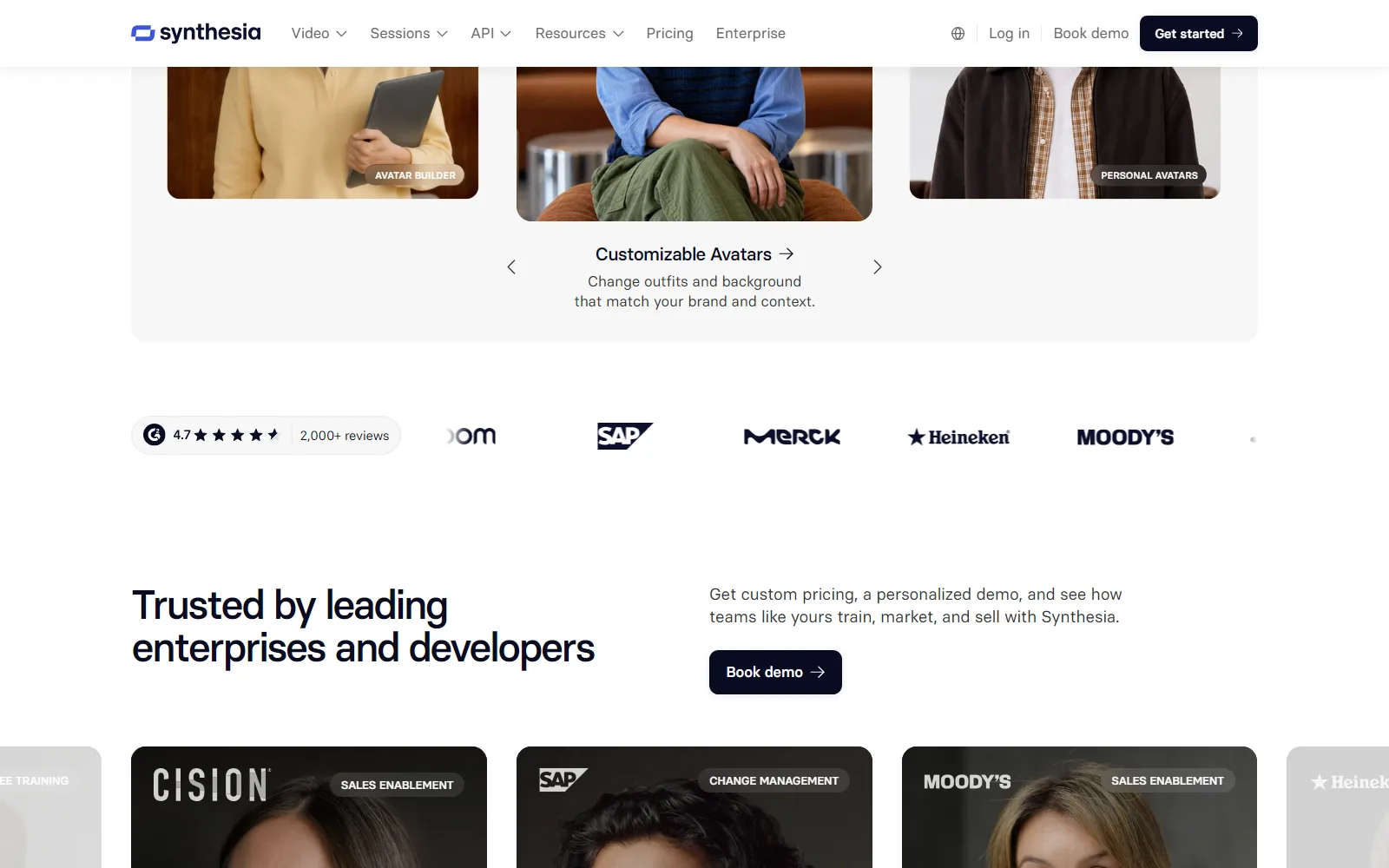
More of Synthesia's own website, captured . Each caption says which page it shows.
Sources
Figures were read from the pages below on 24 September 2026. The pricing page was read again on 13 October 2026.
- Synthesia pricing: plan prices, credit allowances, avatar counts, seats and the 140+ / 160+ language discrepancy (Enterprise lists 140+, the cheaper plans 160+)
- Synthesia knowledge base: credits on self-serve plans: the 2-credits-a-second rate, per-feature rates, the no-rollover rule and the per-plan monthly allocations
- Synthesia knowledge base: what is Synthesia: supported inputs, avatar types, the watermark on the Basic plan, and the consent and red-team statement
- Synthesia on Product Hunt: the date it first appeared, daily/weekly/monthly rankings, rating and review count
Synthesia pros and cons
Pros
- A usable free plan: 10 minutes a month, no card, no cap on the number of videos
- 160+ languages on every self-serve plan, so translation costs credits instead of another shoot
- Dubbing is far cheaper than generating: 25 credits a minute without lip sync against 120
- Credit rates are published per feature, so the cost of a project can be calculated before you start
- Guest seats on Starter and the $89 tier let reviewers in without paying for editor seats
Cons
- Starter is allocated the same 1,200 credits a month as the free plan, so $29 buys no extra video
- The $89 tier costs more per finished minute than Starter, so moving up raises the unit price
- Credits never roll over: an unused month is simply paid for and lost
- Free output is watermarked and limited to 9 of the 240-odd avatars
- Enterprise lists 140+ languages while the cheaper plans list 160+, and the page does not explain why
- Its Product Hunt rating is a soft 3.9 from 24 reviews
The bottom line on Synthesia
Best for
- Training and onboarding modules
- One script in many languages
- Dubbing existing video
Facts checked
Visit SynthesiaSynthesia FAQ
Is Synthesia free?
Yes. The Basic plan costs nothing and needs no card. It gives 1,200 credits a month, which at 2 credits a second is exactly 10 minutes of finished video. Free videos carry a Synthesia watermark and you get 9 avatars; there is no cap on the number of videos, only on total minutes.
How much is Synthesia per month?
Starter is $29 a month, or $18 a month billed yearly. The next tier is $89 a month, or $64 billed yearly; the pricing page named it Pro on 13 October 2026 where our earlier reading said Creator. Basic is free and Enterprise is quoted by sales.
How many credits does a one-minute Synthesia video cost?
120 credits. Synthesia's knowledge base states that each second of video uses 2 credits. AI dubbing is 50 credits a minute with lip sync and 25 without, the API is 75 a minute, and an Avatar Builder avatar is 14 credits.
Does the Starter plan give more video than the free plan?
On monthly billing, no. Synthesia's knowledge base allocates Starter 1,200 credits a month, the same as free Basic, and 14,500 for the year on annual billing against 14,400 if you annualise Basic. Starter buys the removal of the watermark, 125+ avatars instead of 9, three guest seats and human support.
Do Synthesia credits roll over?
No. In Synthesia's words, credits for usage are reset at the start of the billing period and there is no accumulation of unused credit. Upgrading mid-cycle does not preserve them either: the balance resets to the new plan's full amount.
Synthesia or HeyGen?
Synthesia is shaped for corporate training and internal communications, with 160+ languages, guest seats and 10 free watermarked minutes a month. HeyGen suits marketing, social and translation volume; its free plan allows up to three one-minute watermarked videos a month, for non-commercial evaluation. A few long modules favour Synthesia, many short pieces favour HeyGen.
Alternatives to Synthesia
 HeyGenFree plan + paid upgradesAI video platform for talking-avatar videos made from a script and lip-synced translation of existing videos.
 Vozo AIFree plan + paid upgradesAI video dubbing, lip-sync and on-screen text translation
 AIVeedFree plan + paid upgradesPay-per-use AI video and image credits across many models
 AnimeArcPaid onlyTurns one story idea into an AI anime drama
 DescriptFree plan + paid upgradesEdit video and podcasts by editing the transcript

Reviewed by
Amit Kumar
Full Stack AI Strategist
Amit Kumar runs MPAT, where he reviews AI tools and writes its guides. When he covers a tool he checks its pricing, credits and plan limits against the vendor's own pages, so readers know what a plan includes before they pay. He also leads the site's SEO and AI-focused content strategy.