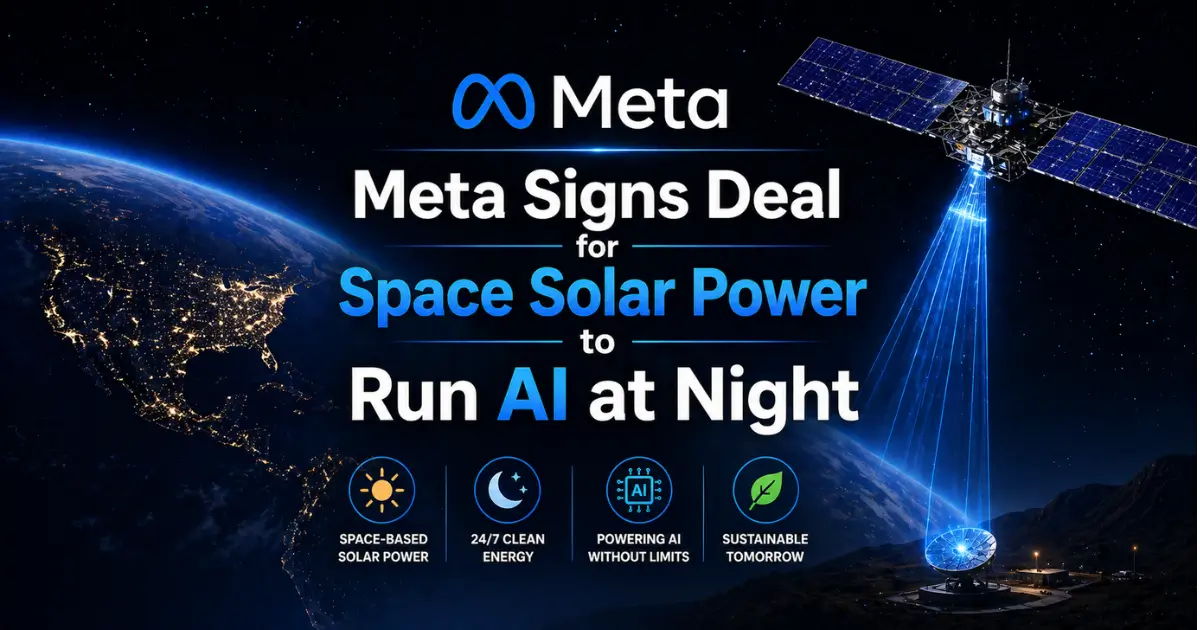
Meta has signed a deal with startup Overview Energy to receive up to 1 gigawatt of solar power beamed from space using a fleet of 1,000 satellites that would keep the company's AI data centers running even after the sun goes down. The agreement is the most ambitious energy deal yet in an AI industry that is rapidly exhausting every power source on Earth.
How Space Solar Works
Overview Energy, a four-year-old startup based in Ashburn, Virginia, is developing spacecraft that collect solar energy in orbit and convert it into near-infrared light. That light is then beamed down to existing terrestrial solar farms, which convert it back into electricity effectively making solar panels productive at night.
The concept avoids the safety and regulatory challenges that have plagued earlier proposals for space-based power transmission using high-power lasers or microwave beams. CEO Marc Berte says the infrared beam is safe enough to stare directly into with no ill effects. By targeting existing solar farm infrastructure rather than requiring specialized ground receivers, Overview dramatically reduces deployment costs.
The company says it has already demonstrated power transmission from an aircraft to the ground and plans to launch its first satellite to low Earth orbit in January 2028 for the initial space-to-ground test.
Why Meta Needs Power From Space
Meta's data centers consumed more than 18,000 gigawatt-hours of electricity in 2024 enough to power roughly 1.7 million American homes for a year. And its energy needs are only growing. The company has committed to building 30 gigawatts of renewable power sources, with a focus on industrial-scale solar. It has also projected $115 to $135 billion in capital expenditure for 2026 as AI spending surges.
The fundamental problem with solar-powered data centers is obvious: the sun goes down. Traditionally, companies using solar must invest in massive battery storage or fall back on fossil fuels at night. Overview's technology offers a third option keep the solar panels producing electricity around the clock by supplementing sunlight with infrared light from orbit.
For Meta, which recently signed a deal for millions of Amazon's Graviton chips and is building out AI infrastructure at extraordinary speed, securing reliable 24/7 clean power is not a luxury it is a prerequisite for remaining competitive.
The 1,000 Satellite Fleet
The deployment plan is ambitious. Overview expects to begin launching satellites in 2030, targeting geosynchronous orbit a high orbit where each spacecraft remains fixed above the same point on Earth. The fleet would eventually consist of 1,000 satellites, each designed to operate for more than 10 years.
Once deployed, the constellation would cover roughly a third of the planet, with initial coverage stretching from the west coast of the United States to Western Europe. As the Earth rotates and customer solar farms enter evening and night, the satellites would boost their electrical generation with light from space.
Overview has created a new metric for the contract megawatt photons which measures the amount of light required to generate a megawatt of electricity. The distinction matters because the efficiency of converting infrared light to electricity at the ground level determines the actual power delivered.
The AI Energy Crisis
The deal reflects the increasingly desperate search for power across the AI industry. Every major AI company is scrambling to secure energy for its data centers. Anthropic just locked in over 13 gigawatts of compute capacity across deals with Amazon and Google. Nuclear power startup Fermi's leadership collapsed amid challenges building nuclear-powered AI campuses. Wisconsin banned new data center construction. And the GPU shortage is now affecting everyone from astronomers to consumer hardware buyers.
Space-based solar represents the most exotic solution yet to a problem that is very real: AI's energy appetite is growing faster than Earth-based power generation can keep up. Whether Overview can deliver on its 2030 timeline and whether the economics work at scale remains unproven. But the fact that Meta is signing agreements for power from orbit says everything about how seriously the industry takes the energy constraint.
The Bigger Picture
Berte sees Overview's advantage in its flexibility. Unlike a ground-based power plant that serves a single market, a fleet of satellites in geosynchronous orbit can deliver energy to solar farms across multiple continents and time zones, directing power wherever it is most valuable at any given moment.
The technology is still years from deployment, and significant engineering challenges remain. But Meta's willingness to sign on as the first customer signals that the AI industry has moved beyond conventional energy solutions. When you need 30 gigawatts of clean power and every option on the ground is either too slow, too expensive, or too constrained you start looking up.