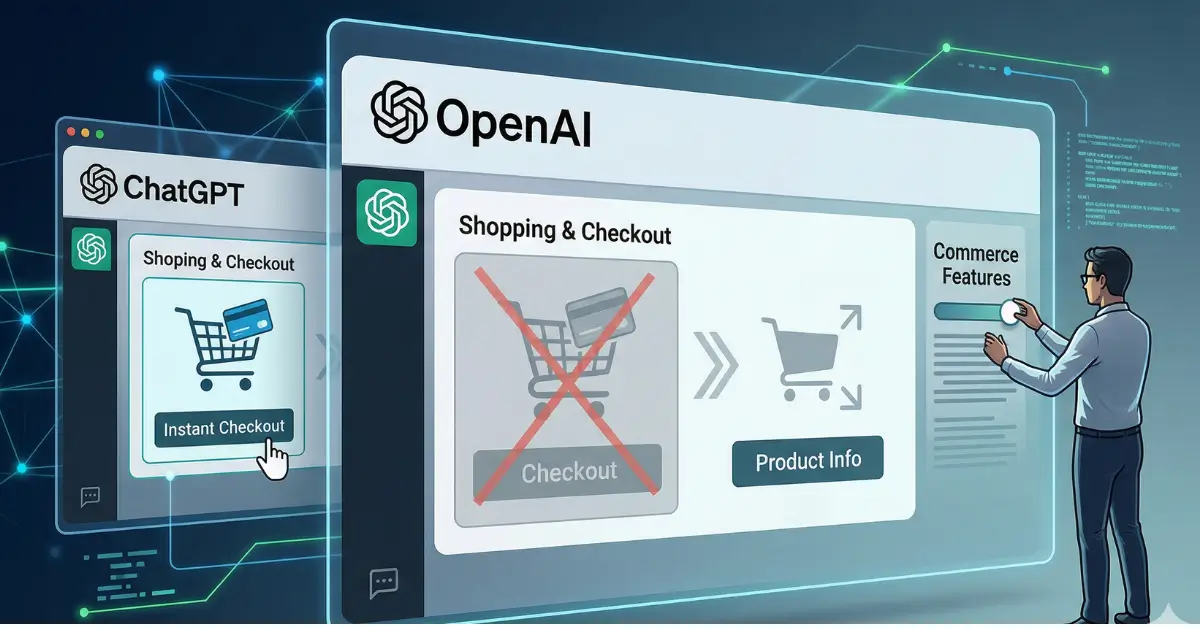
OpenAI wanted ChatGPT to be your next shopping destination. That plan is not working out. The company announced on Tuesday that it is scaling back Instant Checkout, a feature that allowed users to browse products, add them to a cart, and complete purchases directly inside the ChatGPT interface. Instead, OpenAI is shifting its focus to product discovery helping users research what to buy rather than trying to be the place where they actually buy it.
The retreat marks an early stumble in OpenAI's broader push to turn its wildly popular chatbot into a revenue-generating commerce platform capable of competing with established giants like Amazon and Google Shopping.
How the Shopping Bet Unravelled
OpenAI first introduced shopping capabilities in ChatGPT last year, positioning the chatbot as a conversational shopping assistant that could connect consumers with relevant vendors. The Instant Checkout feature launched in September 2025, allowing users to discuss what they wanted to buy with ChatGPT and then complete the transaction without ever leaving the app. The products came from third-party merchants, but ChatGPT served as the storefront.
The problem was simple: people were not using it. Reports from The Information indicated that ChatGPT users were simply not turning to the chatbot to make purchases. A study from October examining referral traffic from ChatGPT found that e-commerce sites were generating very little revenue from users arriving via the chatbot.
OpenAI acknowledged the shortfall in its blog post announcing the change, stating that the initial version of Instant Checkout did not offer the level of flexibility the company aspired to provide. A spokesperson confirmed the company would be deprioritising Instant Checkout as a standalone feature, though merchants would still have the option of incorporating it through apps within ChatGPT for the time being.
The New Strategy: Discovery Over Transactions
Rather than trying to own the full shopping funnel from browsing to payment, OpenAI is now repositioning ChatGPT as a research and comparison tool a place where consumers can explore options before heading to a merchant's own website to complete their purchase.
Under the new approach, ChatGPT will offer more detailed product information, including side-by-side images, pricing comparisons, feature breakdowns, and aggregated reviews. The goal is to make the chatbot a trusted intermediary that helps users decide what to buy, even if it no longer handles the transaction itself.
This discovery-first experience is powered by what OpenAI calls its Agentic Commerce Protocol, an open standard for e-commerce developed in partnership with fintech company Stripe. The protocol relies on data provided by participating merchants and is designed to give users structured, comparable product information within the chat interface.
Going forward, OpenAI's plan calls for merchants to build their own apps within ChatGPT, which would then route users to checkout experiences on the merchants' respective websites. This effectively shifts the burden of conversion from OpenAI back to the retailers themselves.
Why ChatGPT Struggled as a Shopping Platform
The failure of Instant Checkout highlights a fundamental tension in OpenAI's commerce ambitions. ChatGPT's strength lies in conversation, research, and synthesis tasks that align naturally with product discovery. But online shopping is a deeply ingrained habit, and consumers already have well-established relationships with platforms like Amazon, Walmart, and Shopify-powered stores.
Convincing users to enter their payment details and complete purchases inside a chatbot a fundamentally different interface from a traditional e-commerce site was always going to be a high bar to clear. Shopping requires trust, familiarity, and a seamless experience that took Amazon decades to build. Bolting that onto a conversational AI interface in a matter of months was an ambitious gamble.
There is also the question of intent. People come to ChatGPT to ask questions, get information, and solve problems. They do not typically open the app with a shopping list in hand. That mismatch between user intent and platform design may have doomed Instant Checkout from the start.
A Pivot, Not a Retreat
Despite the setback, OpenAI is framing the move as a strategic refinement rather than a failure. By focusing on discovery, the company can still position ChatGPT as an influential part of the consumer journey the place where purchase decisions begin, even if they are completed elsewhere.
If OpenAI can establish ChatGPT as the go-to tool for product research and comparison, it could still capture significant commercial value through referral partnerships, advertising, or merchant fees without needing to build a full-blown checkout infrastructure.
The pivot also reduces friction with merchants, many of whom were reportedly uncomfortable ceding the checkout experience to a third-party AI platform. Letting retailers control their own payment flows while benefiting from ChatGPT's traffic may prove to be a more sustainable arrangement for both sides.
Still, the episode is a reminder that even the most popular AI products face real limits when they try to expand beyond their core strengths. ChatGPT may eventually find its place in e-commerce, but for now, Amazon's crown is safe.