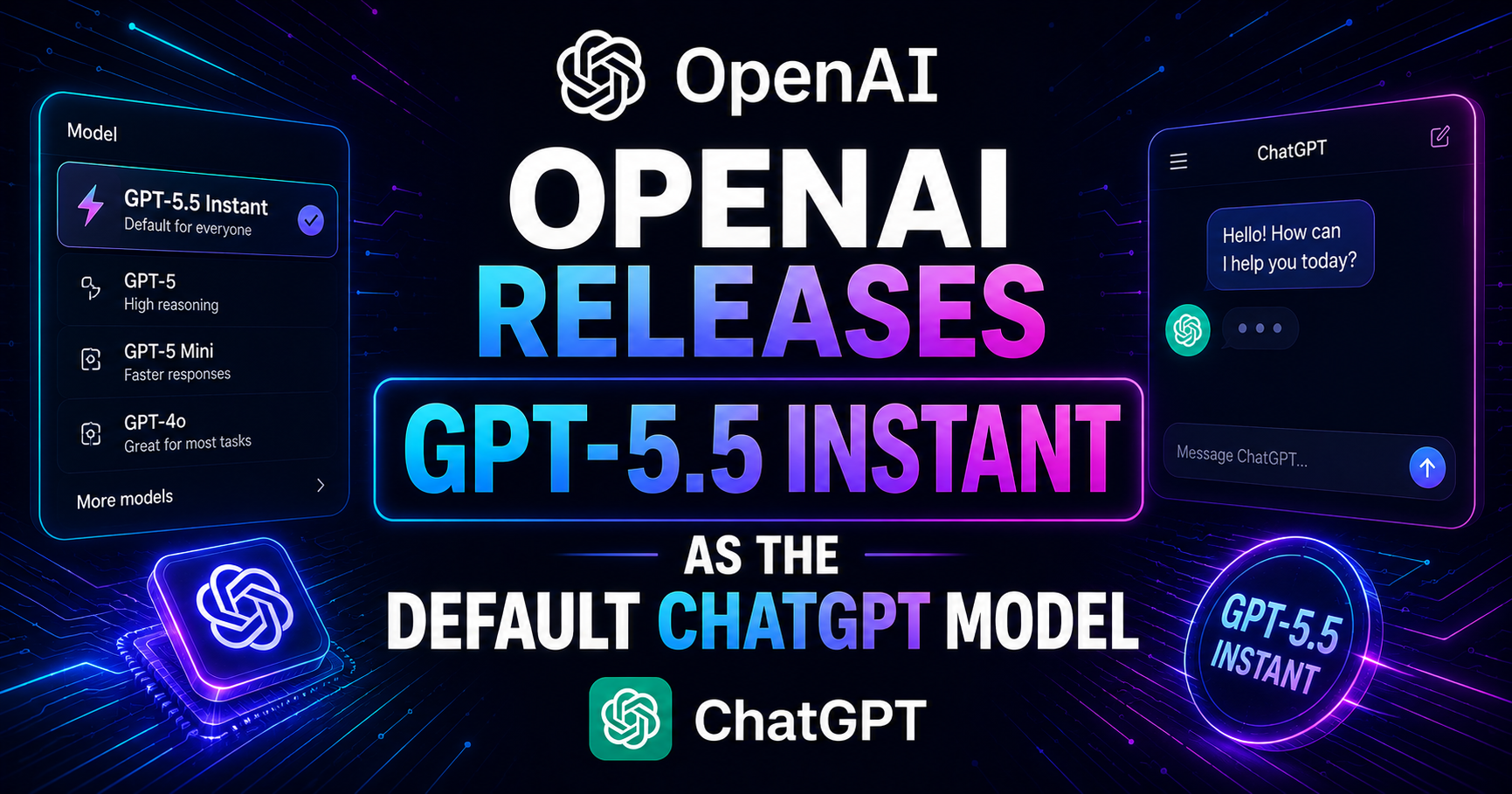
OpenAI has released GPT-5.5 Instant, a new foundation model that replaces GPT-5.3 Instant as the default for all ChatGPT users. The model reduces hallucination in sensitive areas like law, medicine, and finance while maintaining the low latency of its predecessor. It also introduces a significant new capability: the ability to search across past conversations, files, and Gmail to generate personalized answers.
What Is New
GPT-5.5 Instant builds on the GPT-5.5 release from last month. The Instant variant is optimized for speed and efficiency — designed for everyday ChatGPT conversations rather than heavy-duty coding or research tasks.
The headline improvement is reduced hallucination. OpenAI says the model performs significantly better in areas where accuracy matters most — legal questions, medical information, and financial analysis. Given that a BMJ Open study recently found AI chatbots give problematic health advice half the time, improvements in hallucination reduction are among the most consequential upgrades OpenAI can make.
Benchmark numbers back the claims. GPT-5.5 Instant scored 81.2 on the AIME 2025 math test, up from 65.4 for the older model. On the MMMU-Pro multimodal reasoning benchmark, it scored 76.0 compared to 69.2 previously. Both are meaningful jumps.
Memory Gets Transparent
The most interesting new feature is context management. GPT-5.5 Instant can use its search tool to reference past conversations, uploaded files, and connected Gmail accounts to give personalized answers. This feature is available to Plus and Pro users on the web, with mobile and free tier access coming soon.
ChatGPT will now also show memory sources across all models. Users can see where the AI pulled its information from — and delete or correct outdated sources. Critically, if you share a chat with someone, they cannot see the memory sources. That separation protects privacy while maintaining personalization.
The memory transparency addresses a growing concern about AI tools that make claims without attribution. By showing sources, OpenAI gives users the ability to verify what the AI is drawing on — a step toward the kind of accountability that enterprise customers and regulators increasingly demand.
The Model Retirement Problem
The release also highlights a recurring tension at OpenAI. Every new default model means an old one gets retired. When OpenAI withdrew GPT-4o in February 2026, the backlash was significant. Users who felt a personal connection to the model's conversational style signed petitions. Some described it as losing a best friend.
The emotional attachment to AI personalities is a phenomenon the industry is still learning to navigate. For enterprise customers, model transitions create practical challenges — testing, validation, and workflow adjustments. For consumers, the loss feels personal in a way that software updates traditionally have not.
OpenAI is giving developers three months to transition from GPT-5.3 to 5.5 Instant through the API. The compressed timeline reflects the company's near-monthly release cadence — a pace that keeps pressure on competitors but demands rapid adaptation from users and developers alike.
Where It Fits in the AI Race
GPT-5.5 Instant is not a frontier model. It is the workhorse — the model that hundreds of millions of free and paid ChatGPT users interact with daily. Its importance is less about benchmarks and more about the baseline quality of the AI experience for the average person.
Anthropic's Claude serves a different market. About 80 percent of its revenue comes from enterprise customers and developers using Claude Code. Google's Gemini is embedded across Chrome, Maps, Workspace, and now vehicles. DeepSeek's V4 competes aggressively on price.
OpenAI's edge in the consumer market is distribution. ChatGPT has over 400 million users. GPT-5.5 Instant is the model most of them will interact with. Making it faster, more accurate, and more personalized is how OpenAI maintains its consumer lead — even as enterprise momentum shifts toward Anthropic.
The Bigger Picture
GPT-5.5 Instant is a quiet release with significant implications. It sets the quality floor for what hundreds of millions of people experience when they use AI. If the hallucination improvements hold in practice especially in medicine, law, and finance — this update could meaningfully improve the safety and reliability of the world's most widely used AI tool.
The memory source feature adds a layer of transparency that has been missing from consumer AI. Knowing where the AI got its information and being able to correct it gives users more control over the relationship. In a market where trust is the biggest barrier to deeper AI adoption, that transparency matters more than any benchmark score.