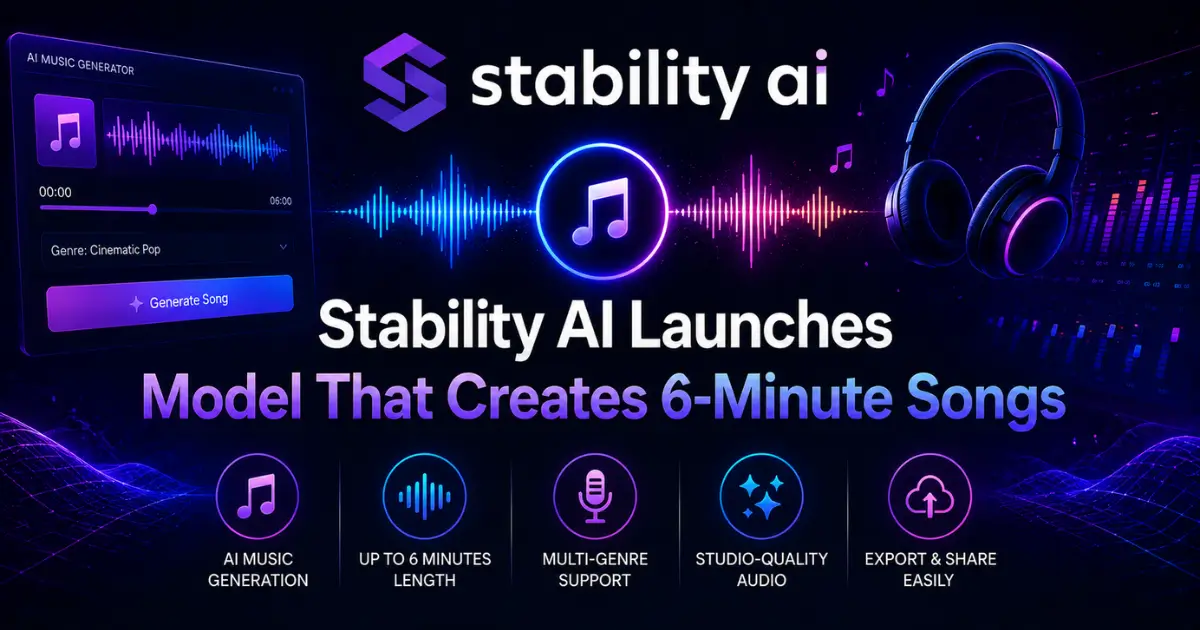
Stability AI has released a new audio generation model that can create full six-minute songs from text prompts. The model generates vocals, instruments, and production across multiple genres. Users describe what they want — genre, mood, tempo, instrumentation — and the AI produces a complete track. The release pushes AI-generated music further into territory that raises both creative possibilities and copyright concerns.
What the Model Can Do
The new model extends Stability AI's audio capabilities significantly. Previous AI music generators produced short clips — 30 seconds to two minutes. Six minutes puts the output in the range of a full commercial song. The model handles vocals, multi-instrument arrangements, and mixing in a single generation pass.
Users can specify genres from hip-hop to classical. They can request specific instruments. They can describe mood and energy. And the model produces a coherent track that maintains structure, builds tension, and resolves — the way a human composer would construct a song.
The quality is not yet at professional studio levels. But it is approaching the threshold where AI-generated music becomes indistinguishable from human-made tracks for casual listeners. That threshold matters enormously for the music industry.
The Copyright Collision
AI-generated music sits at the center of one of the most contentious copyright debates in the AI industry. Music labels have sued AI companies for training on copyrighted songs. Artists have protested AI tools that replicate their voices and styles. And the legal framework for AI-generated music remains largely undefined.
The Oscar ban on AI-generated performances set a precedent in film. The Grammy Awards have taken a similar position on AI-generated music — requiring human authorship for eligibility. But these rules apply to awards, not distribution. AI-generated music can still be uploaded to Spotify, Apple Music, and YouTube without restriction.
Spotify is actively pursuing AI-generated personal audio as a growth strategy. If Stability AI's model can produce six-minute songs that sound professional enough for streaming playlists, the economic implications for human musicians are significant. AI-generated tracks cost nothing in royalties. Human-made music costs roughly 70 cents of every revenue dollar.
The Training Data Question
Stability AI has faced repeated scrutiny over its training data practices. The company's image models were built on datasets that included copyrighted artwork, leading to lawsuits from artists and photographers. The same question applies to its audio models. What music was the model trained on? Were the artists compensated? Did they consent?
Startups like Wirestock are building marketplaces for ethically licensed training data — including audio. But most AI companies have trained their models on data scraped from the internet without explicit permission. The "This is Fine" creator's lawsuit against an AI startup is just one example of the growing legal backlash.
For music, the stakes are higher. A six-minute song generated by AI that sounds like a specific artist — using patterns learned from that artist's copyrighted recordings — creates liability that the AI industry has not yet resolved.
Why Six Minutes Matters
Duration is not just a technical milestone. It is a commercial one. Short AI-generated clips are useful for social media, ads, and background music. A six-minute track is a full song that can be released on streaming platforms, used in film soundtracks, or performed live through digital playback.
The shift from clips to full songs moves AI music from a novelty to a potential substitute. A content creator who needs background music for a YouTube video no longer needs to license a human-made track. A podcast producer who needs an intro does not need a composer. And a brand that needs music for an advertising campaign can generate it instantly rather than hiring a studio.
For human musicians, the AI jobs question applies with special force. Music production is already one of the most economically precarious creative professions. AI tools that generate full songs threaten to compress the market further — replacing session musicians, producers, and composers for the vast majority of commercial music needs.
The Bigger Picture
Stability AI's six-minute song model is another step in the broader collision between AI capability and creative rights. The technology is impressive. The legal framework is nonexistent. And the economic impact on human creators is real.
The AI industry has been through this cycle before. AI writing tools flooded corporate communications with machine-generated text. AI image generators transformed visual creative work. Now AI music is reaching the same inflection point — the moment where the output is good enough that the market must decide what it is worth and who deserves to be paid for it.
For consumers, six-minute AI songs are a curiosity. For the music industry, they may be an existential threat. And for AI companies, they are the next frontier in a race where creative capability keeps advancing faster than the rules governing it.