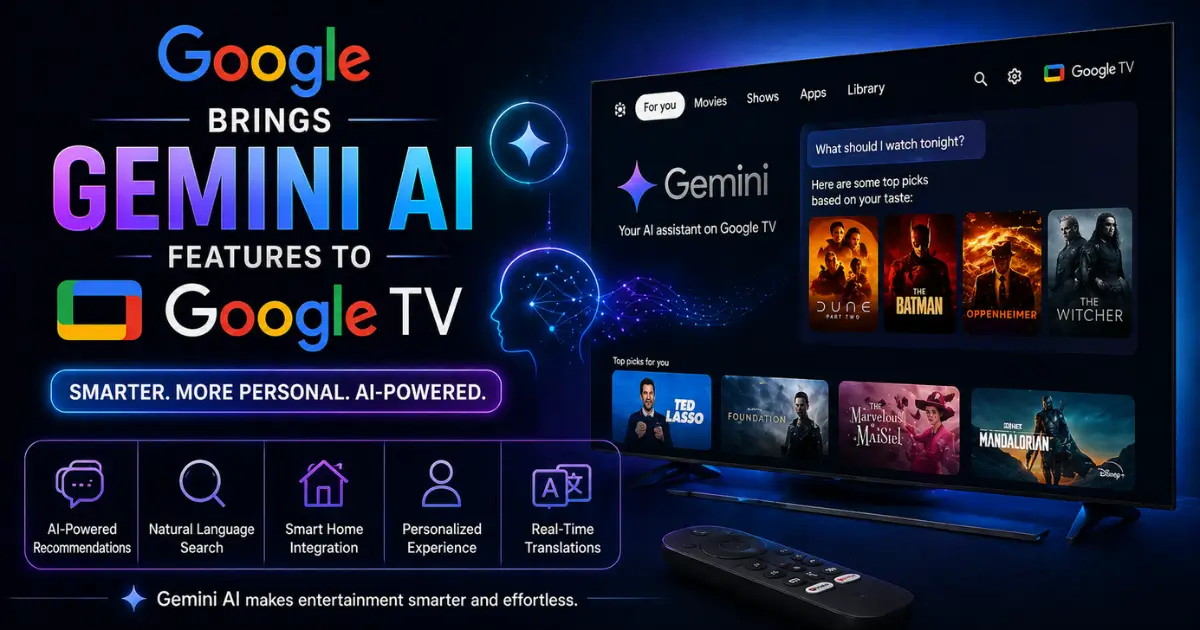
Google is adding Gemini AI capabilities to Google TV, turning the television into the latest device to get an AI upgrade. The new features include conversational search, personalized recommendations, and AI-generated content summaries all accessible through the remote or voice commands. The update continues Google's strategy of embedding Gemini into every product it owns.
What Is Changing
Google TV users will be able to ask Gemini natural language questions about what to watch. Instead of browsing through rows of thumbnails, users can say things like "show me something funny my kids would enjoy" or "find a thriller from the last two years with good reviews." Gemini processes the request and returns personalized results based on viewing history, preferences, and available streaming services.
The AI also generates brief summaries of shows and movies. Users can ask what a show is about and get a concise AI-generated overview without reading reviews or watching trailers. For series, Gemini can provide season-by-season breakdowns and explain where the plot currently stands — useful for deciding whether to pick up a show mid-run.
A new feature called Watchlist Intelligence uses Gemini to analyze a user's saved shows and suggest an optimal viewing order based on mood, time available, and what is trending. The system learns from viewing patterns over time and adjusts its recommendations accordingly.
Part of the Gemini Everywhere Strategy
The Google TV update fits into a massive push to embed Gemini across Google's entire product ecosystem. In the past few weeks alone, Google has expanded Gemini in Chrome to seven new countries. It launched AI features for Google Maps and Workspace. It unveiled new AI chips at Cloud Next. And YouTube began testing AI-powered search with guided answers.
Google TV is a natural next step. The platform runs on over 150 million devices worldwide. Adding Gemini to the TV experience gives Google another high-frequency touchpoint for its AI — one that reaches users during their leisure time rather than their work hours.
The Competition
The move puts Google TV in direct competition with other AI-enhanced entertainment platforms. Amazon has been adding AI features to Fire TV and Alexa. Apple is reportedly planning AI enhancements for Apple TV under incoming CEO John Ternus. And streaming services like Netflix and Disney+ are developing their own AI recommendation engines.
The race to make TV viewing more AI-driven reflects a broader pattern. As content libraries grow across dozens of streaming services, the paradox of choice has become a genuine user experience problem. People spend more time deciding what to watch than actually watching. AI that can cut through that decision fatigue has real value.
Privacy Considerations
AI-powered TV recommendations require access to detailed viewing data. Google TV already tracks what users watch, when they watch, and how long they stay engaged. Adding Gemini means that data now feeds into a more sophisticated AI system that can draw inferences about mood, preferences, and household composition.
Google says users can control what data Gemini accesses through existing privacy settings. But the tradeoff is familiar: restrict data access and the AI becomes less useful. Grant full access and the TV becomes one of the most intimate data collection devices in the home.
The Bigger Picture
Google TV's Gemini integration is a small update in isolation. But viewed alongside Chrome, Maps, Workspace, YouTube, and the company's AI infrastructure investments, it represents another step toward Google's vision of AI running invisibly across every screen in your life. From the phone in your pocket to the laptop on your desk to the TV on your wall — Gemini is becoming the layer that ties it all together.
Whether users embrace AI-driven TV or find it intrusive will depend on how well the recommendations work and how transparent Google is about the data powering them. For now, the remote just got a lot smarter.