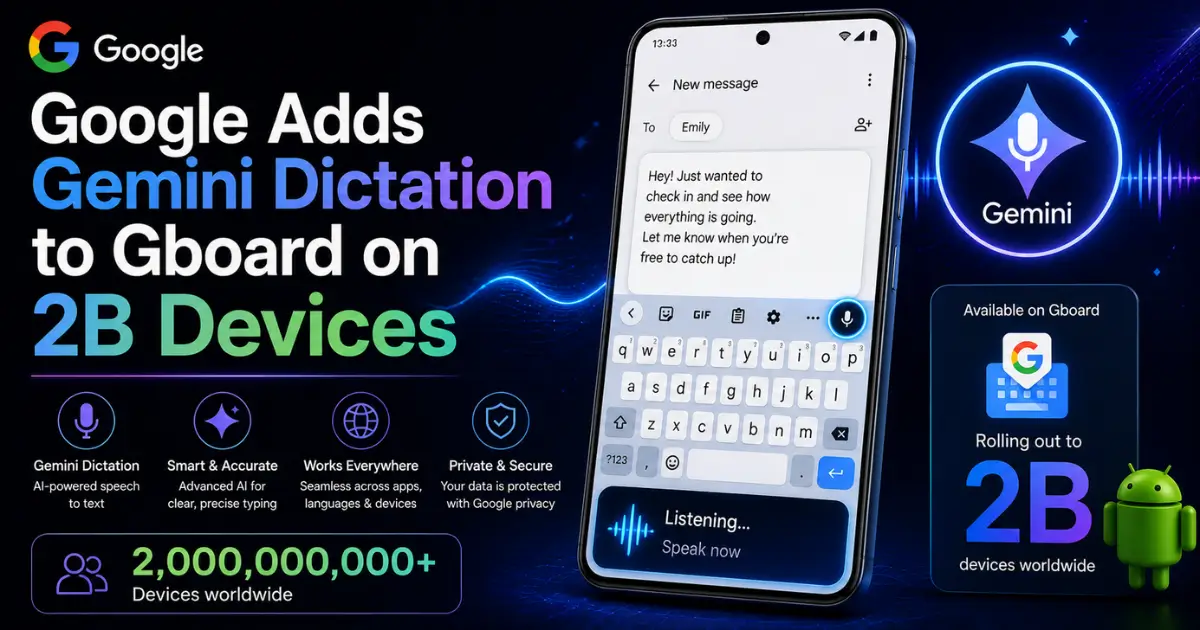
Google has upgraded Gboard's voice typing with Gemini AI. The keyboard — installed on over 2 billion Android devices — now uses Gemini to transcribe speech with significantly higher accuracy, handle code-switching between languages, and clean up grammar in real time. The update is a direct threat to voice dictation startups like Wispr Flow that have built entire businesses on the same capability.
What Changed
Gboard's voice typing previously used Google's standard speech recognition. The Gemini upgrade brings several improvements. The AI understands context better. It handles accents and dialects more accurately. It can transcribe multilingual speech — including Hinglish and other code-switching patterns — without requiring users to switch language settings manually.
The system also cleans up speech as it transcribes. Filler words are removed. Grammar is corrected. Punctuation is added automatically. The output reads like polished text rather than raw dictation. Users speak naturally. Gboard produces clean copy.
The feature rolls out first on Pixel devices with broader Android availability following. Given Gboard's 2 billion installations, the eventual reach is enormous.
Why Startups Should Worry
Wispr Flow has been growing rapidly — doubling growth to 100 percent month-over-month after launching Hinglish support. The startup's entire value proposition is AI-powered voice dictation that converts speech into polished text across any application. It charges $3.40 per month in India and $12 globally.
Google just added the same core capability to a keyboard that comes pre-installed on every Android phone. For free. The distribution advantage is insurmountable. Wispr Flow has 2.5 million downloads. Gboard has 2 billion installations. When the incumbent builds your feature into the default keyboard, the startup's path narrows dramatically.
The pattern is familiar. Snap dropped Perplexity after Google offered better AI search through Gemini. Standalone AI tools lose ground when platform owners build equivalent features into their core products. Voice dictation is following the same trajectory.
The Multilingual Advantage
Google's multilingual capability is particularly significant for India and other emerging markets. India has 22 official languages and hundreds of dialects. Most voice AI tools handle English well. Some handle Hindi. Few handle natural code-switching between languages.
Wispr Flow made Hinglish support its differentiator. Google just commoditized it. With Gemini processing multilingual input natively in the default keyboard, the incentive for Indian users to download and pay for a separate dictation app diminishes significantly.
The same dynamic applies to other voice AI startups targeting emerging markets. If the platform provides the capability for free, standalone products need to find differentiation beyond basic transcription — whether that is enterprise features, specialized integrations, or vertical-specific capabilities.
Part of Google's AI Keyboard Strategy
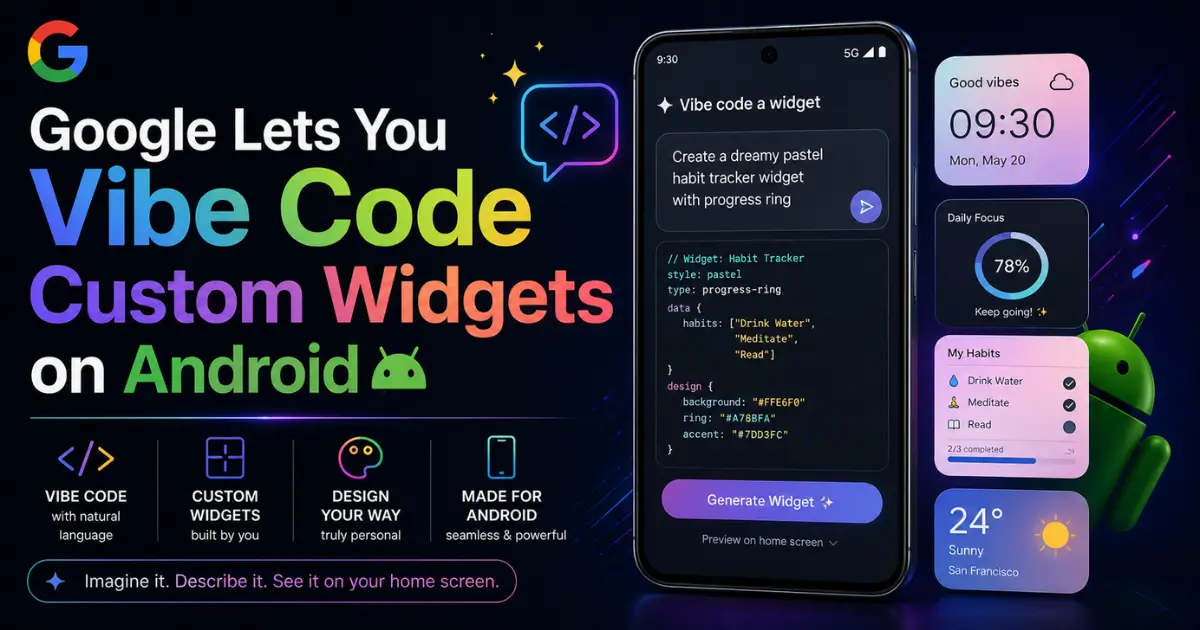
The Gboard upgrade is part of Google's broader push to make every input surface AI-powered. The company already added AI-generated widgets to the Android home screen. Gemini powers Chrome in multiple countries. And Google Workspace now includes AI writing tools across Docs, Sheets, and Gmail.
Adding Gemini to Gboard connects the keyboard to Google's entire AI ecosystem. A user can dictate a message in Gboard. Gemini cleans it up. Gmail's AI suggests a subject line. Calendar AI schedules the follow-up. The entire workflow is Gemini-powered from input to action.
What It Means for Voice AI
The Gboard upgrade does not kill voice AI startups overnight. Wispr Flow, Otter, and others offer features that go beyond basic dictation — enterprise search, meeting transcription, cross-app integration. But it eliminates the entry point. If basic voice-to-text is free and excellent on every Android phone, the funnel that brings users to paid dictation products shrinks.
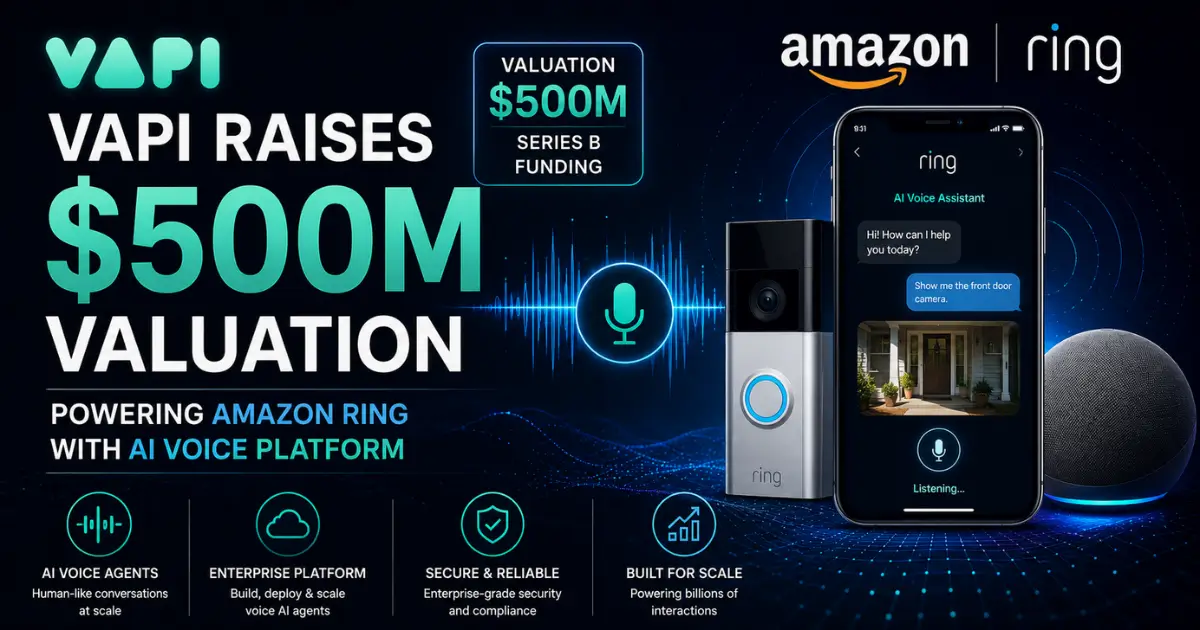
The voice AI market is still growing. OpenAI launched voice intelligence APIs for enterprise. Vapi hit $500 million valuation on enterprise voice agents. Thinking Machines announced full-duplex interaction models. The opportunity is real. But the consumer dictation layer — the simplest use case — just became a platform feature rather than a product category.
For the AI industry, the lesson is the same one it learns every few months. Building on top of a platform is fast. Surviving when the platform builds your feature is hard.